
Care as a Shared Practice
Along for the RideThis flow traces the novel's movement from isolated responsibility toward care shared among family, friends, and the wider Colby community.
increasing Bearing strength in each event
 decreasing
Bearing strength in each eventdecreasingCare Left Unshared

Care Left Unshared
A newborn's needs
Heidi holds the crying Thisbe while Robert continues working, and Auden quickly sees the strain. The baby requires more than the reassurance that things will eventually improve.
The limits of self-sufficiency
Heidi's reluctance to ask for help resembles a learned survival strategy, but it leaves her alone. Robert's offer of a nanny does not meet the immediate need for shared attention.
Auden's First Intervention
Auden's First Intervention
Help offered directly
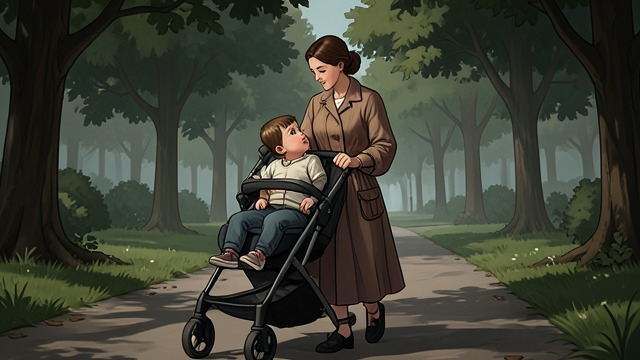
Auden tells Heidi to sleep and takes Thisbe, eventually walking her in the stroller until she settles. She learns by watching the baby's responses rather than relying on a complete plan.
Care changes relationships
The act gives Heidi a small interval of rest and creates the first real bond between Auden and Thisbe. It also makes Auden aware that care is work, not simply sentiment.
Friends Share the Work

Friends Share the Work
A practical community
The girls cover work, offer advice, and make space for one another's feelings amid ordinary shifts and plans. Their help is often informal, but it is consistent.
Belonging through contribution
Auden is not only helped by the group; she also brings bookkeeping skills, listens to Maggie, and joins shared preparations. Care becomes reciprocal rather than a role reserved for one person.
Karen's Experienced Help

Karen's Experienced Help
A call for support
Auden reaches out to Eli when Heidi is silently crying. Eli brings Karen, whose experience as a maternity nurse helps her respond calmly to both mother and baby.
Generations in the room
Karen comforts Heidi and teaches practical childcare skills without shaming her. Her visit shows that care can come from a community rather than being demanded from one exhausted parent.
A More Shared Family

A More Shared Family
Responsibilities rearranged
Robert and Heidi make changes so that each can work while the baby is cared for by family or trusted helpers. Their revised arrangement recognizes that raising a child requires more than one person's effort.
Care as commitment
Robert's return is meaningful because he participates in the daily work of family life. The novel presents responsibility not as a declaration of love but as repeated presence.
When Auden first arrives in the house
The first full night of Thisbe's crying
During the weeks Auden works at Clementine’s
The night Heidi can no longer cope alone
After Robert returns home
