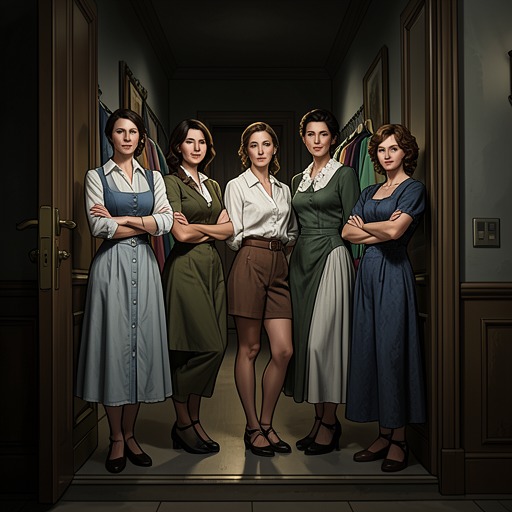
“Life shouldn’t be about the either·or”
Along for the RideThe expression “Life shouldn’t be about the either/or” names a challenge to restrictive categories, especially those that define what a girl can be interested in or become. Its force in Auden’s conversation with a woman lies in the distance between choosing one approved identity and insisting that apparently conflicting qualities can coexist.
Meaning and Context
The woman recalls that her mother wanted her to take part in debutante activities and pageants, while she preferred riding jump bikes with boys. Rather than accept that choice as a test between conventional femininity and sport, she remembers asking, “why can’t I do both?” She extends the same objection to the idea that a person must be either smart or pretty, or interested in girly things or sports. The statement is therefore not a rejection of femininity, but of the forced alternatives used to define it.
The Conversation
Auden responds that the point makes sense, while recognizing that she had not fully appreciated the woman’s perspective before. The exchange gives the expression a personal grounding: it emerges from the woman’s account of her own disagreements with her mother, not as an abstract maxim detached from experience. Her argument also allows her to describe herself on her own terms, rather than through a single expectation imposed from outside.
Work and Significance
After making her point, the woman collects her keys and returns to the denim section to finish folding clothes. She recalls the effort of finding slim boot-cut jeans for a customer and says the result made that effort worthwhile. The practical detail resonates with the conversation: riding bikes, working with clothing, and caring about how someone looks are presented as compatible parts of a life, not competing identities.
Left alone in the pink-and-orange room, Auden considers the either/or thinking she has been stuck in and what impresses her mother. She begins to imagine girlhood as encompassing interest rates and skinny jeans, bikes and pink. The expression thus marks a change in how Auden frames possibility: identity need not be reduced to one side of a divide, and combining interests does not make any of them less genuine.