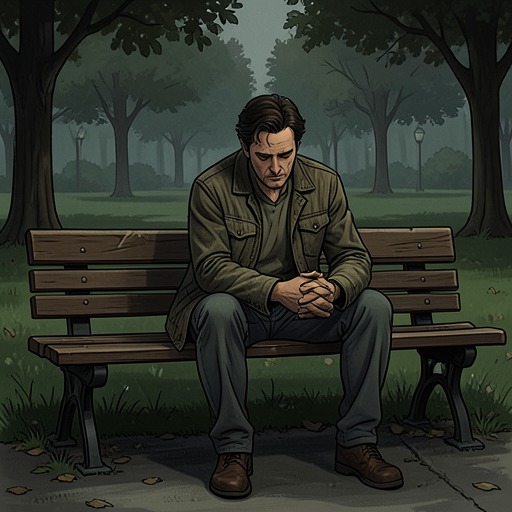
Abe
Along for the RideAbe is Eli’s closest friend, a gifted BMX rider, and the passenger killed in the accident that leaves Eli struggling with grief and survivor guilt. He appears in the story through memories: first as the absent half of an inseparable friendship, then as the person whose shared home still bears traces of his taste and habits. The ordinary details of his life make his death more than a biographical fact for Eli; they give the loss a continuing presence.
Identity and Athletic Partnership
Maggie describes Abe and Eli as best friends from around kindergarten who were almost never seen apart. Leah remembers a marked difference in Eli before Abe died, recalling him as funny. Their recollections establish Abe not simply as someone Eli knew, but as a companion closely bound to the version of Eli his friends remember from before the accident.
The two friends developed as competitive riders and had been sponsored for a couple of years by the time they traveled to an event at Concrete Jungle in Brockton. Both began in straight BMX. Eli later focused on half-pipe competition, while Abe concentrated more on flatland; both were also strong in urban riding. Maggie initially describes these distinctions in technical terms, then translates them for Auden as a simpler fact: Abe and Eli were good enough at riding to be paid to travel to competitions. Abe’s athletic identity thus rests on a concrete achievement, not just on the admiration of his friends.
The Accident and Its Immediate Aftermath
In May of the previous year, Abe and Eli were in Brockton for the riding event. Afterward, they drove back from a party. Eli was driving when an accident occurred, and Abe was killed. The account gives no further circumstances of the crash; its central consequence is the stark division between the friend who survived and the one who did not.
Maggie recounts hearing Eli’s call from the hospital while she was at Jake’s house. She could hear him trying to speak, but what reached her was the sound he was making. The memory shows how the news came to her not as a complete explanation, but through the distress in Eli’s voice. Later, when Maggie and Leah tell Auden about the death at the end of the pier, the revelation changes how Auden understands Eli’s withdrawal: the quiet or altered person her friends describe has a history that begins with this loss.
The Shared Home and Everyday Memory
Abe remains present in Eli’s recollections through the furnishings of their former home. Eli explains that the furniture there had been Abe’s, which is why his own later place has only one chair. As soon as Abe earned prize money from riding, he had begun decorating their home. The objects he chose were memorable less for their refinement than for the insistence with which he made the place his own.
Among them was a large television and a plastic singing fish hung beside the door. The fish played a song whenever someone walked past, so it repeatedly interrupted the people in the apartment. Eli’s account makes the joke depend on repetition: the fish was not merely an odd decoration, but a device that kept announcing itself to everyone who entered or crossed the room. Its irritating persistence also preserves something of Abe’s presence in the home after he is gone.
The water bed offers a different, more intimate example of Abe’s stubbornness. He had always wanted one and refused to admit it was a mistake even after it leaked and caused him back pain. He blamed a spill or a strain from a ride, while continuing to complain and shift around at night. Eli remembers the bed as a source of constant discomfort, but tells the story with enough comic detail that Auden laughs. The exchange briefly lets Abe appear as an exasperating roommate rather than solely as the person at the center of a tragedy.
Grief, Storytelling, and Survivor Guilt
For Eli, however, even funny memories are inseparable from the ending. He tells Auden that other people repeatedly wanted to recount anecdotes at the funeral and afterward, but every story returned him to the fact that Abe died. Eli rejects the idea that he needs stories in order to remember: he does not have trouble remembering Abe. The distinction matters. Remembrance is not absent; it is so immediate that retelling can feel less like keeping Abe close than repeating the loss.
Eli identifies his own place in the accident as the person who was driving and lived. He says that Abe’s parents, girlfriend, and friends all know this, and that his survival is the one certainty amid everything else. His account presents guilt as bound to an unchangeable contrast: he is here, and Abe is not. Auden responds that the accident was not his fault, but the reassurance does not erase the fact Eli is describing—the painful knowledge of who survived.
Interrupted Plans and Narrative Significance
Before Abe’s death, Eli had planned to attend the U after getting in, with the aim of going to school. He says that everything stopped after Abe died. His later decision to return to riding is framed not as a claim that he can put the loss behind him, but as a refusal to let his life end by disappearing from view. He had wanted to go out on top, or at least to try. Abe’s death therefore marks both a personal bereavement and the interruption of Eli’s athletic and educational plans.
Abe has no direct voice in these recollections, but the accounts give him dimensions beyond his role in the accident: a childhood friend, a sponsored competitor with his own riding specialties, a decorator with an appetite for conspicuous and impractical objects, and a roommate who would not admit that his dream water bed was a mistake. The movement between those details and the repeated fact of his death is central to Eli’s portrayal. The anecdotes restore the texture of a life, while Eli’s resistance to retelling shows why texture alone cannot make the ending feel less final.