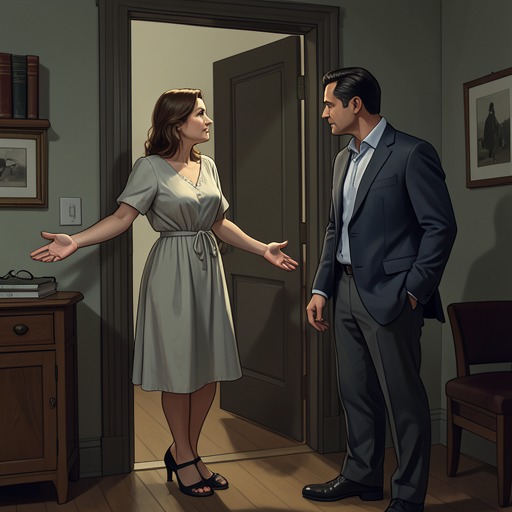
Adam
Along for the RideAdam is a lively presence in Maggie’s circle, at home among bikes, candy-store gestures, and teasing banter, but more cautious than his breezy manner first suggests. His story joins practical kindness to the risk of change: he encourages Maggie and Auden to try what they have avoided, then must weigh whether asking Maggie to the Beach Bash could alter their friendship.
Identity and Introduction
Adam first comes into view through Maggie’s friends’ discussion of the candy he has bought for her. Maggie insists that his purchases mean nothing, while Leah points out that he does not have to bring her something every time he goes to the store. The exchange establishes a pattern before Adam himself appears: his attention to Maggie is visible to others, even when she dismisses its significance.
He enters the group in motion, arriving on a bicycle with a screeching stop and inviting the women to the jump park. Leah objects to another night involving bicycles, but Adam defends riding as more than ordinary transportation. His enthusiasm is immediate and a little comic, setting him apart from friends who see the bikes as childish while revealing the seriousness with which he takes them.
At the Gas/Gro, Adam arrives with Wallace in a battered green truck carrying bikes in the back. The two go inside for drinks and candy, and Adam recognizes Auden from Clementine’s. He introduces himself and Wallace, then teases Auden for buying only one cup of coffee. His easy joke turns a potentially awkward meeting into casual conversation; he knows that Auden has a connection to Jake but does not embarrass her by naming it.
Bikes, Friendship, and Practical Help
At the jump park, Adam’s attentiveness to Maggie becomes visible through action. He gestures for her to join him and Wallace, and when she finally comes down from the bleachers, he gets off his own bike and offers it to her. Maggie puts on a helmet, listens to him, and rides the jumps with confidence. Adam’s gesture gives her the chance to show a skill that her friends—and Auden—had not known she possessed. He makes room for her ability rather than claiming the display for himself.
His comic confidence has limits. At a later gathering, Adam walks into the glass entrance and rubs his arm; Maggie calls out that the door pulls open, something he never remembers. He brushes off the mishap and proceeds with an announcement, carrying a plastic grocery bag. The moment keeps his self-presentation light, but it also makes him a familiar, imperfect figure rather than an effortlessly cool rider.
Adam is also one of the people who makes Auden’s attempt to learn to ride a bike feel possible. When Maggie explains that she simply put Auden on the bike and let her go, Adam objects that this is the fastest way to make someone hate riding. He asks Auden to get on the handlebars while he rides, intending to show her how fun cycling can be once she knows what she is doing. His advice is practical and encouraging: learning requires wanting to learn, and wanting can begin with experiencing the pleasure of the activity. The scene echoes the way he offered Maggie his bike, treating access and encouragement as more useful than pressure.
That readiness to respond also appears when Maggie sends him a text marked as an emergency. Adam arrives quickly, still showing the creases from sleep on his face, and complains that she uses the urgent message only when someone is dead or dying. He is startled but comes anyway. The exchange captures both his comic exasperation and the dependable care beneath it.
Maggie and the Risk of Change
Adam’s interest in Maggie is expressed first through recurring gifts and invitations rather than declarations. His candy purchases prompt teasing from Leah and Esther, while Maggie minimizes them as something he does for people who go to the store. At the jump park, however, he seeks her out and hands over his bike, letting her take the lead. Together these small acts make his attention legible without making Maggie’s interpretation of it certain.
A later conversation gives Adam’s reserve more weight. When the possibility of a different experience of the summer arises, he admits that he has made it this far and that college is only weeks away. He worries about putting an awkward cast on the summer and damaging a friendship. The concern gives shape to his hesitation: the obstacle is not lack of affection so much as the possibility that an attempt at romance could change a friendship that already matters. His willingness to consider that risk distinguishes him from the version of Adam suggested by his joking and spontaneity.
Adam eventually asks Maggie to the Beach Bash. When she tells Leah and Esther that he asked her, their surprise quickly turns to delighted recognition; they treat his invitation as the moment he finally found the nerve. The invitation makes the earlier gestures newly consequential, though it does not erase the uncertainty he had expressed about changing the friendship. It is a choice to risk a different kind of closeness rather than preserve the existing one untouched.
Adam also encourages Auden to reclaim an experience she missed. After hearing her reflect on the photographs and the prom she never attended, he points out that she could remedy that absence and tells her that Eli is at the shop. His intervention helps make the Beach Bash a second chance for Auden, just as his own invitation gives Maggie a new possibility. Adam’s function in these moments is not to solve other people’s feelings for them, but to identify a door they may still choose to walk through.
Work and Later Life
By the fall, Adam has taken over managing the bike shop, balancing the job with a part-time class schedule at Weymar College. He is excited to make changes: bringing in new stock, improving the shop, and adding new signs and specials. The work gives his enthusiasm a sustained form. At the jump park, he welcomed people into riding; as a manager, he can reshape the place where bikes and riders meet.
One part of the shop’s past remains to be addressed. Adam sends Maggie a T-shirt for Auden, and its front bears the name Abe’s Bikes. The name preserves a connection to the shop’s previous identity while signaling a change Adam has taken responsibility for. He is nervous about the grand reopening and keeps worrying that everything must be perfect, especially as things go wrong. His anxiety contrasts with the breezy manner of his early appearances, revealing how much he cares about the work and the choices he is making.
Adam continues to visit Maggie regularly, at least every other weekend, and he talks enthusiastically about the shop and its reopening. His trajectory therefore extends beyond a single invitation: he takes on responsibility, invests in a shared place, and carries his connections into the transition to college. The bikes remain a through-line, but his role grows from the person who brings a bicycle to the group into someone who helps shape the future of the shop itself.