Auden’s missed childhood
Along for the RideAuden’s missed childhood is not described as a story of simple unhappiness. It is the loss of a more childlike way of living: Auden was a child, but her parents treated childhood as something she could outgrow through effort. In the summer before college, Eli helps her see that this absence might be revisited—not by recovering the past, but by allowing herself new experiences in the present.
A Childhood Recast as Something to Overcome
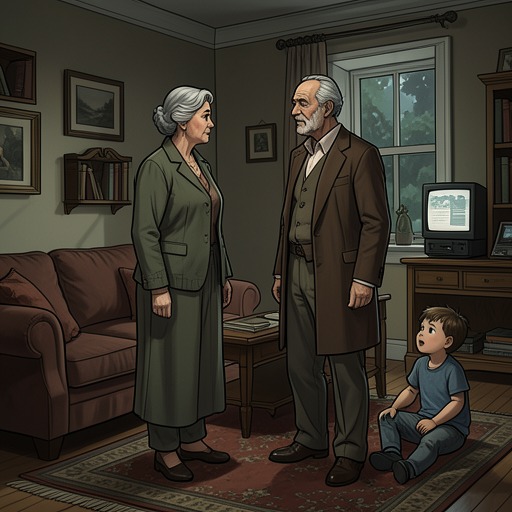
Auden makes the distinction during a late-night conversation with Eli. At a Gas/Gro around three in the morning, they fill Slurpees and talk about his belief that it is never too late to have a happy childhood. Auden resists the idea that her childhood was unhappy, then searches for a more precise description: it had not been very childlike. Her older brother, Hollis, had worn their parents out on the whole business of raising a child, she explains, and they did not have the patience to do it again.
The explanation leaves a gap between Auden’s age and the role she felt expected to occupy. She agrees that she was a child, but says her parents seemed to believe that being one was something she could overcome if she tried hard enough. The account does not identify one dramatic incident as the cause. Instead, it locates the loss in a family expectation: childhood becomes a condition to master rather than a stage of life to inhabit. Auden can therefore acknowledge that her childhood was not necessarily unhappy while still recognizing what it lacked.
Eli answers from a sharply different household. In his family, he says, it was “kid central, all the time.” His contrast does not disprove Auden’s experience; it gives her a way to see that the family arrangement she had taken for granted was not inevitable. When she points out that Hollis had childhood figured out, Eli calls it selfish that he got the only childhood. Auden admits that she had never considered the imbalance in those terms.
Eli and the Possibility of a Do-Over
The conversation belongs to a pattern that develops during Auden and Eli’s nights together. Since their first night out a week earlier, their time has been marked by back-and-forth talk, sometimes serious and often playful, stretching from other people’s bedtime until sunrise. They wander through stores under fluorescent lights, drink coffee while Eli’s clothes tumble in a laundromat, and drive through mostly empty streets. In these hours they talk about time ahead, including college, and time behind, including childhood. More than either, they return to whether lost time can be made up.
Auden senses that the night changes the meaning of their conversations. The hours seem at once to speed up and slow down, and what they say and do takes on a heightened significance in the dark. Eli appears to believe that Auden, especially, can still make up for what she missed. The idea is not that their late-night outings can turn back the clock. Rather, they offer a different scale for measuring experience: the future need not simply begin when college starts, and the past need not dictate what Auden is allowed to try now.
The Slurpee scene makes that possibility concrete. Eli clicks a lid onto his cup while Auden pokes at the pink slush with a straw. She adds blue flavor, a trick he taught her a few nights before. These small, shared experiments give their larger discussion a playful form: Auden is not merely analyzing childhood but participating in a kind of improvised play. When she finally says that perhaps it is not too late for a happy childhood, Eli answers with certainty. His confidence is encouraging, though the exchange leaves the meaning of a do-over open rather than promising that the past can be repaired completely.
The Summer Between One Life and the Next
Auden’s sense of missed experience also meets the uncertain interval before college. She had focused on her final year of high school and the beginning of college without thinking much about the time between them. Suddenly it is summer, and she feels there is nothing to do but wait for her real life to begin again. She gets what she needs for Defriese University and tries to pick up tutoring shifts at Huntsinger Test Prep, but work is slow and her attention to school sets her apart from former friends at Perkins Day.
She wants to see those friends, yet their conversations about summer jobs and boyfriends feel distant from the academic world she experienced at Kiffney-Brown. After several awkward outings, she says she is busy, and eventually they stop asking. The withdrawal gives her free time but does not make that time feel like childhood rediscovered. At home, Auden’s mother is occupied with a research grant, and graduate assistants bring dinners and cocktail hours into the house. When the noise and crowding become too much, Auden takes a book to the front porch and reads until it is dark enough to go to Ray’s Diner. Waiting, study, and solitude shape this summer as much as any deliberate adventure.
Against that background, Eli’s proposal matters because it offers Auden a way to act rather than keep waiting for life to resume. At one point, after he questions what she has been doing with her life, she recognizes that there are many legitimate ways to spend one’s days, but that she would not refuse the chance for a real do-over. She accepts the idea as something a little crazy, even something that might be called chicken salad, and says that within reason—or even without it—she is in. The playful answer marks a change in posture: she does not need to prove that her past was wrong before she can choose something different now.
Second Chances Without a Recovered Past
The same tension appears later when Auden considers the Beach Bash. Finding her dress leaves her with the strange sadness that the event has already fallen short before it begins. She knows it will be fun, but it is not the real prom she might have attended the first time around. Heidi offers another interpretation: Auden is lucky to have another try, and can make it memorable. Auden accepts the possibility cautiously. The scene does not erase her sense of what she missed; it shows her weighing the disappointment of an unrealized first experience against the agency of a second one.
Auden’s relationship with her mother also develops through small, imperfect approaches rather than a single decisive reconciliation. In one phone call, Auden and her mother sit in silence before Auden says that her friends are downstairs and that she should go. Her mother asks her to call again the next day, and Auden agrees. The exchange is brief, but it belongs to a period when her mother calls regularly and their conversations, often beginning with Auden’s studies, move on to other subjects. Their growing contact offers another version of making up time: not a return to an uncomplicated past, but continued effort in the present.
By October, Auden is at Defriese University, riding across the empty campus with a large coffee from the cafeteria as the weather turns cold and rain begins. The image places her in a new daily life, not outside time but moving through it. She and her mother remain in regular contact, and Auden is able to work alongside her so that she will be ready to talk about her relationship with Finn when she is ready. At home, her father and Heidi have also begun trying again, but not by pretending nothing changed. Their return is gradual and negotiated: Heidi works part-time at the store, her father teaches one course, and they arrange care for the baby around their working lives.
These later arrangements do not give Auden back the childhood she describes. They do, however, keep the story’s idea of a second chance grounded in change rather than wishful reversal. Her parents’ renewed household depends on different responsibilities and compromises; Auden’s own movement into college follows a summer in which she begins to question the narrow idea that life only starts later. Her missed childhood remains real, but it is no longer the only measure of what she can experience.