Karen Stock
Along for the RideKaren Stock is Eli Stock’s mother and a practical source of support for Heidi and her family. When Auden finds Heidi silently weeping with the newborn Thisbe, Karen arrives at Eli’s side and helps turn Auden’s alarm into immediate, concrete care; later, she also watches Thisbe so Auden can leave. Her importance lies less in a developed personal history than in the way she recognizes exhaustion and responds with help that can be used.
Identity and Family
Karen is introduced by Eli as his mother. Auden observes her short dark hair, olive skin, green eyes, cardigan and slacks, purse, and spotless white tennis shoes. The description gives her an everyday, composed presence as she enters a household in distress.
Auden later says that Karen raised two children. Karen refers to her oldest, Steven, when recalling the help she received after his birth. Her own experience of early motherhood informs the advice she gives Heidi, while her relationship with Eli places her in a position to respond when he brings her to the house.
Intervention During Heidi’s Crisis
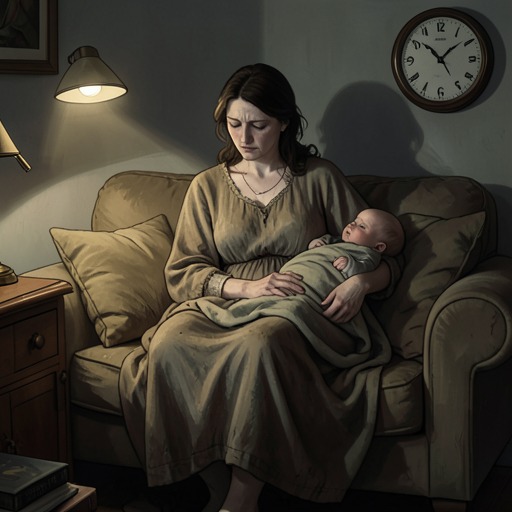
Karen arrives after Auden has found Heidi crying silently on the couch with Thisbe in her arms. Auden has tried to get Heidi to hand over the baby, but Heidi has shaken her head. When Karen comes inside, she gives Eli a clear first task: take Thisbe upstairs and swaddle her. She then stays with Heidi, reassuring Auden that Heidi will be all right and asking her to trust the help being offered.
The division of care is significant in its plainness. Eli takes responsibility for the baby, while Karen turns her attention to Heidi. Karen does not treat the distress as a failure of character or offer an abstract fix; she makes room for the exhausted mother to receive support. Her calm instructions help Auden, who has admitted she does not know what to do, step back from having to manage the crisis alone.
Experience and Advice
Karen explains that when she had Steven, her oldest child, her own mother came to live with her for a month, and that she could not have managed without that help. The comparison gives her encouragement a personal basis: needing another person’s support is part of her own experience of becoming a mother.
She also recognizes the particular absence in Heidi’s life. Heidi’s mother died a couple of years earlier, and Karen understands that Heidi has mentioned this loss. Karen describes motherhood as the hardest job in the world and concludes that Heidi needs rest. Her response links emotional reassurance to the material need that has gone unmet: someone else must help care for the baby so Heidi can recover.
Continuing Practical Support
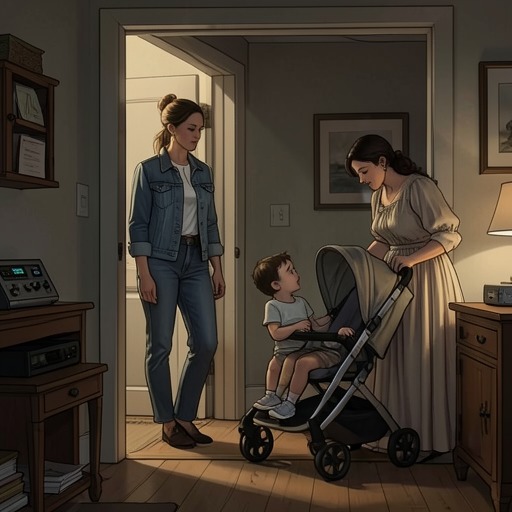
Karen’s help is not limited to the crisis at home. When Thisbe becomes unhappy in her stroller, Auden hesitates to leave her. Karen takes Thisbe from the stroller and tells Auden to go have fun, pointing out that she raised two children and can be trusted with a newborn for an hour. The offer gives Auden permission to stop treating every unsettled moment as a reason to stay on duty.
Later, when Robert and Heidi’s work arrangements have changed, Karen is among the people who care for Thisbe on days when neither parent can be home. The account notes that Karen enjoys time with the baby. Across these scenes, she provides dependable help without displacing the parents: her care gives them room to rest, work, and take part in life beyond immediate childcare.