Alpha status
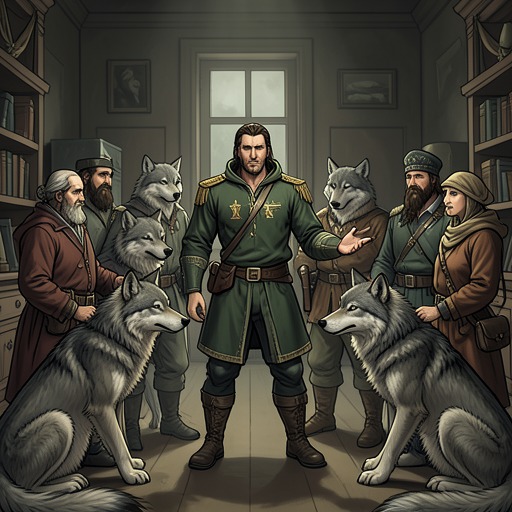
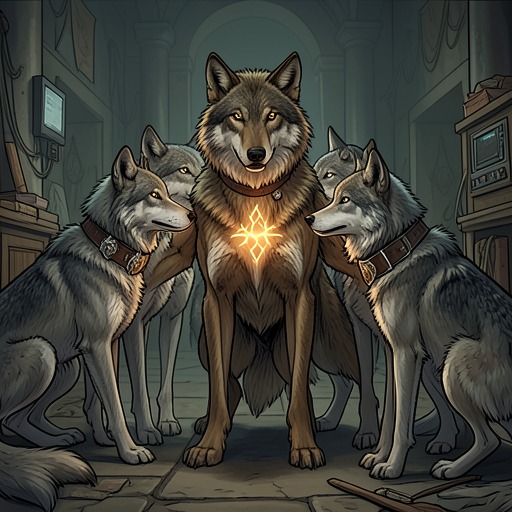
Alpha Wolf Mate Mega Bundle (Paranormal BBW Werewolf Erotic Romance 7-Pack)Alpha status is the werewolf condition’s clearest social rank, combining physical supremacy with authority over mates and pack life. The novel presents it through men whose transformations expose their supernatural power, but also through the obligations that make leadership more than domination: an alpha must protect the vulnerable, recognize a mate, secure the pack, and demand obedience within a dangerous world.
Definition and Signs
Alpha status becomes visible first through the body. In the subway, Silas’s human form tears open into a gigantic wolf, with fur engulfing his face, a snout extending from it, and his muscular body acquiring feral strength. Later, when another wolf attacks, Silas transforms again and confronts it in the darkness, his grey fur glowing with an otherworldly light. His authority is therefore not abstract. It is announced through transformation, combat, endurance, and the ability to meet another supernatural creature as an equal or superior force.
The same pattern appears in the revelations involving Lucas Wilde, Greyson, Mr. Adams, and Floyd Meriwether. Lucas Wilde changes back from a grey wolf after knocking an armed attacker unconscious in the street. Greyson’s identity is disclosed when his body shifts beside the apartment window into a huge grey wolf with enormous blue eyes, a transformation that initially makes Celia believe he intends to kill her. Mr. Adams is likewise recognized when the wolf that has fought in the office becomes the exhausted, sweat-soaked man she knows. Jillian’s realization that Floyd Meriwether is a werewolf retrospectively explains both his knowledge of Garrett and the wolf that arrived to protect her. These scenes make alpha identity a recurring threshold between ordinary social appearances and the hidden structure governing werewolf life.
Authority, Protection, and Pack Survival
An alpha’s power is repeatedly justified through protection. Silas tells Maggie that the subway is no longer safe because one enemy has already been sent after him and others will follow. He describes the conflict as an endless struggle for life and survival, then tells her that his brothers and his pack are waiting in a safer place. Safety in numbers becomes a practical expression of alpha responsibility: the pack is not merely a romantic or familial idea but a refuge from continuing violence. Silas promises that he could never allow harm to come to Maggie, while still insisting that she must trust him.
Combat gives that promise material force. When the attacking wolf reaches for Maggie, Silas knocks it from the air and pins it on the subway tracks. The fight remains dangerous enough that the other wolf nearly kills him, but the scene establishes the alpha as the figure who places his body between his mate and destruction. Lucas Wilde performs a parallel act in the street, striking the attacker before the man can draw and use a pistol. The wolf’s intervention leaves the assailant unconscious and seemingly lifeless, converting supernatural violence into immediate protection. Alpha status thus carries a paradox: the same strength that frightens human witnesses is what rescues them.
Mates, Obedience, and Recognition
Alpha status also structures intimate relationships. Silas explains his choice of Maggie by identifying qualities he believes suit a mate: physical strength, emotional strength, determination, the ability to handle herself, and the ability to listen when obedience to an alpha is required. His account joins desire to pack continuity, presenting the mate as someone who can nourish young and participate in the future of the group. When he asks Maggie whether she trusts him as his mate, her answer marks the movement from isolated fear toward acceptance of a place within his world.
Greyson frames the same process as mutual recognition. After Celia voices feelings she cannot fully explain, he tells her that he experiences the counterpart of those feelings and therefore knows that she is his mate. The declaration changes the meaning of their prior interactions: what appeared to be sudden attraction becomes part of a werewolf system of identification. In this structure, the alpha does not simply choose a partner according to ordinary courtship. He interprets an intense bodily and emotional response as evidence of a predetermined or uniquely binding relation, then asks the human partner to accept the consequences of that interpretation.
Floyd Meriwether’s relationship with Jillian makes the authority dynamic especially explicit. He says that her body, intelligence, writing, and scent drew him toward her, but that he waited because she was not ready and did not yet understand her own beauty. After revealing himself, he reassures her that she is safe because he protected her from Garrett. Jillian nevertheless recognizes that fear and desire coexist: she wants him but is frightened by his nature and uncertain what being his mate means. Her later decision to remain while he sculpts her is described in terms of alpha obedience. She understands Floyd as both the man she desires and the werewolf who cannot be separated from his identity, and she accepts that he is her alpha and she is his mate.
Leadership and the Politics of Selection
The novel repeatedly links alpha selection to evaluation. Mr. Adams says he watched Liza after hiring her and waited to discover what she was made of before deciding that she could be his mate. He names strength of character, passion, intelligence, and cunning alongside fertility and physical capacity, presenting the chosen woman as both a reproductive body and a potential contributor to pack life. He wants Liza to help raise his young and nurture his pack, so the relationship is framed as an institution with duties rather than as private desire alone.
This language of assessment echoes the human workplaces that surround the supernatural plot. Maggie earns a position at Wallace-Anderson Investment Group after outperforming other candidates on a mathematics and problem-solving test, but her new status also subjects her to long hours and late-night presentation work. Liza graduates at the top of Brooklyn Law School yet finds herself consumed by the schedule imposed by Hobson, Kinney & Dwyer and Mr. Adams, who expects employees in the office from eight in the morning until eight at night six days a week, with Sunday hours as well. In both settings, a powerful authority watches, judges, and determines worth. The difference is that alpha evaluation claims to see beyond the insecurity produced by ordinary institutions: Mr. Adams tells Liza that the features she worries about are precisely those he finds enthralling, while Silas tells Maggie that he understands her better than she understands herself.
That apparent affirmation is inseparable from control. The alpha’s gaze can convert self-doubt into belonging, but it also defines the terms on which belonging is granted. Liza’s curviness, fertility, intelligence, and capacity for care are gathered into a single argument for selection; Jillian’s body and mind are interpreted through Floyd’s desire to build a pack. Alpha status therefore creates recognition while narrowing the recognized person into a role: mate, bearer of young, nurturer, and obedient member of a hierarchy.
Revelation and Narrative Significance
Alpha status functions as the mechanism by which the novel repeatedly turns terror into explanation. A wolf in a subway tunnel is first an apparent killer; the transformation of Silas reveals a protector whose violence has a purpose. A street attack makes Lucas Wilde frightening even as he saves Carol. Greyson’s transformation threatens Celia before his confession recasts the encounter as the disclosure of a mate bond. Mr. Adams’s change overturns Liza’s understanding of his earlier cruelty, which he explains as the pressure of sensing hostile wolves in the building rather than a genuine judgment of her legal work. Floyd’s revelation similarly reorganizes Jillian’s memories of his teaching, sculpture, and intervention against Garrett.
The repeated movement from monster to alpha, and from alpha to mate, gives the rank its central narrative importance. Werewolf power is never presented only as predation. It is alternately murderous, defensive, erotic, managerial, pedagogical, and domestic. The gigantic body provokes social fear, yet the same body becomes a source of shelter when it carries Maggie through the subway tunnels or stands between a woman and an attacker. The rank also offers the women a new interpretation of traits they have been taught to distrust: bodily fullness, emotional resilience, intelligence, determination, and the desire to be cared for are recoded as evidence of worth within the pack.
At the same time, the stories preserve the unease of that recoding. The women enter the supernatural order through shock, surveillance, attack, or an involuntary revelation, and their acceptance develops under the pressure of fear, desire, and the alpha’s certainty. Alpha status consequently represents both refuge and subordination. It promises protection and a place in a collective, while requiring trust, obedience, secrecy, and submission to a leader whose physical power is overwhelming. Its significance lies in that unresolved duality: the rank makes the werewolf world legible, but it also exposes how easily safety, romance, reproduction, and authority can become parts of the same claim over another person.