Jōshicho
Alpha Wolf Mate Mega Bundle (Paranormal BBW Werewolf Erotic Romance 7-Pack)The Upper West Side is a geographically specific but symbolically unstable part of New York City. In the evidence, it appears as a polished urban environment of celebrated restaurants, expensive automobiles, renovated private buildings, and high-status professional life, yet its apparently civilized surfaces repeatedly open onto coercion, transformation, pursuit, and supernatural violence. The district’s decisive significance lies in this contrast: it converts ordinary metropolitan privilege into a gateway through which hidden werewolf identities become visible.
Setting and Urban Character
The Upper West Side is associated with 77th Street and with buildings whose luxury is measured through privacy, architectural control, and proximity to the city’s spectacle. Lucas Wilde brings Carol Grey to a luxurious building on 77th Street after their dinner, while Thomas Anderson’s residence on the Upper East Side provides a parallel image of elite urban ownership. The neighborhood therefore belongs to a broader Manhattan world in which wealth is displayed through restaurants, cars, penthouses, and buildings redesigned according to the owner’s will.
The district’s visual appeal is inseparable from its metropolitan scale. From Lucas Wilde’s apartment, Carol Grey sees New York City glittering through rain: buildings and cars shine below, traffic streams through the city, and the Hudson River appears as a dark boundary between the island metropolis and New Jersey. The view momentarily overwhelms her fear and makes the apartment seem like an elevated realm above ordinary life. That beauty is unstable, however, because the same window and penthouse become the setting for her confrontation with the man who has brought her there under threat.
Wealth, Dining, and Romantic Display
The Upper West Side is introduced through Lucas Wilde’s extravagant courtship of Carol Grey. At the best table in a restaurant, Lucas orders a $700 bottle of Krug Rosé and instructs the waiter to ask the chef for every one of his finest dishes, declaring that money is no object. The table fills with filet mignons, pistachio-crusted rack of lamb, caviar, and even sushi in the French restaurant. The abundance does more than establish Lucas’s wealth: it reshapes Carol’s insecurity into a sense that his attention confirms her specialness.
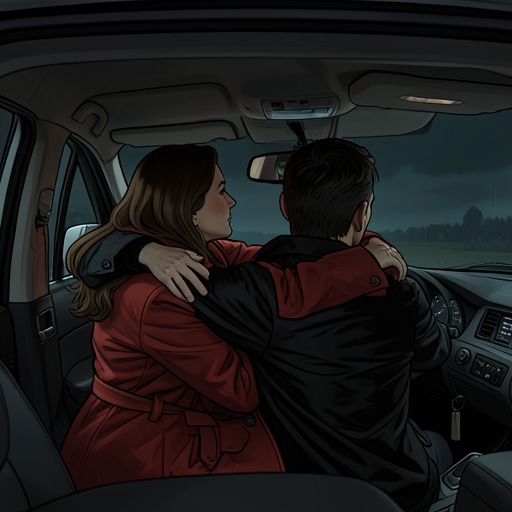
This luxury functions as romantic capital. Lucas’s class position, taste, confidence, and access to experiences unavailable to Carol make him appear both desirable and protective. His black AMG Mercedes coupe continues the performance after dinner as he drives her along the West Side Highway toward his apartment. The car’s sophistication mirrors the mystery surrounding its owner, while the movement from restaurant to private residence turns a public date into a privately controlled encounter.
Private Buildings and Concealed Power
The Upper West Side setting intensifies the connection between architecture and authority. Lucas’s building is not merely a home but the next enclosure in a sequence that moves Carol away from public protection. After Lucas attacks a threatening man in the street while transformed into a gigantic grey wolf, he returns to human form and orders Carol to come with him. He threatens to kill both her and the doorman if she screams. They then enter the building hand in hand, presenting themselves as a perfect couple while concealing the violence that has just occurred outside.
The elevator carries them rapidly to Lucas’s penthouse, where the polished façade of social respectability remains intact even as Carol understands that she is not free. The doorman receives Lucas’s smile and wave, but inside the elevator Lucas’s face becomes stern and silent. The building thus divides appearance from knowledge: in the lobby, the pair can pass as an ordinary couple; beyond the doors, Carol is trapped with a man whose supernatural nature and intentions she does not understand.
Thresholds of Werewolf Revelation
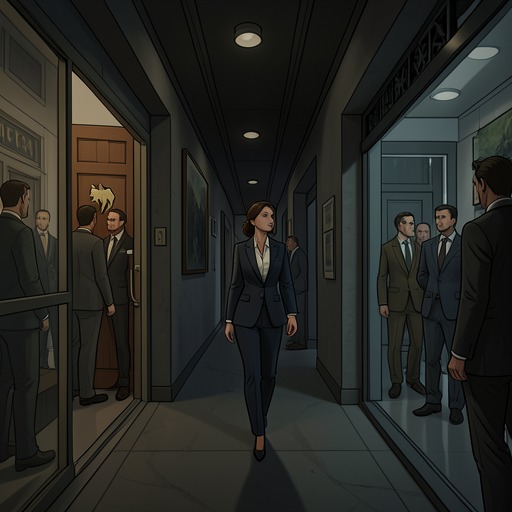
The Upper West Side belongs to the book’s recurring urban pattern in which modern infrastructure becomes a threshold to the supernatural. Subway cars, underground tracks, dark streets, elevators, private apartments, and office corridors all begin as familiar city spaces before a werewolf transformation breaks their ordinary logic. The subway episode makes this pattern especially stark: a man follows a woman from the train, transforms into a gigantic wolf, carries her onto the tracks, and is then opposed by Silas, who transforms into the luminous grey wolf she has seen before. The underground transit system becomes an arena for a violent contest over her fate.
The same revelation pattern recurs in elite interiors. Greyson transforms in an apartment, changing from a muscular man into a gigantic grey wolf with enormous glowing blue eyes before approaching the terrified woman nearby. Mr. Adams transforms after Liza witnesses a brutal fight, then returns to human form while retaining the otherworldly glow in his ice-blue eyes. Jillian’s realization that Floyd Meriwether is a werewolf similarly reorganizes earlier events: his knowledge of Garrett and his timely rescue of her suddenly acquire a supernatural explanation. Across these scenes, the Upper West Side’s refined urban setting helps conceal the werewolf world until bodily transformation makes hidden identity undeniable.
Narrative Significance
The Upper West Side embodies the book’s urban Gothic tension between glamour and threat. Its restaurants and luxury buildings promise access to a privileged life, but their wealth can also facilitate control, isolation, and silence. The neighborhood’s rain-bright skyline offers sublime beauty at the same moment that a woman stands under coercion; its streets support both the spectacle of a luxurious arrival and the eruption of a gigantic wolf against an armed attacker.
Because the district repeatedly links social elevation with supernatural exposure, it becomes more than a backdrop. The upward journey to a penthouse contrasts with the downward movement into subway darkness, yet both routes lead toward the same hidden reality: the city contains a werewolf society operating beneath the visible order of work, money, romance, and manners. The Upper West Side’s central narrative function is therefore to make monstrosity inseparable from modern sophistication. The werewolf is not confined to wilderness or legend; he can be a celebrated, wealthy, professionally powerful man whose private spaces stand within one of Manhattan’s most recognizable urban environments.