
The Contest for Musical Authority
AmadeusThis flow charts the conflict between Mozart’s confidence in musical necessity and courtly authorities who claim the right to define good taste.
increasing Bearing strength in each event
 decreasing
Bearing strength in each eventdecreasingThe Note Count

The Note Count
Authority judges the score
Joseph II tells Mozart that the opera contains too many notes, turning a musical judgment into an imperial verdict. Salieri cautiously agrees, prioritizing courtly safety over the composer’s defense.
Mozart’s answer
Mozart insists that every note is necessary. His confidence rests on a compositional logic that the emperor cannot fully hear or explain.
The dispute establishes a recurring conflict: the person with institutional authority is not necessarily the person best able to judge the music.
The Genius of the Ensemble

The Genius of the Ensemble
Multiple minds at once
Mozart describes how an ensemble can express several characters’ thoughts simultaneously, transforming private motives into a larger musical whole. He imagines the combined sound as something like the way God hears the world.
A new artistic claim
His argument is more than a defense of comic opera: it proposes that musical form can represent social reality more fully than speech alone. Salieri listens, fascinated, even as he remains Mozart’s rival.
The scene reveals an authority grounded in artistic insight rather than rank or reputation.
The Unheard Masterpiece
The Unheard Masterpiece
Recognition by a rival
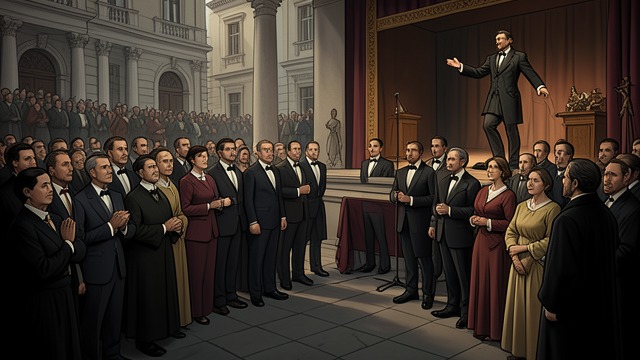
Salieri understands Figaro’s intricate emotional design and believes it will endure. The audience and emperor respond with restraint, leaving the composer without the recognition his achievement warrants.
Taste and power diverge
The work’s limited reception exposes the difference between artistic judgment and public fashion. Salieri’s own popular successes receive applause even as he privately considers them inferior.
Musical authority remains divided among the composer, the court, and the listeners who may not yet understand what they have heard.
After The Abduction from the Seraglio premiere
During the argument over Figaro
At the later reception of Figaro
