
The Final Psychological Siege
AmadeusThis flow follows the transformation of Mozart’s fears into instruments that Salieri uses to intensify the final conflict.
increasing Bearing strength in each event
 decreasing
Bearing strength in each eventdecreasingThe Recurring Figure
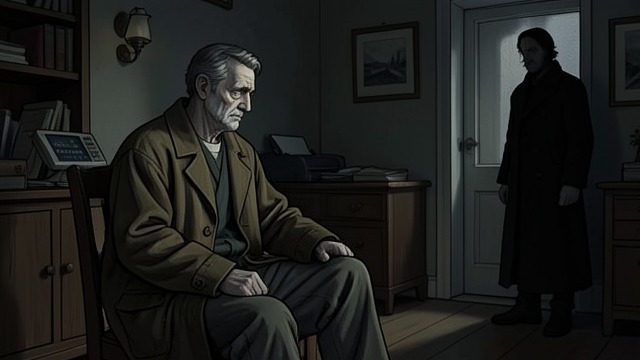
The Recurring Figure
Fear takes shape
Mozart describes a recurring dream of a gray, faceless figure beckoning him. He dismisses the dream as fantasy, but his unease and physical symptoms suggest that it is becoming difficult to contain.
A private vulnerability
Constanze is frightened by the way Mozart dwells on the vision. Salieri, meanwhile, learns that the figure has become an important part of Mozart’s psychological life.
The image gives Salieri a means of pressure that is more intimate than professional sabotage.
The Commission’s Shadow
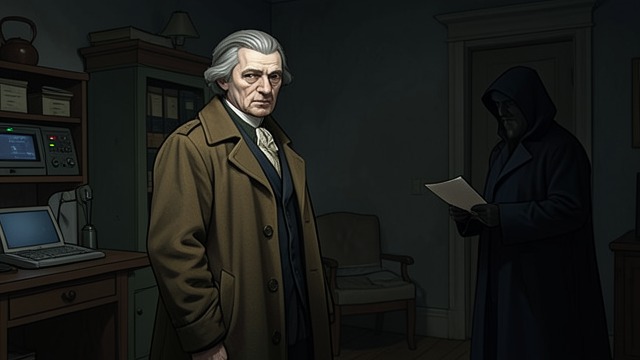
The Commission’s Shadow
Work fused with dread
The gray messenger’s request for a Requiem seems to confirm Mozart’s fear that the vision carries a real warning. Illness, exhaustion, and the music’s subject reinforce each other.
Reality and imagination blur
Mozart cannot tell whether the figure appeared in his mind or in the room. He continues composing while believing that the work may be for his own death.
The uncertainty allows Salieri’s deception to feel supernatural to Mozart while remaining a human act of manipulation.
A Voice Reduced to Childhood
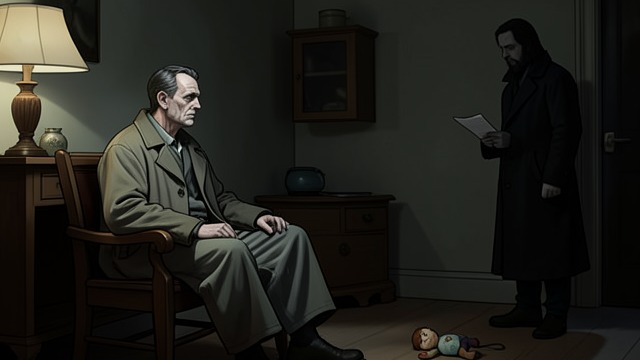
A Voice Reduced to Childhood
The revelation
Salieri admits that he is the gray messenger and tells Mozart that God has abandoned him. Mozart breaks down and cries for his father, retreating into a childlike state.
Cruelty’s consequence
Salieri describes the moment as the degradation of both man and God. Constanze returns to find Mozart confused and dying, and his accusations cannot be separated from his illness or Salieri’s intimidation.
The psychological siege ends in collapse rather than a clear victory, leaving Salieri horrified by what his campaign has done.
During Mozart’s later years
After the Requiem is commissioned
During Salieri’s final encounter with Mozart
