
Mozart’s Declining Health
AmadeusThis flow traces Mozart’s physical and psychological deterioration without reducing the play’s uncertainty about its cause.
increasing Bearing strength in each event
 decreasing
Bearing strength in each eventdecreasingPain Beneath Success
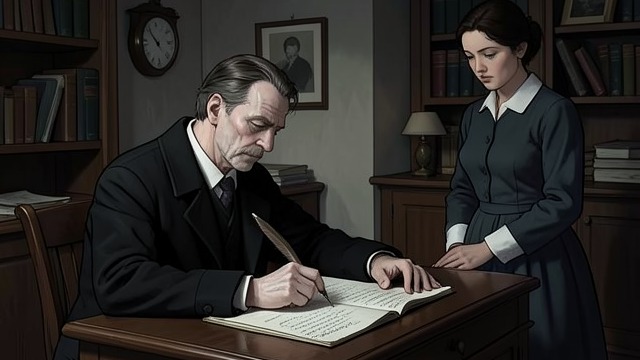
Pain Beneath Success
Symptoms emerge
Mozart complains of stomach cramps, pain, and poor sleep. His professional prospects worsen at the same time, making physical illness inseparable from the pressures of poverty and anxiety.
Concern without diagnosis
Salieri asks after his health but has no reliable explanation for the symptoms. Constanze urges Mozart to seek a more stable position, while he tries to reassure both her and himself.
The play presents decline through observation and uncertainty rather than a settled medical account.
Visions Become Real
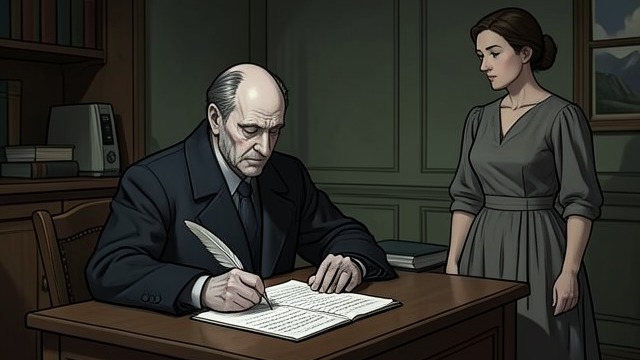
Visions Become Real
A recurring fear
Mozart speaks of a gray figure that beckons him and later reports seeing it while awake. The commission to write a Requiem gives the vision a concrete, frightening purpose.
Isolation deepens
Constanze finds his descriptions frightening and eventually leaves, while Salieri encourages the atmosphere of dread by impersonating the messenger. The composer’s vulnerability becomes both a symptom of distress and a target for manipulation.
The play leaves open where illness ends and deception begins, intensifying the tragedy without offering a diagnosis.
A Body That Cannot Continue
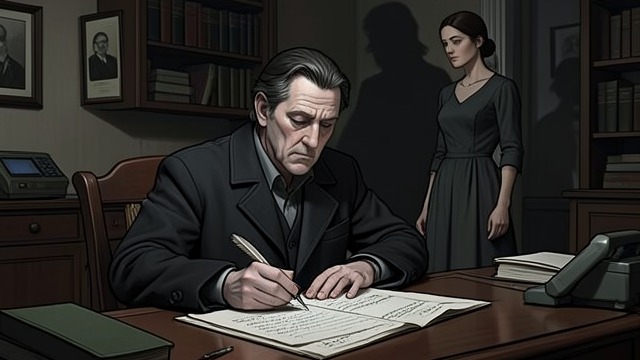
A Body That Cannot Continue
Music outlives strength
Mozart continues composing the Requiem even as his strength fails. He can still hear the music internally, but his body can no longer sustain the work.
Death and uncertainty
He dies before finishing the score, and the official cause is described as kidney failure accelerated by exposure to cold. The drama does not provide definitive proof that Salieri poisoned him, despite Salieri’s repeated claims.
The unresolved cause preserves the distinction between the play’s theatrical accusation and what can be established within its own events.
During Mozart’s later Viennese years
After Mozart receives the Requiem commission
At the end of 1791
