
The Ordinary Made Sublime
AmadeusThis flow develops the play’s contrast between ordinary human experience and art capable of making it feel enduring.
increasing Bearing strength in each event
 decreasing
Bearing strength in each eventdecreasingCourt Life as Ceremony
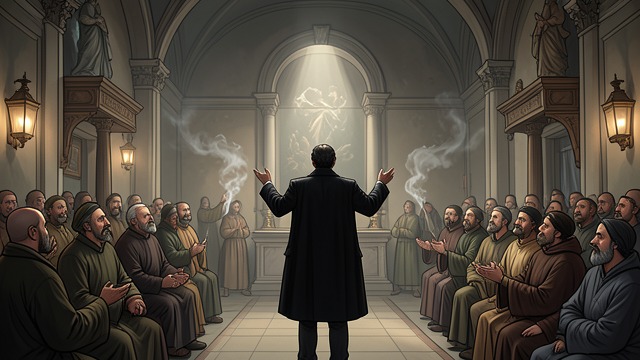
Court Life as Ceremony
Music dignifies the routine
Salieri describes composers as servants who give grandeur to bankers, soldiers, clergy, and ordinary spouses. Music marks births, deaths, celebrations, and public ambition, making everyday lives feel solemn.
A claim for artistic service
He argues that artists preserve the emotional atmosphere of an age even after its politics have been forgotten. The composer’s service is therefore not merely submission to patrons.
The speech establishes art as a means of giving ordinary experience lasting form.
Figaro’s Human Reality

Figaro’s Human Reality
Intimacy becomes dramatic material
Figaro’s garden finale turns disguise, marital disappointment, and the desire for tenderness into a complex musical scene. Salieri recognizes that the opera gives ordinary relationships a depth that heroic legend cannot supply.
Art exceeds its first audience
The emperor yawns and the applause remains limited, but Salieri believes the work will endure. Its immediate reception cannot settle its value.
The opera embodies Mozart’s conviction that the everyday can carry the weight of serious art.
A Popular Sacred World

A Popular Sacred World
The theater beyond court
The Magic Flute reaches a crowded popular audience rather than an elite imperial gathering. Its humor and accessible setting carry ideals of brotherhood and moral transformation.
A new kind of elevation
Salieri hears the audience’s noisy pleasure alongside a vision of a sacred world. The work makes transcendence available through popular entertainment rather than court ceremony.
The opera expands the play’s claim that artistic greatness can arise from ordinary settings and reach ordinary people.
During Salieri’s account of the 1781 court
At the premiere of Figaro
At The Magic Flute’s opening
