
God’s Instrument and Human Cost
AmadeusThis flow examines the image of Mozart as God’s instrument and the human suffering hidden inside that metaphor.
increasing Bearing strength in each event
 decreasing
Bearing strength in each eventdecreasingThe Chosen Voice

The Chosen Voice
Music as evidence
Salieri believes that Mozart’s music carries a divine voice. He cannot dismiss the sound even though Mozart’s behavior offends his ideals of discipline and virtue.
The composer as vessel
Mozart appears to Salieri less like a conventional craftsman than an instrument through which something greater speaks. That perception makes Salieri’s admiration nearly religious.
The metaphor elevates Mozart but begins to obscure the vulnerable person who produces the music.
The Cost of Being Used

The Cost of Being Used
A body under demand
Salieri imagines God as an inexhaustible force that demands music from Mozart without concern for the man’s suffering. The composer’s poverty and illness make the metaphor feel cruel rather than celebratory.
The flautist and the flute
Salieri describes the divine breath continuing until the instrument cracks. The image expresses compassion for Mozart, but it also turns his death into part of Salieri’s theological argument.
The play asks whether reverence for artistic genius can become another way of neglecting the artist’s human needs.
The Instrument Survives
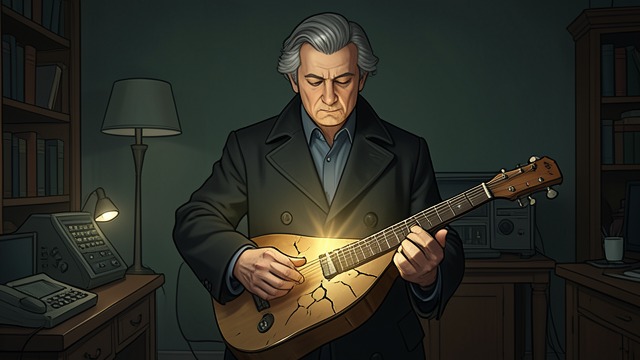
The Instrument Survives
Music beyond the body
Mozart dies, but the Requiem and his other works continue to be heard. Salieri himself conducts the Requiem, remaining close to the music after its creator is gone.
A troubling legacy
The survival of the work can be read as triumph, but it does not compensate for the poverty, fear, and illness that marked Mozart’s final years. Salieri’s metaphor of divine use is both an explanation of greatness and an accusation against the divine.
The play leaves the audience to weigh artistic endurance against the human cost of its creation.
After Salieri first hears Mozart’s music
During Mozart’s final illness
After Mozart’s death
