
The Final Requiem
AmadeusThis flow traces the Requiem commission from mysterious request to Mozart’s death and the unresolved legacy of its completion.
increasing Bearing strength in each event
 decreasing
Bearing strength in each eventdecreasingThe Gray Visitor
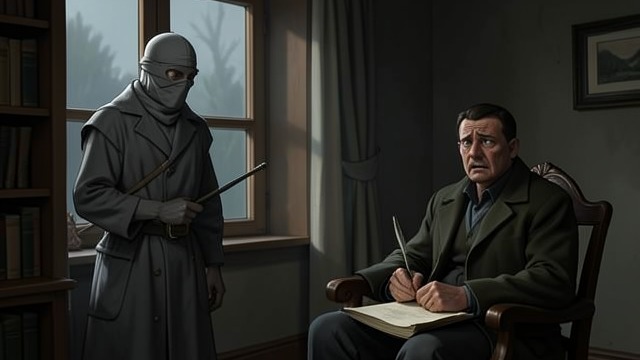
The Gray Visitor
A disturbing commission
A gray-clad messenger visits Mozart and orders him to write a Requiem. Mozart does not know that the mysterious request comes from Count Walsegg, who plans to claim the work as his own.
Fear enters the work
Already troubled by pain and recurring visions of a faceless figure, Mozart begins to interpret the commission as a message about his own death. The music becomes entangled with his fear and physical exhaustion.
The commission supplies the play’s ominous image of art being produced under the shadow of mortality.
The Seven Nights
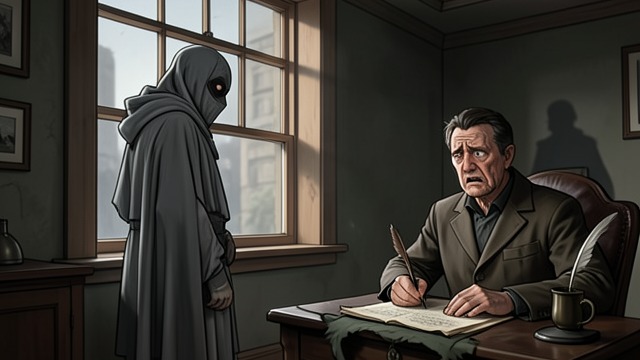
The Seven Nights
A counterfeit messenger
Salieri admits that he obtains a gray cloak and mask and appears outside Mozart’s window for seven nights. He repeats the frightening image already haunting the composer and turns an imagined summons into a deliberate campaign of intimidation.
Terror used as leverage
Mozart responds to the masked figure as though it were an emissary from beyond the human world. Salieri’s deception exploits illness, exhaustion, and the Requiem’s ominous circumstances.
The episode makes Salieri’s rivalry materially dangerous, even though the play does not establish that he caused Mozart’s physical disease.
Death Before Completion
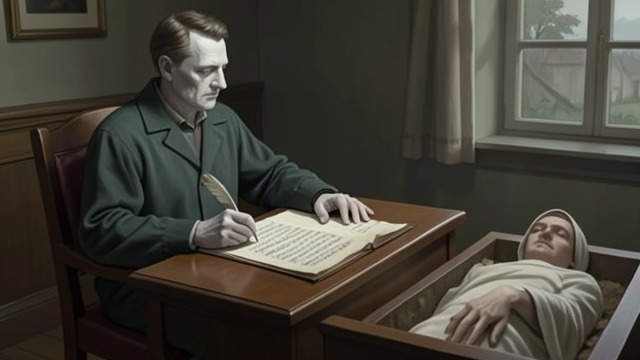
Death Before Completion
An unfinished work
Mozart labors on the Requiem while ill and increasingly dependent on Constanze. The music continues in his mind even when he can no longer sustain the physical effort of writing.
The final collapse
Mozart dies as the work remains unfinished. His body receives a pauper’s burial in a shared grave, and Constanze is left to gather the papers and care for their children.
Salieri later conducts the Requiem, a bitter culmination of his proximity to the music he envies and the man he claims to have destroyed.
During Mozart’s final period of illness
November 1791, during the final weeks
Late 1791, at Mozart’s death
