
Mozart and the Emperor
AmadeusThis flow follows the uneven relationship between Mozart and Joseph II, where curiosity and limited support never amount to lasting protection.
increasing Bearing strength in each event
 decreasing
Bearing strength in each eventdecreasingAn Enthusiastic Welcome

An Enthusiastic Welcome
The emperor’s curiosity
Joseph II welcomes Mozart with excitement, recalls meeting him as a child, and jokes about a possible contest between virtuosos. Mozart answers with extravagant deference and a torrent of charm.
A promising commission
The emperor has commissioned a German comic opera and is intrigued by Mozart’s plans for The Abduction from the Seraglio. Their meeting suggests that Mozart may find a receptive patron at court.
The warmth is genuine but personal; it does not yet establish the durable institutional support Mozart needs.
Too Many Notes

Too Many Notes
A royal judgment
After the opera, Joseph tells Mozart that it contains too many notes. Mozart answers that it contains exactly as many as necessary, defending his composition without disguising his frustration.
A patron’s limits
The emperor is interested in music but measures it through his own preferences and attention span. Salieri’s uneasy agreement with the criticism shows how court etiquette can pressure artists to validate a ruler’s taste.
The exchange condenses the distance between Mozart’s compositional confidence and the authority that controls access to the court.
Permission for the Dance
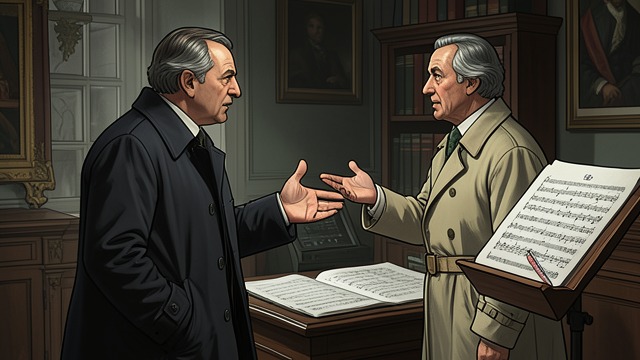
Permission for the Dance
A rule enforced
Count Orsini-Rosemberg removes dance music from Figaro, invoking Joseph’s restriction on ballet in opera. Mozart protests that the dance belongs to the story, but the director treats the decree as absolute.
A qualified intervention
Joseph attends the rehearsal and dislikes the resulting silent dance. He orders the music restored, supporting Mozart in this instance while retaining the power to criticize and limit his work later.
The intervention shows that imperial favor can reverse an obstacle without removing the larger insecurity of court dependence.
At Mozart’s first court audience
At the premiere of The Abduction from the Seraglio
During Figaro’s dress rehearsal
