
The Cost of the Communist Label
American PrometheusThis thread traces how the shifting meaning of communism transformed political association into a tool for discrediting Oppenheimer and his circle.
increasing Bearing strength in each event
 decreasing
Bearing strength in each eventdecreasingPopular Front Context
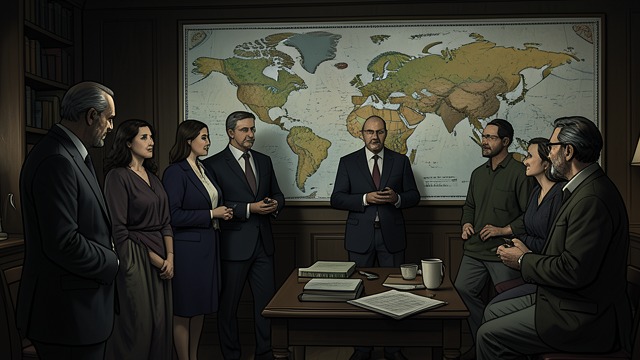
Popular Front Context
Shared causes
Many Americans, including New Deal liberals, worked with Communist Party members on labor, civil rights, and anti-fascist causes. Political boundaries were less rigid than they later appeared.
Oppenheimer’s place
Oppenheimer supported many of these causes and knew numerous members, but did not submit to Party discipline. His politics were progressive, social, and personal at once.
A Membership Disputed
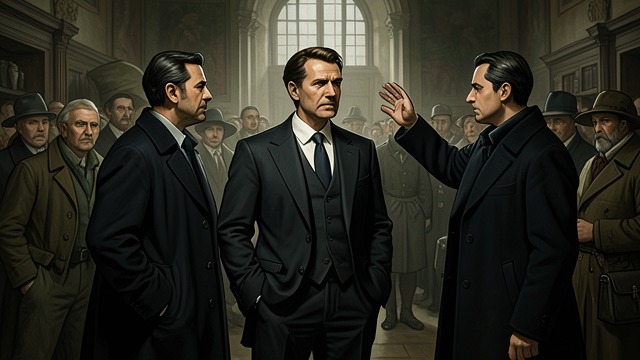
A Membership Disputed
Conflicting testimony
Chevalier and Gordon Griffiths later described Oppenheimer as part of a closed Party group. Oppenheimer denied membership, and other witnesses described him as independent and undisciplined.
No decisive record
The FBI never found a definitive party card or proof that he accepted Party discipline. The record stayed ambiguous, partly because the organization itself blurred formal membership and political sympathy.
War Changes the Label
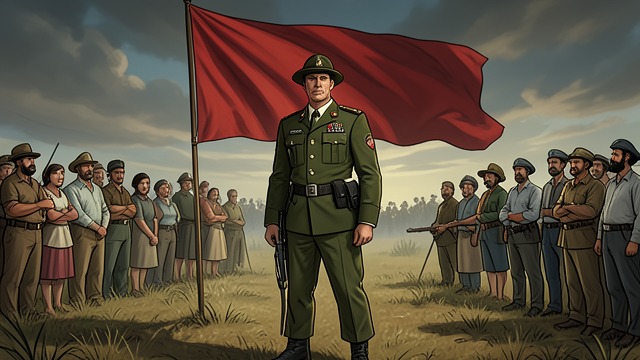
War Changes the Label
An ally, then an enemy
During World War II, the Soviet Union was an American ally and left-wing causes retained legitimacy. After the war, those same associations were recoded as evidence of danger.
A shifting standard
Oppenheimer’s political history did not change as quickly as the political climate around it. What had been ordinary association became grounds for investigation.
The Label in Court
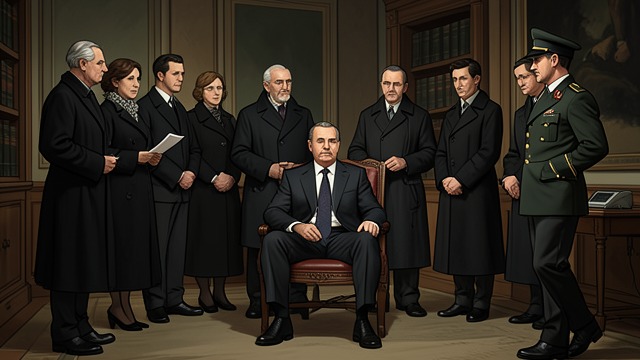
The Label in Court
A political accusation
Congressional committees and the AEC invoked communist associations to test loyalty and judgment. No proof of atomic espionage was required to make the label damaging.
Friends become evidence
Oppenheimer’s relationships with students, activists, and former lovers were recast as a network. The process blurred the distinction between radical belief and treason.
The Liberal Setback
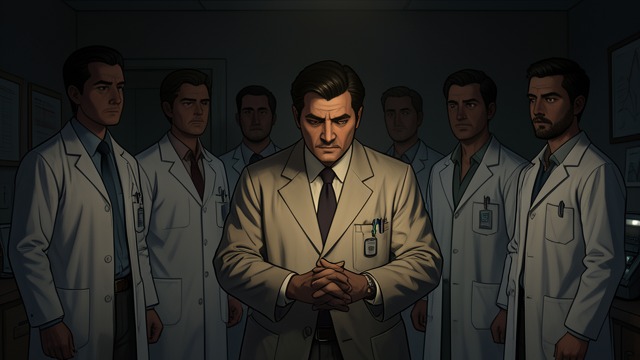
The Liberal Setback
A narrowed debate
Oppenheimer’s case made it dangerous for liberal scientists to challenge national-security policy. Many learned to remain within official channels or withdraw from public controversy.
A lasting consequence
The episode weakened the postwar hope that expertise and public reason could restrain military power. It became part of a broader setback for American liberalism.
1930s, during the Great Depression
1938–1942, during the Berkeley discussion years
1941–1945, from the Soviet alliance to postwar suspicion
1949–1954, from HUAC to the AEC hearing
After June 1954, following the clearance decision
