
From Laboratory to National Counsel
American PrometheusThis thread tracks Oppenheimer’s postwar effort to influence nuclear policy and his gradual realization that access to power did not mean control over decisions.
increasing Bearing strength in each event
 decreasing
Bearing strength in each eventdecreasingA Public Warning

A Public Warning
A changed world
Oppenheimer spoke publicly about the bomb as a weapon of terror, not merely a new military tool. He warned that the Hiroshima pattern could define future warfare.
A scientist enters politics
His fame gave him access to officials and audiences. He tried to translate scientific knowledge into a warning about secrecy, arms racing, and the limits of military defense.
The Interim Committee
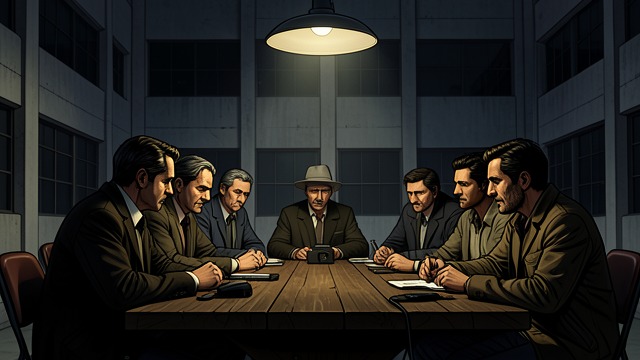
The Interim Committee
Advising on use
Oppenheimer joined the scientific panel advising the government on atomic policy. He argued for informing the Soviet Union and for recognizing the weapon’s revolutionary implications.
Compromise and silence
He did not prevent the decision to use the bomb on Japanese cities without warning. His arguments for openness competed with his limited authority and his belief that the war effort must proceed.
The International Control Plan
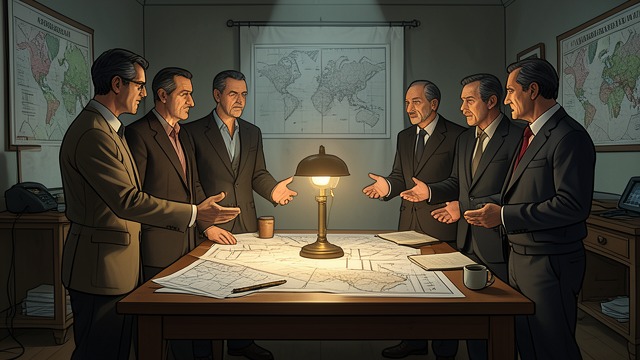
The International Control Plan
A comprehensive proposal
Oppenheimer helped shape a plan for international ownership and management of atomic resources. It sought to prevent secret national bomb programs while preserving peaceful development.
A lost opportunity
The plan’s sweeping demands collided with U.S. and Soviet distrust. Bernard Baruch’s revised proposal emphasized enforcement and American advantage, and the chance for early cooperation collapsed.
Advising the AEC
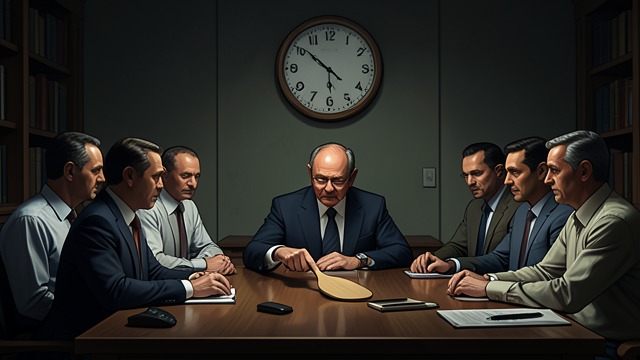
Advising the AEC
A policy insider
Oppenheimer chaired the General Advisory Committee and advised on research, weapons, and nuclear energy. He hoped to temper military planning with scientific judgment and political realism.
Influence with limits
His position gave him a voice but not decisive power. Repeated disagreement over secrecy, military priorities, and the future of nuclear weapons widened the gap between advice and policy.
The Public Intellectual

The Public Intellectual
A constrained voice
Stripped of government clearance, Oppenheimer continued to speak about science, culture, and responsibility. He largely avoided direct political confrontation, even when troubled by nuclear policy.
A different authority
His influence shifted from official counsel to public reflection. The man once central to government planning became an ambiguous, admired intellectual outsider.
Autumn 1945, after the bombings of Japan
May–June 1945, in Washington
1946, during the Acheson-Lilienthal deliberations
1947–1949, as chairman of the General Advisory Committee
1955–1963, after the security hearing
