
The Allegations of William Borden
American PrometheusThis thread traces how Borden converted accumulated suspicion about Oppenheimer into a formal accusation that drove the 1953 security action.
increasing Bearing strength in each event
 decreasing
Bearing strength in each eventdecreasingA Staff Director’s Suspicions
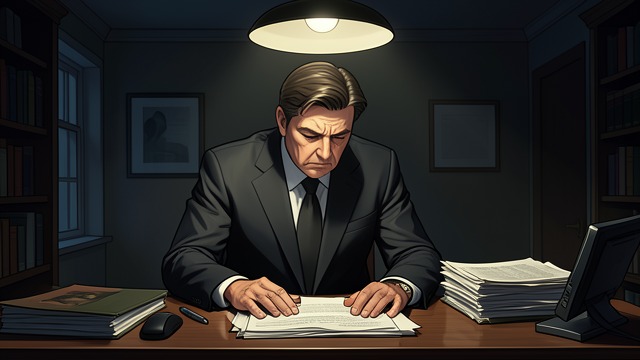
A Staff Director’s Suspicions
Concern becomes a theory
William Liscum Borden believed Oppenheimer’s policy influence was dangerous and suspected his past political associations hid a deeper allegiance. His views were reinforced by Strauss and Edward Teller.
A narrative of obstruction
Borden interpreted opposition to strategic bombing and the hydrogen bomb as part of a pattern. He increasingly treated Oppenheimer’s dissent as evidence rather than a position to debate.
The Case File Reopened
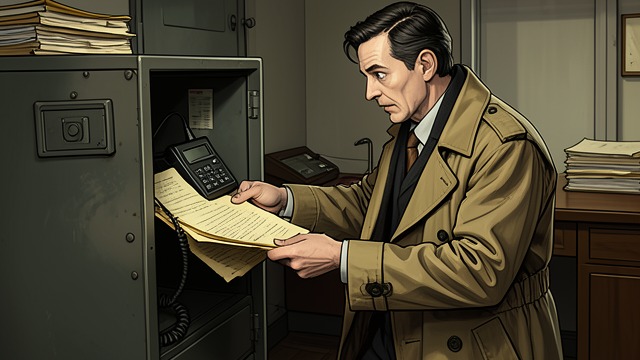
The Case File Reopened
A secret review
Borden obtained access to Oppenheimer’s AEC security file and assembled old reports, wiretaps, and allegations. Much of the material had already been examined in earlier clearance decisions.
A prosecutor’s brief
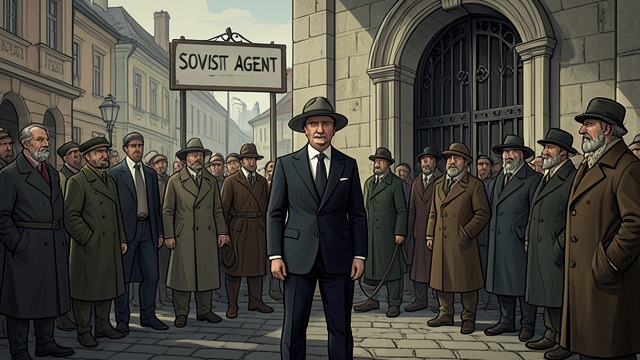
He turned ambiguous evidence into a concise accusation of Soviet agency. The conclusion went beyond what the records established, but it gave Strauss a political instrument.
The Letter to Hoover
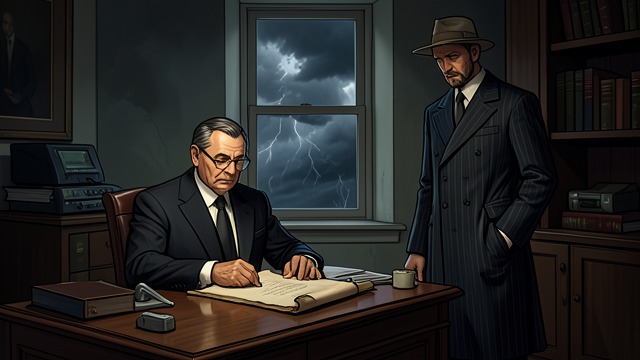
The Letter to Hoover
A shocking conclusion
Borden wrote J. Edgar Hoover that Oppenheimer was more likely than not an agent of the Soviet Union. The claim rested on political associations and disputed interpretations, not proof of espionage.
The machinery activates
The letter reached senior officials and helped prompt an immediate barrier between Oppenheimer and classified information. His advisory role was now at risk.
Strauss Uses the Letter
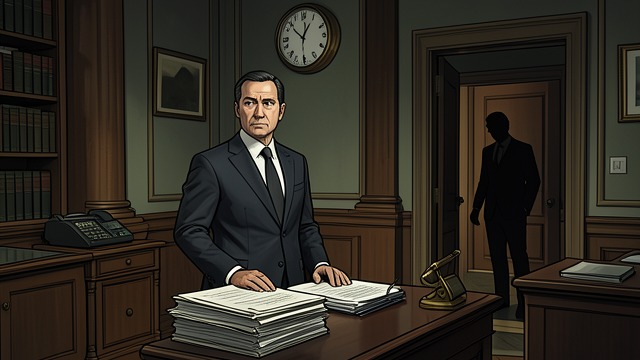
Strauss Uses the Letter
An administrative campaign
Strauss used Borden’s accusation to justify a review and suspended Oppenheimer’s clearance. The case was framed as a question of security, though policy disagreements were central.
A hearing designed to persuade
The letter’s allegations shaped the hearing’s atmosphere before Oppenheimer could respond. Strauss’s management of the process helped turn suspicion into an official verdict.
The Accusation’s Legacy
The Accusation’s Legacy
Reputation damaged
Borden’s claims helped remove Oppenheimer from government service even though no espionage was proven. The allegation that he was a Soviet agent was repeated in political circles as if established fact.
A failed judgment
Later evidence and the hearing transcript exposed the thin basis of the claim. The letter remains a stark example of suspicion acquiring the force of policy.
1949–1952, while Borden worked on atomic affairs
Spring–autumn 1953, as Borden reviewed the security dossier
November 1953, before Eisenhower’s directive
December 1953, during the clearance suspension
1954 onward, after the public decision
