
Boris Pash’s Suspicion
American PrometheusThis thread follows Pash’s pursuit of alleged espionage in Berkeley and the way his suspicions shaped Oppenheimer’s security history.
increasing Bearing strength in each event
 decreasing
Bearing strength in each eventdecreasingA Career of Counterintelligence
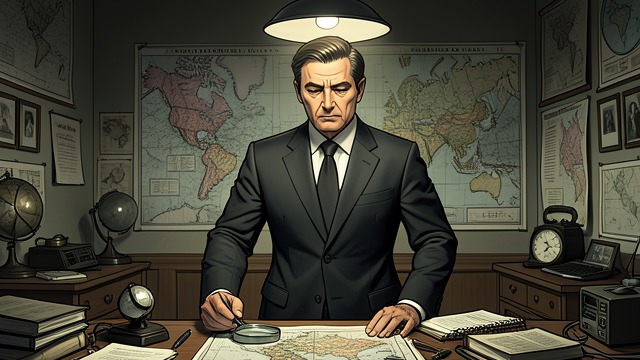
A Career of Counterintelligence
An enemy within view
Boris Pash regarded Soviet influence as a major threat and treated political association as a possible security danger. His authority expanded as the Manhattan Project became a military priority.
Suspicion as method
Pash was convinced that a network might be seeking bomb information. He approached the Berkeley investigation with a readiness to infer conspiracy from contacts and political beliefs.
The Nelson–Weinberg Recording
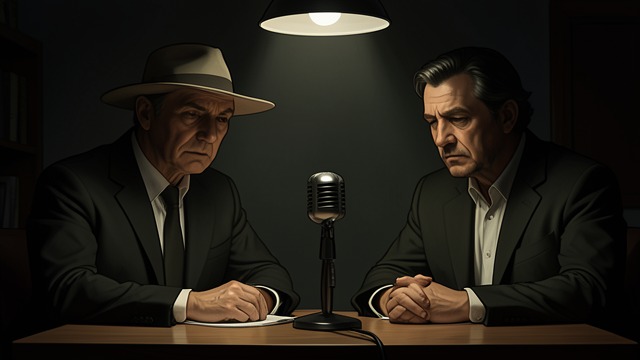
The Nelson–Weinberg Recording
A whispered conversation
An FBI microphone recorded Joseph Weinberg discussing a secret project with Steve Nelson. The evidence was obtained illegally but passed to Army intelligence.
An investigation accelerates
Pash interpreted the conversation as evidence of espionage and focused on Berkeley physicists. The recording strengthened his suspicion of Oppenheimer even though it showed the director withholding information.
An Interrogation Without Preparation
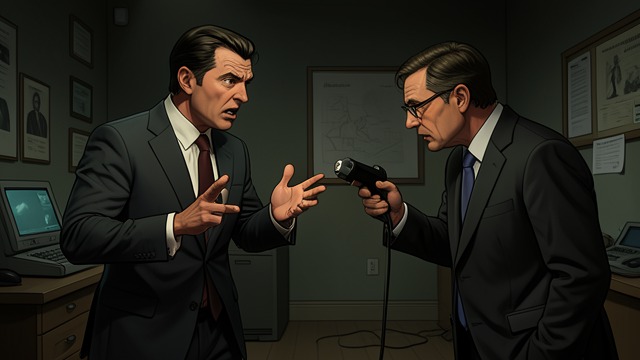
An Interrogation Without Preparation
A sudden confrontation
Pash questioned Oppenheimer about Soviet approaches without warning. Oppenheimer tried to explain the context and protect people he thought innocent.
A record for later use
His loose and inaccurate account was recorded. Years later, the transcript would be used to argue that Oppenheimer could not be trusted, though it established no espionage.
A Plan to Abduct Suspects

A Plan to Abduct Suspects
Escalation beyond law
Pash considered kidnapping and interrogating several physicists at sea. The FBI objected because any such operation would be illegal and potentially fatal.
Security excess exposed
The plan revealed how anticommunist suspicion could push officials toward extrajudicial measures. Oppenheimer’s people were treated as threats before their actions were established.
Pash’s Suspicion Survives
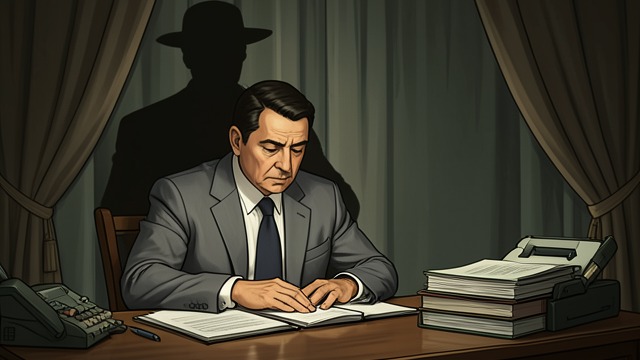
Pash’s Suspicion Survives
Evidence reinterpreted
Although Pash’s investigation found no usable proof of espionage by Oppenheimer, its assumptions persisted in the security file. Strauss and Robb later revived the same suspicions.
A lasting consequence
The episode demonstrates how an unproven theory can shape administrative judgments long after its original investigators have moved on.
1942–1943, on the American West Coast
March 1943, during an FBI wiretap
August 1943, during Oppenheimer’s interview
July 1943, during the Berkeley investigation
1954, when the old inquiry resurfaced
