
The Lasting Legacy of the Oppenheimer Hearing
American PrometheusThis thread traces the hearing’s immediate verdict, public response, later rehabilitation, and continuing influence on debates about security and dissent.
increasing Bearing strength in each event
 decreasing
Bearing strength in each eventdecreasingClearance Revoked
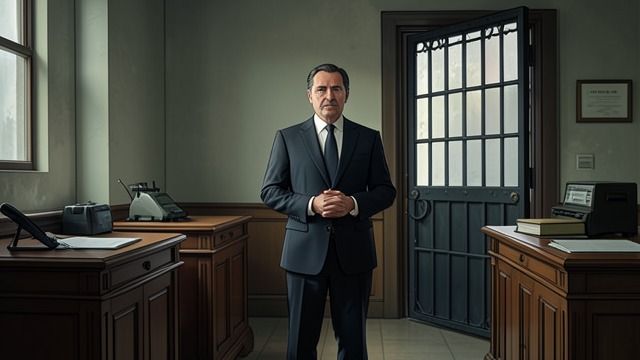
Clearance Revoked
A narrow decision
The AEC commissioners upheld the judgment against Oppenheimer. They described him as loyal but a security risk, leaving him without access to government secrets.
A life redirected
He remained director of the Institute for Advanced Study, but his advisory career had ended. His public role shifted away from official policy.
A Public Controversy

A Public Controversy
Support and condemnation
Scientists and liberals protested the verdict, while conservative commentators praised it. The published hearing record made Oppenheimer’s private history available to a mass audience.
A new public image
He became simultaneously a suspect, a martyr, and a symbol of scientific power. The competing images shaped how Americans understood both the man and the atomic age.
Life After Excommunication

Life After Excommunication
Work continues
Oppenheimer continued as director of the Institute for Advanced Study and remained a respected public lecturer. He withdrew from the official nuclear-policy world but did not stop thinking about it.
A quieter authority
His influence became cultural and intellectual rather than administrative. Friends saw both a wounded man and a more reflective one.
The Fermi Award

The Fermi Award
A symbolic return
President Lyndon B. Johnson presented Oppenheimer with the Enrico Fermi Prize. The award acknowledged his service and signaled a measure of political rehabilitation.
No full restoration
The honor did not restore his security clearance or erase the hearing. The encounter with Edward Teller showed that personal wounds remained close to the surface.
A Legacy Reconsidered
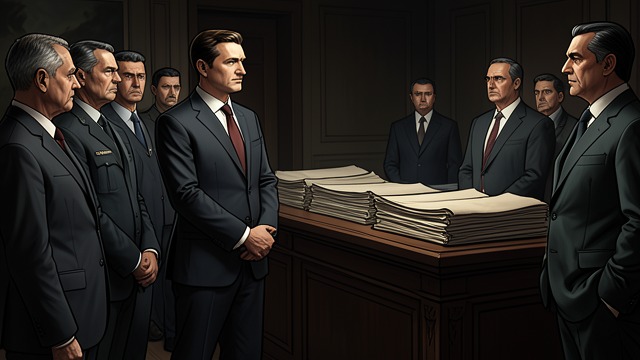
A Legacy Reconsidered
A public life remembered
Obituaries praised Oppenheimer’s scientific leadership and mourned the way the government treated him. Later drama and scholarship turned the hearing into a defining episode of the Cold War.
Contradiction endures
His legacy includes both the creation of an atomic weapon and the effort to limit nuclear danger. The hearing remains a test of how democracies treat expertise, loyalty, and dissent.
June 1954, after the AEC commissioners reviewed the board’s report
Summer 1954, after the decision became public
1954–1963, at the Institute and on St. John
December 1963, at the White House
1967 onward, after Oppenheimer’s death
