
The Atomic Project and Its Director
American PrometheusThis thread follows the creation of Los Alamos and the transformation of Oppenheimer from a theorist into a wartime scientific leader.
increasing Bearing strength in each event
 decreasing
Bearing strength in each eventdecreasingFission’s Implications
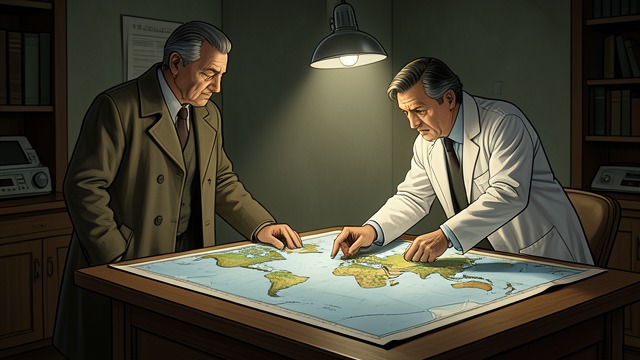
Fission’s Implications
A practical possibility
News of nuclear fission reached Berkeley, where Oppenheimer quickly grasped that released neutrons might sustain a chain reaction. The discovery linked abstract physics to a potentially decisive weapon.
A new urgency
He saw both scientific excitement and lethal possibility. The emerging bomb project would eventually give him a route from theoretical speculation to direct service in wartime.
The Fast-Neutron Seminar
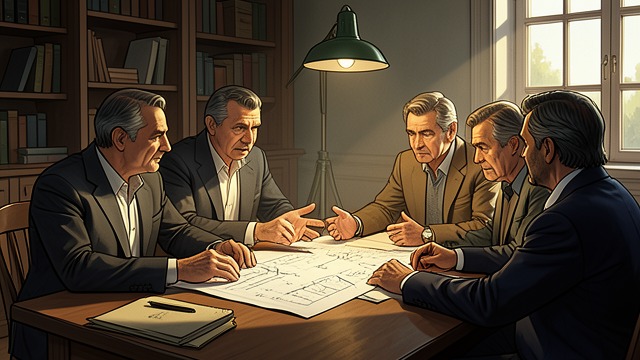
The Fast-Neutron Seminar
Organizing a calculation
Appointed to coordinate fast-neutron research, Oppenheimer gathered leading theorists for a concentrated summer study. The group estimated what a deliverable fission weapon might require.
A leadership test
His ability to synthesize disciplines and keep discussion moving impressed colleagues. The seminar showed that he could lead a collective effort, not merely contribute ideas from the blackboard.
Choosing Los Alamos

Choosing Los Alamos
A familiar mesa
Oppenheimer helped redirect the search from a cramped canyon to the mesa he had explored on horseback. Los Alamos offered isolation, space, and the New Mexico landscape he loved.
A consequential choice
The site became a hastily built town and scientific laboratory. Oppenheimer’s knowledge of the region helped shape the setting in which the bomb would be developed.
A Laboratory Becomes a Community
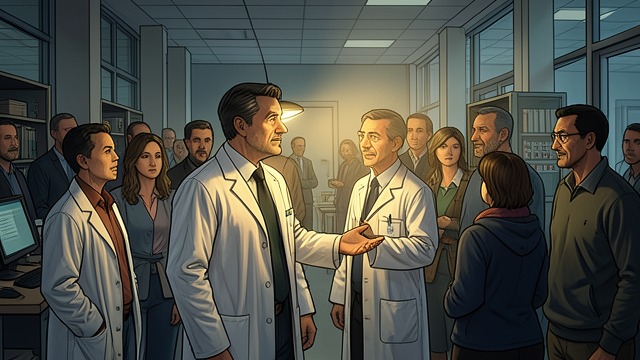
A Laboratory Becomes a Community
Building under pressure
Oppenheimer recruited scientists, negotiated with the Army, and improvised an organization as the population rapidly expanded. At first, housing, security, and equipment lagged behind the mission.
Leadership through connection
He made meetings and informal exchange central to the laboratory. His personal presence helped people work across divisions, even as strict secrecy and military authority generated friction.
Trinity and Its Aftermath

Trinity and Its Aftermath
The device works
At Trinity, Oppenheimer watched the first atomic explosion succeed. Relief and elation surrounded him, but he also knew that the invention had altered the moral and political landscape.
Consequences arrive
Hiroshima and Nagasaki made the weapon real to the world. Oppenheimer’s changing response—from public triumph to sorrow and warning—began the next phase of his life.
Early 1939, after the discovery of nuclear fission
Summer 1942, at Berkeley
November 1942, during the search for a laboratory site
Spring 1943, during Los Alamos’s first months
July–August 1945, from the test to the bombings
