Anti-fascism
American PrometheusAnti-fascism in the biography is not a single organization or a settled doctrine but a set of commitments enacted under changing political conditions. It appears in Jean Tatlock’s reporting and Communist Party work, Joe Dallet’s labor organizing and service in Spain, Kitty’s solidarity with the Spanish Republic, and J. Robert Oppenheimer’s political activity and concern about the consequences of fascism and war. Their experiences show both the practical force of anti-fascist commitment and the very different paths it could take, including the suspicion that later attached to left-wing activism.
Political commitments and different paths
Tatlock’s opposition to fascism developed alongside her interest in psychology and social questions. Before attending Vassar, she spent a year traveling in Europe and encountered a close-knit community of psychoanalysts in Switzerland. At the University of California, Berkeley, she took premedical courses, reported for the Western Worker, and regularly attended Communist Party meetings as a dues-paying member. Her political convictions were forceful: a year before meeting Oppenheimer, she told a friend, “I find I am a complete Red when anything at all.” Her reporting on children prosecuted for selling the Western Worker and lumber-mill workers accused of rioting gave her anger at injustice specific subjects and cases. The biography presents her politics not as a by-product of her relationship with Oppenheimer but as part of her own effort to respond to social inequity.
Dallet’s path joined anti-fascist conviction to a deliberate break with his sheltered upbringing. After leaving Dartmouth and quitting an insurance job, he worked as a social worker, longshoreman, and coal miner; he later described the execution of Sacco and Vanzetti as a decisive influence on his life. He joined the Communist Party in 1929 and became a union organizer in Youngstown, where he worked to organize steelworkers. His experience of political commitment was consequently grounded in labor conflict as well as international events. Kitty participated in that work too: she joined the Young Communist League after selling the Daily Worker and distributing leaflets to steelworkers, sometimes wearing tennis shoes so she could run when police arrived. Their activism took place amid material hardship, including a five-dollar-a-month boardinghouse and reliance on relief checks.
Spain as a test of solidarity
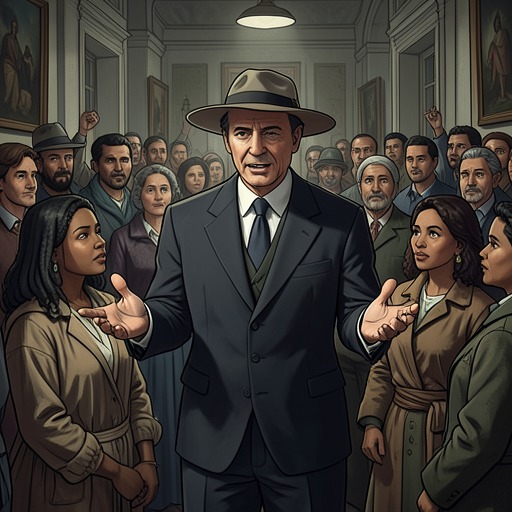
The Spanish Civil War brought these commitments into direct contact with danger. Dallet and Steve Nelson left for Spain, while Kitty was initially forced to remain behind. Before parting, she took them shopping for flannel shirts, wool-lined gloves, and wool socks. In a letter to Nelson’s wife, Kitty recalled a Paris meeting of 30,000 people protesting the Western policy of strict neutrality. She described the subway journey to the meeting as its most thrilling part: young Communist leaders held the train until they could board, singing the Internationale and shouting anti-fascist slogans, until the passengers joined in. The scene makes solidarity a shared public action, rather than merely a private sentiment.
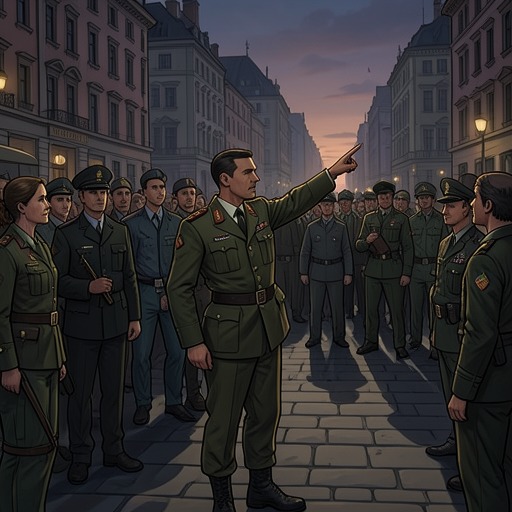
In Spain, Dallet became political commissar of the 1,500-man McKenzie-Papineau Battalion. His letters to Kitty conveyed his excitement at joining the fight, including his account of the feeling of operating a heavy machine gun. But his first battle exposed the cost of turning political courage into a public test. Lonely and unpopular among his men, he had said he would prove he was not a political officer who stayed safely behind the lines. At the Battle of Fuentes del Ebro, he went over the parapet first, was struck by machine-gun fire, and refused to let first-aid men reach him while he lay exposed. A second burst killed him as he tried to crawl back toward the trenches. He was barely thirty. Nelson later told Kitty of his death in Paris; she collapsed, and Nelson persuaded her not to continue to Spain as a hospital volunteer. She returned to the United States a widow, while the Communist Party commemorated Dallet as a working-class martyr and published his letters in Letters from Spain.
Oppenheimer and the crisis of 1939
Oppenheimer’s relation to anti-fascist politics was less linear. His political engagement in Berkeley grew in a decade marked by the Great Depression at home and the rise of fascism abroad. He worked with friends, many of them fellow travelers or communists, in struggles for economic and racial justice. In 1939, however, the Molotov–Ribbentrop Pact unsettled left-wing circles. Oppenheimer wrote to Willie Fowler that he was not yet ready to make a judgment about every aspect of the pact, though he mocked its “hocuspocus.” Some American Communists left the Party; Haakon Chevalier remained loyal and defended the agreement as necessary. According to Chevalier, Oppenheimer argued that it was a treaty of necessity shaped by Western appeasement of Hitler at Munich, rather than simply an alliance.
This episode makes the political meaning of anti-fascism in the biography contingent and contested. Oppenheimer’s name did not appear on an open letter Chevalier signed defending the Soviet position, and the available evidence does not establish that Oppenheimer was a Communist Party member. He did, however, help with left-wing publications. A 1940 pamphlet defended the New Deal’s social programs and warned that reaction was mobilizing; Chevalier believed Oppenheimer had helped draft or edit it, though the text alone could not establish authorship. A second pamphlet sharply criticized Franklin D. Roosevelt as a reactionary and war-monger. The biography treats Oppenheimer’s possible role cautiously: if he helped draft it, the language reveals concern about domestic politics in a world approaching disaster, but his correspondence does not show that he shared its denunciation of Roosevelt. His political activity was intermittent, and he sometimes feared that it could cost him his university position.
From anti-fascist action to political suspicion
Oppenheimer’s 1940 appearance at a Berkeley fundraiser for refugees from the Spanish Civil War connected political argument with personal relationships. Speaking alongside Nelson, he argued that the fascist victory in Spain had led directly to general war in Europe and that volunteers such as Nelson had fought a delaying action. Afterwards, Oppenheimer told Nelson he intended to marry Kitty, whom Nelson had known during her stay with him and his wife. The meeting brought together refugee aid, the memory of the Spanish conflict, and the personal history of people who had acted on their political commitments.
The biography places these earlier commitments against the later treatment of Oppenheimer’s politics. His 1930s activism and associations could be used to attack his character and professional judgment during the 1954 security hearing. That vulnerability is part of the subject’s historical significance: convictions formed in response to fascism and social injustice did not remain safely confined to the past, but became material for a later struggle over who could speak credibly about national policy. The book’s account does not collapse anti-fascism into Communist allegiance. Instead, it distinguishes individual action, shifting political judgment, and the institutional power to recast earlier dissent as a threat.