Big science
American PrometheusBig science in the book is more than science conducted with large machines. It is a new scale of organization: expensive equipment, powerful patrons, purpose-built laboratories, teams of specialists, and, in wartime, military control over information. Ernest Lawrence’s cyclotron made that scale visible; the Los Alamos project led by J. Robert Oppenheimer turned it into a national weapons enterprise. Together, they show how scientific capacity expanded while the conditions of scientific work became entangled with money, administration, secrecy, and state power.
From the cyclotron to large laboratories
Lawrence conceived a way to attack the atom’s nucleus without relying on an initially impractical million-volt accelerator. Rather than propel protons in a single straight path, his proposed machine would accelerate them repeatedly through an alternating electric field, sending them along a spiral. A small voltage could thus build into much greater particle speeds. By early 1931 he had a crude accelerator with a 4.5-inch chamber producing 80,000-volt protons; a year later, an eleven-inch machine produced million-volt protons. Lawrence named the invention the cyclotron and kept imagining larger machines, including accelerators weighing hundreds of tons and costing tens of thousands of dollars.
With the support of University of California president Robert Gordon Sproul, Lawrence secured an old wooden building beside LeConte Hall and established the Berkeley Radiation Laboratory. The laboratory’s importance lay not only in any one experiment: the cyclotron offered theoretical physicists a way to explore the atom’s innermost reaches. Lawrence received the Nobel Prize for physics in 1939, a recognition of the scientific power of the instrument and the research program built around it.
Money, patrons, and the culture of scale
The cyclotron’s scale required a corresponding system of finance. An eighty-ton magnet could not be built on modest laboratory resources alone. Lawrence proved adept at winning support from influential Berkeley regents, including oil entrepreneur Edwin Pauley, banker William H. Crocker, and John Francis Neylan, a national power broker and counsel to William Randolph Hearst. In 1932, Sproul sponsored Lawrence for membership in San Francisco’s Bohemian Club, where California businessmen and politicians gathered. Lawrence’s access to such patrons helped turn ambitious apparatus into working institutions; it also drew him into the conservative, anti–New Deal politics of some of the men whose money he repeatedly accepted.
That institutional culture differed from J. Robert Oppenheimer’s orientation toward theoretical physics. The book describes him as devoted to pure, comparatively “small” science, while the large laboratories were often oriented toward technology and “military science.” The contrast could be felt even among younger physicists: Robert Wilson, who had studied with both Lawrence and Oppenheimer, left Berkeley for Princeton because he regarded the science associated with the big machines as “team research at its worst.” Big science enabled collaboration and investigation at previously unattainable energies, but it could also make research feel impersonal or subordinate to the demands of large organizations.
Los Alamos: a scientific project becomes a community
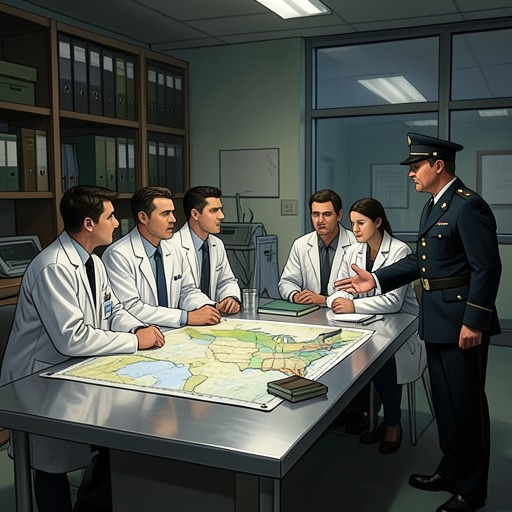
During the war, Oppenheimer had to enter this world of scale from a different direction. As director of a weapons laboratory meant to unite distant Manhattan Project sites and deliver a usable atomic weapon, he faced unfamiliar administrative work, security rules, and a compressed schedule. At thirty-nine, he had to change not just what he worked on but how he worked: recruiting, coordinating, and managing became as consequential as his scientific judgment.
The laboratory site reflected the project’s unusual combination of ambition and isolation. Oppenheimer and Edwin McMillan inspected possible locations with Army officer John H. Dudley before Los Alamos was selected. Its remoteness appealed to the military, but it made ordinary scientific infrastructure difficult to provide. In the three months after the site was chosen, construction crews erected inexpensive, Army-green barracks and crude physics and chemistry laboratories. Oppenheimer promised Hans Bethe a functioning community, with housing, electricity, a school, library, laundry, hospital, and other services; for security reasons, the houses would have no telephones. John Manley, arriving with experience of Chicago’s university, libraries, technicians, and machinery, objected that Los Alamos had almost none of the resources needed for experimental physics. The project demanded a working scientific town in a remote setting, and the mismatch between the ambition and the available infrastructure made logistics part of the scientific problem.
Secrecy against the needs of collaboration
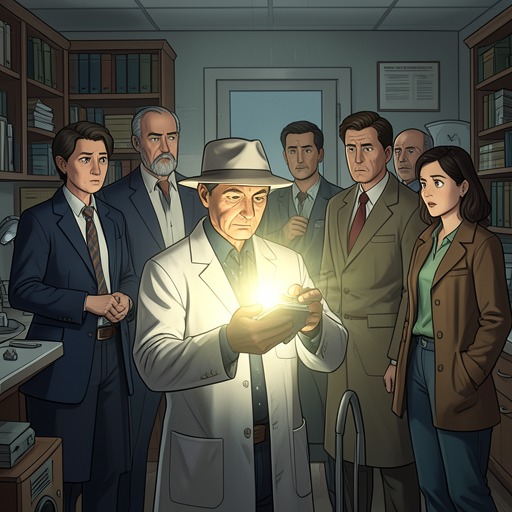
Military organization also tried to divide knowledge. The summer 1942 seminar met in an attic room at LeConte Hall, with wire netting fastened over the balcony and Oppenheimer holding the only key. Sunlight cast the netting’s shadow across the physicists’ papers; Joe Weinberg remembered the group as appearing to sit in a symbolic cage. At Los Alamos, the same tension became an institutional question. Oppenheimer supported a weekly open-ended colloquium after Hans Bethe proposed one, insisting that scientists needed room to discuss complicated work that had previously been compartmentalized. At the first session, on April 15, 1943, Bob Serber briefed no more than forty scientists in an empty schoolboys’ library. Even the meeting’s language registered military oversight: Oppenheimer sent John Manley to ask Serber to use “gadget” rather than “bomb.”
In practice, however, the work pushed against strict compartmentalization. Oppenheimer argued that thorough discussion would help scientists whose information had been divided into separate compartments. Edward Teller shared the concern that excessive secrecy impeded efficiency, and even Ernest Lawrence disregarded restrictions while lecturing at Los Alamos. The policy remained official, but became increasingly lax among the scientists. This was not simply a conflict between security and personal preference: the organization needed secrecy to protect the project, yet the scientific task required people to compare ideas and problems.
The surveillance surrounding the laboratory sharpened that contradiction. Army counterintelligence arranged full-time technical and physical surveillance of Oppenheimer, while undercover officers monitored his mail and home telephone and his office was wiretapped. He complied with security requests and became careful about handling classified papers, but the pressure, investigations, and fear of failure weighed on him. In the summer of 1943 he told Robert Bacher he was thinking of quitting. Bacher’s answer—that there was nobody else who could do the job—underscored how much the enterprise depended on a director asked to operate within a system that also watched him.
The scale of science and its public obligations
The book sets this military form of big science against Niels Bohr’s vision of an “open world.” In Bohr’s view, laboratories already showed that international scientific communities could share knowledge across national boundaries. The atomic bomb, however, made that exchange a matter of security as well as scientific principle: without international control and access to information, any temporary advantage might give way to a lasting danger. His argument that international inspectors should have access to military and industrial sites exposed the scale of the institutional change he considered necessary.
Big science therefore appears as both an achievement and a dilemma. Lawrence’s accelerating particles and Oppenheimer’s coordinated laboratory brought unprecedented scientific and technical resources to bear on the atom. But the larger and more powerful the enterprise became, the harder it was to separate discovery from patronage, military purpose, and the governance of knowledge. At Los Alamos, collaboration was indispensable to the bomb project even as security rules tried to restrict it; the laboratory’s need to share information revealed a limit within the very secrecy regime meant to control it. The concept names not only a growth in machines and budgets, but a transformation in who organizes science, what purposes it serves, and what responsibilities accompany its power.