Harry S. Truman
American PrometheusHarry S. Truman became president as the atomic bomb moved from a secret wartime project to a weapon used against Japan and a defining problem of postwar policy. His record in these episodes is marked by a sharp tension: he acknowledged the revolutionary danger of atomic energy and spoke publicly of international arrangements, while presiding over decisions in which the weapon’s use and national control remained central. His encounters with J. Robert Oppenheimer made that tension personal, exposing both men’s different understandings of what the bomb demanded of its makers and leaders.
Presidency at the Threshold of the Atomic Age
When Oppenheimer learned that Franklin D. Roosevelt had died, he still hoped that Roosevelt and his advisers had absorbed Niels Bohr’s case for openness about the new weapon. Oppenheimer contrasted that hope with uncertainty about the new president, suggesting that Truman might prove a practical successor where Roosevelt had been the architect. The remark captured the expectation that Truman would have to turn a scientific and political vision into policy, though Oppenheimer would soon find the president difficult to reach.
On May 25, 1945, Leo Szilard and two colleagues, Walter Bartky and Harold Urey, sought a meeting at the White House to warn about using the bomb against Japan. They were referred to James F. Byrnes, soon to become secretary of state, and traveled to Byrnes’s home in Spartanburg, South Carolina. When Szilard warned that an atomic attack could help turn the Soviet Union into an atomic power, Byrnes interrupted with the claim that General Groves had said Russia had no uranium. Szilard corrected him: the Soviet Union had plenty. The exchange illustrated how the issue was already being framed through strategic competition, even before the weapon had been used.
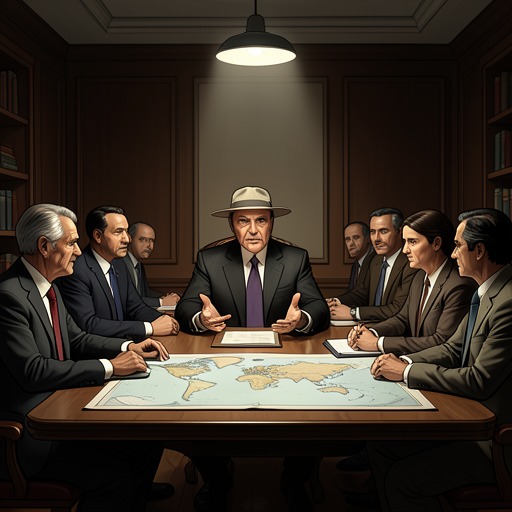
The next day, Truman’s Interim Committee met to consider atomic policy. The ad hoc body, assembled to advise the secretary of war, included senior officials and a panel of four scientific consultants: Oppenheimer, Enrico Fermi, Arthur Compton, and Ernest Lawrence. General George C. Marshall and General Groves also attended. The record preserves a dispute over how much the Soviet Union should be told. Marshall supported informing the Soviets that the bomb existed; Byrnes objected that Joseph Stalin might then demand participation in the project. Vannevar Bush observed that Britain did not possess the American plant blueprints, and Oppenheimer and the other scientists recognized that the bomb’s underlying physics could not remain secret indefinitely. Truman’s representative thus confronted a choice between guarding the project and acknowledging that technical knowledge would spread regardless.
Japan, Surrender, and the Weapon’s Use
Truman’s knowledge of Japan’s position complicates the picture of what officials understood as the war approached its end. Oppenheimer later recalled that the scientists did not know whether Japan could be brought to surrender by other means or whether an invasion was inevitable; they had been told to think an invasion was inevitable. He did not know that military intelligence in Washington had intercepted and decoded Japanese messages indicating that the government understood the war was lost and was seeking acceptable surrender terms.
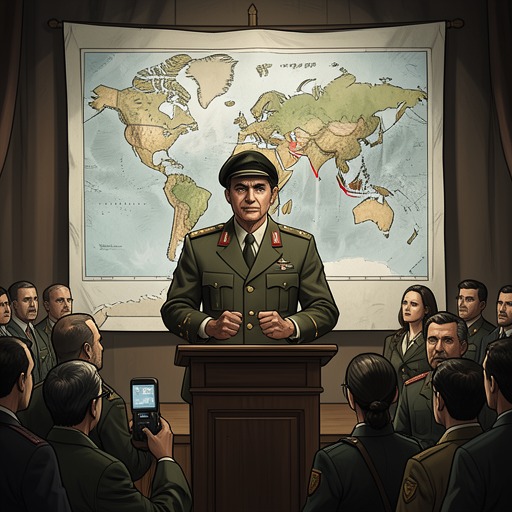
At the Potsdam Conference in July, Dwight D. Eisenhower later said he told Henry L. Stimson that an atomic bombing was unnecessary because the Japanese were ready to surrender. Truman’s private diary also registered signs of a possible end to the war. On July 18, he described an intercepted message from the emperor to the Japanese envoy in Moscow as a “telegram from Jap Emperor asking for peace.” The cable identified unconditional surrender as the obstacle to peace. Truman had also obtained Joseph Stalin’s promise that the Soviet Union would declare war on Japan by August 15, an intervention that he and some military planners believed could prove decisive. That same day, Truman wrote, “Believe Japs will fold up before Russia comes in.” On August 3, Walter Brown recorded that Truman, William D. Leahy, and Byrnes agreed that Japan was seeking peace, while Truman feared it might seek terms through the Soviet Union.
The possibility of clarifying surrender terms was politically contested: Byrnes opposed such a move on domestic political grounds. In the account presented here, the war could end before the Soviet entry only through use of the new weapon. Oppenheimer, meanwhile, believed that Truman and the other Allied leaders were having frank discussions about the bomb at Potsdam. He had been relieved after the Trinity test to hear from Bush that the Interim Committee had unanimously accepted his recommendation that the Soviet Union be informed clearly about the weapon and its intended use against Japan. He was appalled to learn that Truman’s actual reference to Stalin had been cryptic rather than an open discussion of the weapon’s nature.
The Soviet Union declared war on Japan on August 8, as promised. Two days later, after the bombing of Nagasaki, the Japanese government offered to surrender on the condition that the emperor’s status be guaranteed. The Allies agreed that the emperor’s authority would be subject to the Supreme Commander of the Allied powers. On August 14, Radio Tokyo announced Japan’s acceptance of the clarification and its surrender. These events placed Truman’s wartime choices in a larger sequence: the bombings, Soviet entry, and modification of the surrender terms all formed part of the close of the war, while the intelligence available to the president differed from what the scientists at Los Alamos had been told.
International Control and the Oval Office Encounter
Truman’s public language after the war appeared to offer Oppenheimer grounds for hope. In a message to Congress on October 3, 1945, drafted by Herbert Marks with Oppenheimer’s help, Truman called atomic energy “a new force too revolutionary to consider in the framework of old ideas.” He urged the creation of an atomic energy commission empowered to regulate the industry and warned that “The hope of civilization” lay in international arrangements directed, if possible, toward renouncing the use and development of the bomb. Oppenheimer thought he had won the president’s support for the urgency of international control; his discreet assistance in drafting the message had helped give it language close to his own concerns.
On October 25, Oppenheimer met Truman in the Oval Office, with Secretary Robert Patterson also present. According to one account, Truman asked for help securing congressional passage of the May-Johnson bill, which would give the Army permanent control over atomic energy. He proposed defining the national problem first and the international problem afterward. Oppenheimer allowed an uncomfortable silence before replying, “Perhaps it would be best first to define the international problem.” He was arguing that the spread of the weapon had to be addressed before its domestic administration.
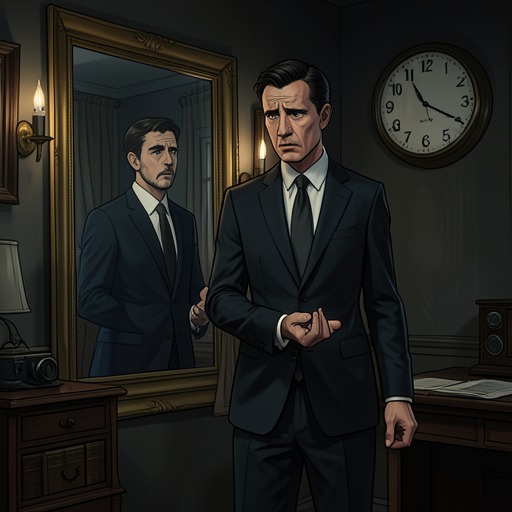
The conversation did not bridge the difference between them. Oppenheimer took Truman’s response as evidence that the president did not grasp the deadly urgency of international controls. Nervously wringing his hands, he said, “Mr. President,” he said quietly, “I feel I have blood on my hands.” Truman reportedly answered afterward that Oppenheimer had less blood on his hands than he did, and complained that the physicist was bellyaching. He later told Dean Acheson that he did not want Oppenheimer back in the office. In May 1946, the encounter still rankled: Truman described Oppenheimer as a “cry-baby scientist” who had spent much of the meeting wringing his hands over the discovery of atomic energy. What Oppenheimer intended as a confession of moral burden, Truman received as an unwelcome display of remorse and an implicit challenge to presidential responsibility.
Later Policy and the Oppenheimer Connection
Truman’s presidency also left a legacy that shaped later arguments over secrecy and nuclear strategy. In 1949, Oppenheimer warned that the United States planned a massive, initial, unremitting strategic assault and criticized the secrecy that left important facts known to only a few. He pointed to Truman’s public doubt about the Soviet Union’s ability to threaten the continental United States, arguing that it was disturbing for a former president who had been briefed on the evidence to cast doubt on its conclusions. The criticism was not simply about a former president’s statement; it concerned the gulf between classified knowledge and public claims about nuclear danger.
The dispute over the hydrogen bomb sharpened that strategic context after Truman left office. In October 1949, the General Advisory Committee debated a proposed thermonuclear weapon that might yield 100 million tons of TNT, compared with the Hiroshima bomb’s 15,000 tons. Oppenheimer feared that such a weapon would be too large for any legitimate military target; the committee’s majority warned that it could become a weapon of genocide and argued that undertaking a crash program would not deter the Soviet Union. The AEC commissioners endorsed the committee’s recommendations by a three-to-two vote. These were decisions and arguments of the post-Truman period, not meetings in which Truman is shown participating, but they illuminate the perilous strategic landscape his presidency had helped inaugurate.
That landscape continued to inform Oppenheimer’s later criticism of American nuclear policy. He condemned an Air Force plan shown to him in 1951 that called for the obliteration of Soviet cities, and he argued that tactical weapons might bring nuclear arms onto the battlefield while increasing the likelihood that they would actually be used. In a later public argument, he criticized secrecy and the expectation of a massive initial attack. Truman’s role in this later story is chiefly as the former president whose public statements and wartime choices remained points of reference as the arms race intensified.
A different aspect of Truman’s response to the Oppenheimer circle surfaced during Joseph Weinberg’s perjury trial in 1952. When told that Oppenheimer might be called as a witness, AEC chairman Gordon Dean warned Truman that Oppenheimer’s reputation and value to the country could be impaired whatever the trial’s outcome. Truman replied that he was very interested in the connection and agreed that Oppenheimer was an honest man, adding that good people suffered amid character assassination and unjustified smears. He did not say what action he would take. The response contrasts with the anger that followed their Oval Office meeting: Truman could regard Oppenheimer as an honest and valuable figure even while their encounter had left him resentful.
Character and Historical Significance
Truman emerges through these episodes less as a settled theorist of atomic policy than as a president navigating competing pressures: the weapon’s military use, the secrecy of its development, the prospect of Soviet power, and the public demand for a defensible postwar policy. His diaries registered the possibility that Japan might surrender before the Soviet Union entered the war, while his administration did not resolve the surrender issue through clarification before the bombings. His public message to Congress invoked international arrangements, but his Oval Office conversation with Oppenheimer exposed how far that language was from agreement on what should come first.
The meeting became a lasting emblem of the divide between political authority and scientific responsibility. Oppenheimer’s words about blood on his hands were not a policy proposal, yet they forced the moral consequence of the bomb into the room. Truman’s offended response turned the exchange into a clash over who could claim the burden of wartime decisions. Later, his defense of Oppenheimer against the possibility of an unjust smear showed that this rupture did not settle every judgment he made about the physicist. The contrast is central to Truman’s significance in the account: he could recognize the peril and the human stakes of the atomic age, but recognition did not produce a shared language—or a shared course of action—with the scientist who had helped make the weapon possible.