Hawksnest Bay
American PrometheusHawksnest Bay, on St. John in the U.S. Virgin Islands, became both a refuge and a charged family landscape for J. Robert Oppenheimer after 1954. There he bought land, built an open-sided beach cottage called Easter Rock, and spent part of each year in what felt to him like self-imposed exile. The bay also became the setting for a damaging feud with neighbors, the eventual resting place of his ashes, and the site of his daughter Toni’s death. Its story moves from a private retreat toward a public memorial, without erasing the tensions that marked the family’s life there.
A retreat on the island
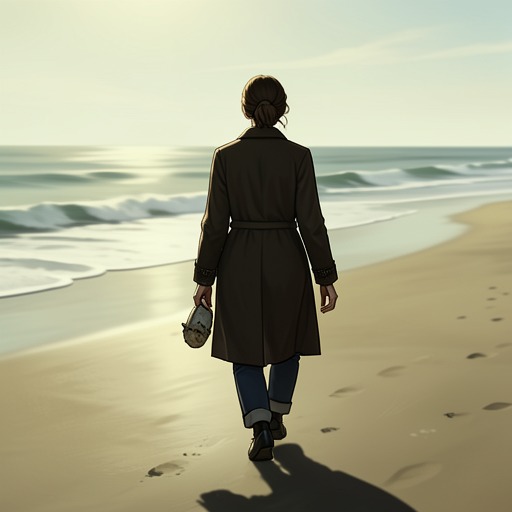
Beginning in 1954, the Oppenheimers spent several months each year on St. John. On their first visits they stayed at a small guest house at Trunk Bay; in 1957, Robert bought two acres on Hawksnest Bay, a cove at the island’s northwest tip. The location lay below a hump-shaped rock outcropping known as Peace Hill. The beach sloped gently toward turquoise water, and the place’s beauty offered a sharp contrast to the political ordeal from which Robert had withdrawn.
For Robert, this was more than a holiday setting. He welcomed the solitude as a chosen separation from public life, an exile that recalled an image from a poem he had written as a young man: a separate prison. The retreat seemed to renew him, as summers in New Mexico had done decades earlier. Yet the bay was not isolated from other people. The property adjoined land owned by Robert and Nancy Gibney, whose reluctant sale followed Robert’s persistent, gentle persuasion. The proximity that made the purchase possible would become the condition of an enduring neighborhood conflict.
Easter Rock and its neighbors
In 1958, Robert hired architect Wallace Harrison to design a spare beach cottage, conceived as a Caribbean counterpart to Perro Caliente. Construction began badly: the contractor put the foundation in the wrong place, dangerously close to the water, and blamed a donkey for eating the surveyor’s plans. The completed building was a long rectangular room, roughly sixty or seventy feet in length, on a concrete slab. A low partition separated the sleeping area from the rest; terracotta tiles covered the floor, and the back contained a kitchen and small bathroom. Shuttered windows admitted light from three sides, while the front remained entirely open to the cove and the trade winds. A tin roof could roll down to close that side during hurricane season. The family named the cottage Easter Rock, after an egg-shaped rock perched on Peace Hill.
The Gibneys lived about a hundred yards up the beach. They had settled on St. John in 1946 and bought seventy acres around Hawksnest Bay; Bob had worked as an editor at The New Republic, while Nancy had been an editor at Vogue. Nancy first met the Oppenheimers at the Trunk Bay guest house in 1956. Her account of that meeting conveyed both the couple’s frailty and their strangeness to her, but she initially warmed to Robert’s courtesy and sympathy. He also made a darkly self-accusing joke when she explained that Bob sometimes worked for Laurance Rockefeller at Caneel Bay: Robert remarked that he too had taken money for doing harm.
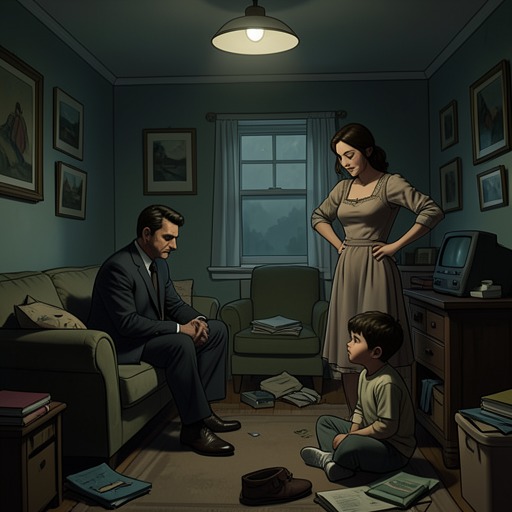
That uneasy first impression became a long, difficult stay. In spring 1959, while the cottage was still under construction, Katherine(Kitty)Oppenheimer asked Nancy for a place to stay in June. The Oppenheimers arrived with fourteen-year-old Toni and her schoolmate Isabelle, intending to remain far longer than Nancy had expected. Kitty’s late-night drinking and search for ice, the couple’s habit of drinking and smoking in bed, their irregular sleeping hours, and Robert’s nightmares strained the household. One August night, after Nancy confronted Kitty about drinking through the night, Kitty struck at her with a flashlight. Nancy forced her back into the Oppenheimers’ room, barricaded the doors, and left for Boston the following morning; the family departed in mid-August.
The following year the Oppenheimers returned to their completed cottage, but relations with the Gibneys did not recover. Nancy put Private Property signs on her side of the beach; Kitty tore them down. Nancy later expressed a grudging respect for Kitty’s courage, candor, and loyalty, while retaining a much more hostile judgment of Robert. Several years later, during a New Year’s Eve party at Easter Rock, Bob Gibney came down to the beach with a gun and fired several shots into the air. Robert, who was rarely seen angry, shouted that Gibney should never come to his house again. The neighbors thereafter had nothing to do with one another, hired lawyers, and disputed beach rights; the feud became an island legend.
Ashes, loss, and a public legacy
After Robert’s death, Hawksnest Bay became the destination of his ashes. On a stormy, rainy afternoon, Katherine, Toni, and two St. John friends motored toward Carval Rock, a small island visible from the beach house. Between Carval Rock, Congo Cay, and Lovango Cay, in water seventy feet deep, they stopped the boat. Rather than scatter the ashes, Katherine dropped the urn overboard. It bobbed on the rough water as they circled and watched until it sank. She explained that Robert had wanted to be there. The act joined his chosen retreat to a final resting place just offshore.
The bay was also the setting of Toni’s last years. After returning to St. John, she lived with depression and the complicated legacy of her parents. At one point she swam from Hawksnest Bay toward Carval Rock, where her father’s ashes rested in their urn beneath the sea; after swimming outward for a long time, she felt better and turned back. In January 1977, she died by suicide in the beach cottage. She left a will giving the house to the people of St. John, and hundreds attended her funeral in Cruz Bay, with many unable to fit inside the small church.
The cottage was later swept away by a hurricane. A community house now stands in its place, on a shore called Oppenheimer Beach. Hawksnest Bay thus bears several histories at once: Robert’s withdrawal after public disgrace, the family’s difficult domestic life, the neighbors’ lasting quarrel, and the island community’s inheritance of a place marked by both loss and remembrance.