Jackie
American PrometheusJackie emerges in the account as Frank Oppenheimer’s wife, political companion, and partner in the costs of their shared past. Her brief but vivid appearances are shaped by two contrasting settings: the marble government buildings where the House Committee on Un-American Activities questioned their politics, and a remote Colorado ranch where the couple made a life after Frank lost his university position. In both, she is presented not simply as an adjunct to her husband but as a witness to injustice who retained her own judgment and anger.
Political convictions and shared decisions
Jackie and Frank had belonged to the Communist Party USA for about three and a half years, from early 1937 until late 1940 or early 1941. Frank later explained that they had joined in 1937 seeking an answer to unemployment and want in a country he described as wealthy and productive. The account gives no separate statement of Jackie’s individual reasons, but places her within that shared political choice. The couple eventually left the Party, disillusioned.
In the years before his 1949 testimony, Frank had denied his membership publicly. He explained that a newspaper reporter had called late at night before a story appeared, and that the article contained other false allegations. Under pressure from the University of Minnesota to repeat his denial in writing, he had signed a statement drafted by a lawyer, fearing for his job. By June 14, 1949, he had concluded that he had to tell the truth. He and Jackie talked the decision over together before he appeared under oath.
Frank acknowledged his own past membership and his Party alias, Frank Folsom, but, on the advice of counsel, refused to disclose the political views of friends. Jackie’s presence in the account makes their decision a shared ordeal, though the record distinguishes their actions: Frank testified, while Jackie waited to testify herself. His refusal to name names was rooted in his conviction that the people he had known were decent and well-meaning, and that he knew of no instance in which they had acted against the Constitution or the laws of the United States.
The hearing and its human stakes
As Jackie waited in the committee anteroom, she looked out at the contrast between the manicured government grounds and nearby rows of poor Black residents’ homes. She noticed barefoot children in ragged clothes, appearing undernourished and playing with junk from the street. The scene sharpened her sense of the hearing’s distorted priorities: while visible poverty surrounded the Capitol, she and Frank had been summoned to answer accusations of being un-American. Her recollection captures anger and apprehension together; she worried about what the committee would do to her and grew angrier at the fact of being questioned.
After Frank’s testimony, he told reporters that they had joined the Party in 1937 in search of answers to unemployment and want. He also said that he had left it in 1940, knew nothing of atomic espionage at Los Alamos or Berkeley’s Rad Lab, and had neither been approached for information nor given any. Jackie’s presence in the account places her beside him as the consequences began to arrive. Barely an hour after his testimony, Frank learned that the University of Minnesota had accepted his resignation as an assistant professor of physics. He had been three months from tenure; after a final meeting with the university president, he left in tears, his academic career ended.
Exile and life on the ranch
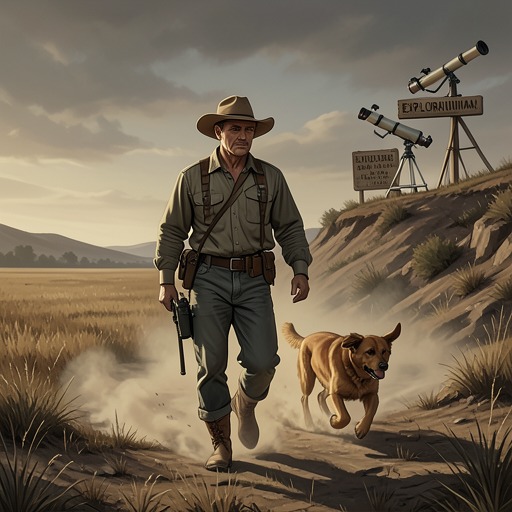
A year earlier, Jackie and Frank had bought an 800-acre cattle ranch near Pagosa Springs in the Colorado mountains, intending it as a summer home. In autumn 1949, they retreated there for the winter, to the surprise of friends. The ranch stood at an altitude of 8,000 feet, and the cold made the decision a demanding one. Jackie stayed in the cabin with binoculars, watching cows about to give birth in the snow; when calves arrived, she and Frank ran outside to keep the newborns from freezing. The detail gives their new life its physical scale: isolation was not only a matter of distance from institutions, but of daily work and exposure to the mountain winter.
For the next decade, Frank made his living as a working rancher, twenty miles from the nearest town. He said that he truly felt and was a rancher, although Robert Oppenheimer wanted him to return to academic life. The account does not describe Jackie’s private response to that disagreement or assign her a separate view of their changed circumstances. It does show her sharing the ranch’s practical labor and remoteness. Offers for Frank to teach physics abroad in Brazil, Mexico, India, and England did not restore the couple’s freedom of movement: the Department of State refused to issue him a passport, and no American job offers came. Frank had been blacklisted.
Political pressure beyond the committee
The isolation of the ranch did not put an end to scrutiny. FBI agents periodically questioned the couple’s neighbors and sometimes visited the ranch to ask Frank about other Communist Party USA members. On one occasion an agent connected cooperation with the prospect of Frank finding university work. Frank refused to cooperate. In 1950 he concluded that the FBI was trying not merely to investigate him but to poison the atmosphere around him, turning friends, neighbors, and colleagues suspicious. Jackie shared the setting in which that pressure continued, although the account does not say that agents questioned her or describe her own response to their visits.
Jackie’s place in this story rests on a set of concrete acts and circumstances: she had shared Frank’s political history, discussed his decision to acknowledge it, waited under questioning, registered the inequality visible from the committee’s window, and helped sustain a household in exile. The hearing’s language of loyalty and national belonging is set against the life the couple actually built afterward: a cold, distant ranch, newborn calves, and a husband barred from academic work and denied a passport. The account leaves Jackie’s later life largely undescribed, but records her as a participant in the decisions and consequences that carried Frank from political conviction into enforced isolation.