James B. Conant
American PrometheusJames B. Conant, president of Harvard University and a leading wartime scientific administrator, helped organize the United States’ atomic-bomb program from its early governmental stages through decisions about the weapon’s use. As chairman of the S-1 Committee, he worked with Vannevar Bush to mobilize national resources and recruit scientists; he also supported J. Robert Oppenheimer’s growing role in the project. His wartime service placed him among the officials and scientists who shaped both the bomb’s development and the arguments over its consequences.
Identity and wartime responsibilities
Conant entered the bomb project as a senior university leader recruited into a new system for directing scientific work toward military purposes. When President Franklin D. Roosevelt replaced the Uranium Committee with the S-1 Committee, the new group reported directly to the White House. Its members included Bush, Secretary of War Henry L. Stimson, Chief of Staff George C. Marshall, Vice President Henry Wallace, and Conant, who served as chairman. The committee’s urgency arose from a fear that German scientists might be ahead in fission research and that the race could affect the outcome of the war.
Conant and Bush were responsible for organizing government resources and drawing scientists from across the country into the bomb project. Their work helped shift atomic research from a loosely coordinated concern into a national program with a defined administrative center. The urgency of the undertaking did not remove the difficulty of assembling it: the weapon remained a highly uncertain scientific and industrial prospect, and its development depended on recruiting specialists whose expertise was dispersed among universities and laboratories.
Recruiting scientists and backing Oppenheimer
Conant’s connection to Oppenheimer began before Oppenheimer became director of the Los Alamos laboratory. In the autumn of 1941, Oppenheimer was collaborating with Ernest Lawrence on uranium-isotope separation, although he was not yet officially part of the bomb project. Lawrence told Oppenheimer that Conant had rebuked him for discussing fission calculations with someone outside the authorized project. The episode illustrates the growing tension between the need to gather scientific expertise and the new restrictions on who could be included in sensitive discussions.
That tension did not prevent Conant from later supporting Oppenheimer’s participation. In January 1942, Lawrence told Conant that Oppenheimer would be a valuable addition, citing his grasp of the theoretical program and his practical judgment. By May, Oppenheimer had formally become S-1’s director of fast-neutron research, with the unusual title Coordinator of Rapid Rupture. He then organized a summer seminar of theoretical physicists to outline a preliminary bomb design. Conant’s role was not to direct that seminar, but his position in S-1 and his involvement in recruiting scientists helped place Oppenheimer in a position to lead it.
The seminar brought together researchers whom Oppenheimer called his “luminaries,” including Hans Bethe, Edward Teller, Felix Bloch, and Emil Konopinski, alongside Robert Serber and former students. Its conclusions helped establish the scale of the undertaking. After Bethe’s calculations persuaded Teller and Oppenheimer that the danger of igniting the atmosphere was nearly zero, Oppenheimer prepared the group’s report. In late August 1942, Conant read it and made notes under the heading “Status of the Bomb.” The report described a feasible weapon, but one requiring a far greater critical mass than previously estimated and the coordinated resources of science, technology, and industry.
Conant also helped defend the participation of scientists with left-wing associations. Although the War Department had rejected Oppenheimer for a security clearance, Conant and Bush pressed for clearances for him and other scientists with such backgrounds. In September 1942 they took Oppenheimer to Bohemian Grove, where he attended his first meeting of the secret S-1 Committee. Bush subsequently argued to Stimson’s executive assistant that, despite Oppenheimer’s left-wing politics, his substantial contributions justified clearing him for further work.
Choosing a laboratory director
Oppenheimer’s appointment to lead the secret weapons laboratory was controversial among scientific leaders. He was a theorist with no experience managing a large organization, and skeptics questioned whether someone unfamiliar with equipment could direct an enterprise that depended on experimental physics and engineering. Conant’s support for Oppenheimer’s inclusion formed part of the broader confidence in his scientific ability, but the appointment itself was General Leslie Groves’s decision.
When Groves proposed Oppenheimer to the Military Policy Committee, members opposed the choice. Groves asked each of them to name a better candidate; after several weeks, no alternative emerged. By the end of October 1942, the position was Oppenheimer’s. Isidor Isaac Rabi, who had initially considered Oppenheimer an unlikely candidate, later judged Groves’s appointment a stroke of genius. Conant’s part in this episode was therefore distinct from Groves’s: he had helped bring Oppenheimer into the work and pressed for his clearance, while Groves made the consequential choice of laboratory director despite opposition.
Atomic policy and the use of the bomb
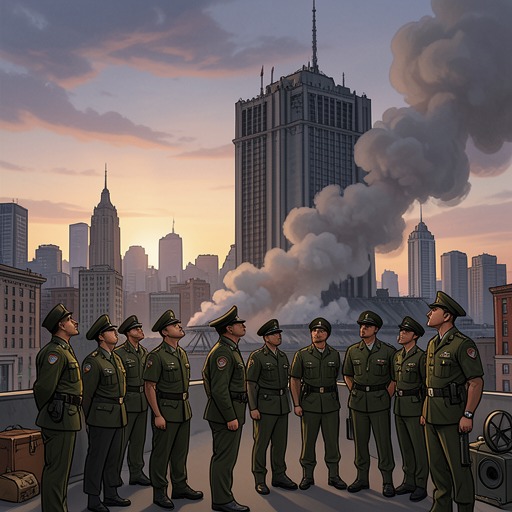
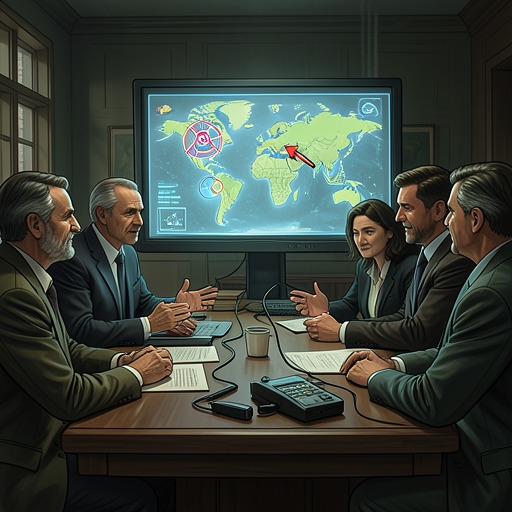
On May 31, 1945, Conant attended a meeting of Stimson’s Interim Committee, which advised the secretary of war on atomic policy. He sat with government officials and three other scientific consultants—Oppenheimer, Enrico Fermi, and Arthur Compton—while General Groves and senior military and civilian figures also attended. The committee was not convened to decide whether the bomb would be used against Japan; the account describes that decision as effectively settled elsewhere, with military-use authority resting at the White House.
The meeting nevertheless addressed the weapon’s larger implications and the future of atomic research. Oppenheimer estimated that within three years a bomb might have an explosive force of 10 million to 100 million tons of TNT. Lawrence urged a substantial stockpile and expanded production capacity to keep the United States ahead. Oppenheimer, by contrast, argued that most scientists should return to universities and research laboratories after the war, warning against the sterility of allowing wartime work to dominate scientific inquiry. Bush agreed that only a nucleus of the present staff should be retained, and Fermi and Compton supported releasing scientists for broader research. Conant was present for this debate, in which the committee considered not only the weapon’s production but also the institutional future of science after the war.
The discussion turned more directly to targeting when the committee considered what would produce a profound psychological effect in Japan. Conant proposed “that the most desirable target would be a vital war plant employing a large number of workers and closely surrounded by workers’ houses.” The phrasing joined an industrial objective to a densely populated setting. The meeting’s stated principles rejected advance warning and a deliberate focus on a civilian area, while also seeking a powerful impression on inhabitants; the account emphasizes the contradiction between that language and the selection of a target surrounded by workers’ homes. Oppenheimer did not object to the defined target and raised the possibility of multiple strikes, which Groves rejected.
Later testimony and personal cost
Conant’s association with the Oppenheimer case continued after the war. In 1954 he was serving in the Eisenhower administration as high commissioner to West Germany when he was called to testify at Oppenheimer’s security hearings. Secretary of State John Foster Dulles tried to dissuade him, warning that testimony could destroy his usefulness in government. Conant refused. In his diary he recorded that he had told Dulles he had no choice but to testify.
The decision placed Conant’s public responsibilities in direct tension with the prospect of political and professional damage. His diary entry makes clear that he understood the risk, yet he regarded appearing at the hearings as an obligation. The episode offers a final contrast to his earlier administrative role: during the war, he had helped construct a system that concentrated authority and restricted information in the name of security; at Oppenheimer’s hearing, he accepted the cost of participating in a proceeding that tested the government’s treatment of one of the scientists he had helped bring into the bomb effort.