Oppenheimer's revoked security clearance
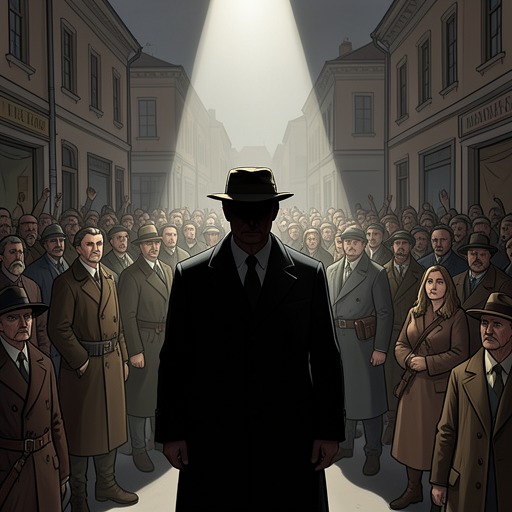
American PrometheusOppenheimer’s revoked security clearance was more than the loss of permission to handle classified information: it was the state’s judgment that a man it had trusted to lead the wartime bomb project could no longer be trusted as a government adviser. The case joined his earlier political associations and disputed testimony to his opposition to an accelerated hydrogen-bomb program, turning questions about policy and judgment into grounds for exclusion. Its immediate result was isolation from nuclear secrets; its public afterlife made Oppenheimer’s punishment a lasting emblem of the costs of dissent during the McCarthy era.
From wartime trust to security risk
The revocation contradicted the record of Oppenheimer’s wartime service and earlier clearances. In 1943, with full knowledge of the derogatory information later invoked against him, Leslie Groves had ordered that he receive a security clearance. The United States Atomic Energy Commission renewed it in 1947 and thereafter. Oppenheimer had led the scientific effort that made the atomic bomb, and after the war he remained a prominent adviser who spoke about both nuclear weapons’ dangers and their possible benefits.
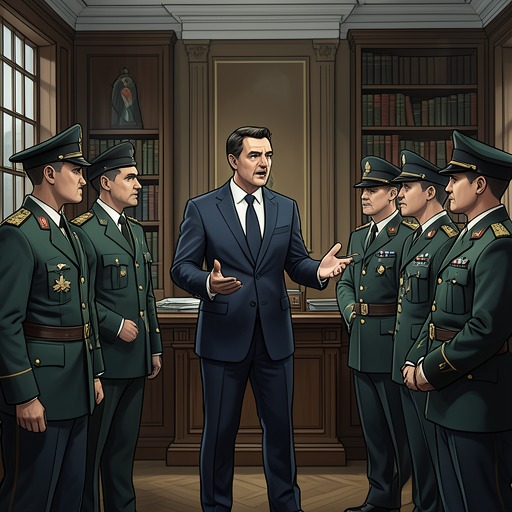
His later criticism acquired a sharper political meaning as U.S.–Soviet relations deteriorated. Oppenheimer persistently raised difficult questions about nuclear weapons and challenged proposals for nuclear warfare promoted by military officials and academic strategists. The return of Republicans to the White House in 1953 brought advocates of massive nuclear retaliation, including Lewis Strauss, into positions of power. Oppenheimer’s willingness to question those policies troubled Washington’s national-security establishment; his experience and public standing made him a credible critic, not simply a former project director.
The dispute also stood against a longer tension between scientific exchange and enforced secrecy. During the Manhattan Project, a thick wire net covered the balcony outside the Berkeley summer-seminar room, and Oppenheimer alone held its key. Later, when Groves tried to stop a weekly open-ended colloquium at Los Alamos, Oppenheimer insisted that scientists needed sustained discussion because their work had been so compartmentalized. He also agreed with Niels Bohr’s argument that a safer atomic future required an open world, international confidence, and access for inspectors. These commitments did not erase the secrecy obligations under which Oppenheimer had worked; they help explain why his postwar challenge to secret nuclear policy became entangled with judgments about his security fitness.
Charges and the hearing
In December 1953, President Dwight D. Eisenhower ordered a “blank wall” between Oppenheimer and the government’s nuclear secrets. On Christmas Eve, FBI agents arrived at Olden Manor and took control of his remaining classified papers. That same day he received a formal letter of charges, dated December 23. The letter revived allegations about associations with Communists, contributions to the Communist Party of California, and the Chevalier affair. It also accused him of helping persuade other scientists not to work on the hydrogen bomb and of slowing its development. The hydrogen-bomb charge was the crucial addition: the other information had previously been reviewed and discounted by Groves and the AEC.
The hearing opened on April 12, 1954, before a personnel security board chaired by Gordon Gray. Oppenheimer retained Lloyd K. Garrison as his lawyer; Roger Robb prosecuted the case. This was an administrative security review, not a criminal trial, but its allegations reached well beyond a narrowly defined breach of law or security regulation. The board assessed Oppenheimer’s associations, candor, personal loyalties, and policy judgments. While it deliberated, Oppenheimer and Kitty watched the televised Army-McCarthy hearings, a public spectacle that offered a disturbing parallel to the proceedings he had just faced.
On May 23, the Gray Board returned a two-to-one verdict. It deemed Oppenheimer loyal but a security risk, and Gray and board member Morgan recommended that his clearance not be restored. Their opinion did not accuse him of violating a law or security regulation. Instead, it treated his alleged susceptibility to influence, his conduct in the hydrogen-bomb debate, and what the board called failures of candor as grounds for doubt. Gray and Morgan argued that loyalty to friends could conflict with obligations to the country and the security system; in their reasoning, Oppenheimer’s attachment to people and independence of judgment became security liabilities. Ward Evans dissented, observing that most of the derogatory information had already been before the committee when Oppenheimer was cleared in 1947.
Revocation and public record
The commissioners’ final decision divided its judgments: four to one that Oppenheimer was loyal, and four to one that he was a security risk. His clearance was rescinded one day before it was due to expire. In the majority opinion, the hydrogen-bomb dispute, central to the Gray Board’s reasoning, disappeared; the emphasis shifted to Oppenheimer’s character and associations, especially the Chevalier affair and his connections with students who had been Communists. The change in emphasis underscored how the decision was not simply a technical assessment of access to secrets. It was also a judgment on the kind of adviser Oppenheimer had been and the authority he had claimed to question government policy.
The public release of the hearing record widened the consequences. Lewis Strauss had persuaded the commissioners to publish the transcript after claiming that a copy had been stolen from a train; it was soon found in the lost-and-found office at Pennsylvania Station. Publication broke the board’s promise to witnesses that their testimony would remain confidential. The printed record ran to 993 densely printed pages and approximately 750,000 words. Strauss’s staff highlighted damaging testimony for reporters, and coverage exposed intimate details, including Oppenheimer’s relationship with Jean Tatlock. Yet the record also made the hearing’s methods and political character visible to a much broader audience.
Consequences and significance
The ruling denied Oppenheimer access to government secrets, but it did not silence the public response. Some 282 Los Alamos scientists signed a letter defending him; more than 1,100 scientists and academics around the country signed a protest petition. The decision enhanced his fame in the United States and abroad. Previously known above all as the father of the atomic bomb, he now appeared to many as a scientist punished by the state, a modern Galileo-like figure. The paradox was captured by broadcaster Eric Sevareid: government would no longer have access to secrets that might be born in Oppenheimer’s brain.
The public record also outlasted the effort to discredit him. The transcript revealed the inquisitorial character of the hearing, and its publication helped turn the case into a document of the early Cold War. The campaign intended to damage Oppenheimer’s standing instead made the fairness of the process, and the political use of security judgments, subjects of lasting scrutiny. His loss of clearance thus had two linked meanings: a concrete exclusion from government work and a public reckoning over whether dissent about nuclear policy could be treated as evidence of disloyalty.