Pajarito Plateau
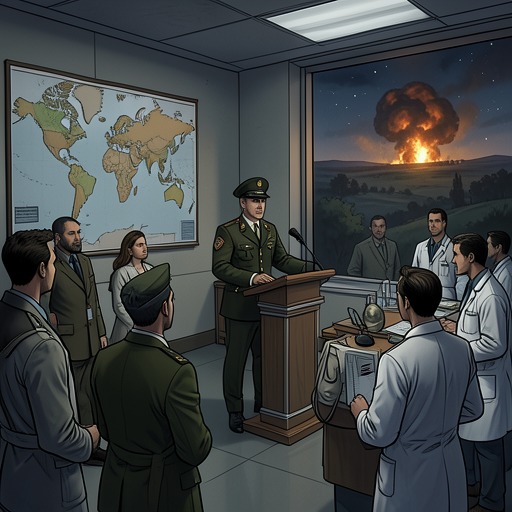
American PrometheusThe Pajarito Plateau is the high, open mesa where J. Robert Oppenheimer helped redirect the search for a wartime weapons-laboratory site to Los Alamos. Its expansive mountain views and relative isolation shaped both its appeal and its rapid transformation from a boys’ school landscape into a military construction zone.
Setting and Terrain
On November 16, 1942, Oppenheimer, Berkeley physicist Edwin McMillan, and Army officer Maj. John H. Dudley traveled to Jemez Springs, where Dudley had selected a site in a deep canyon for the proposed laboratory. Oppenheimer and McMillan objected that the strip of land at the canyon bottom was too narrow for the town they expected to build, offered no view of the mountain scenery, and would be difficult to fence because of the steep terrain. Oppenheimer knew the country from horseback trips; the Pajarito Plateau lay across the landscape he had explored over many summers with his brother.
The party drove roughly thirty miles northwest from Jemez Springs across the lava mesa to the Los Alamos Ranch School. The school stood at 7,200 feet, near timberline. To the west, the Jemez Mountains rose to 11,000 feet; from Fuller Lodge, the view extended forty miles east across the Rio Grande Valley to the Sangre de Cristo Mountains, whose peaks reached 13,000 feet. The plateau offered the open prospect missing from the canyon site.
Choosing Los Alamos
When Leslie Groves arrived at Jemez Springs and agreed the canyon site would not work, Oppenheimer proposed the school on the plateau as an alternative. The setting joined features that mattered differently to the two men: Oppenheimer had long been drawn to New Mexico’s desert high country, while Groves needed a remote location for the project. Within two days, the Army began paperwork to buy the school. The site was designated Site Y.
Oppenheimer returned several days later with McMillan and Ernest Lawrence to inspect the property. For security, the visitors used assumed names, but student Sterling Colgate recognized the physicists from photographs in a physics textbook. The visit made the distant war feel suddenly present to the school community; soon afterward, bulldozers and construction crews arrived on the grounds.
The School Grounds
The school occupied 800 acres and included the Big House, its main building; Fuller Lodge, built in 1928 from 800 ponderosa logs; a rustic dormitory; and several smaller structures. A pond behind the lodge served as an ice-skating place in winter and a canoeing spot in summer. During the site visit, Oppenheimer, Groves, and McMillan saw schoolboys running on the playing field in shorts through hazy, drizzly snowfall, an incongruous glimpse of ordinary school life just before the grounds were taken over for wartime construction.
Isolation and Transformation
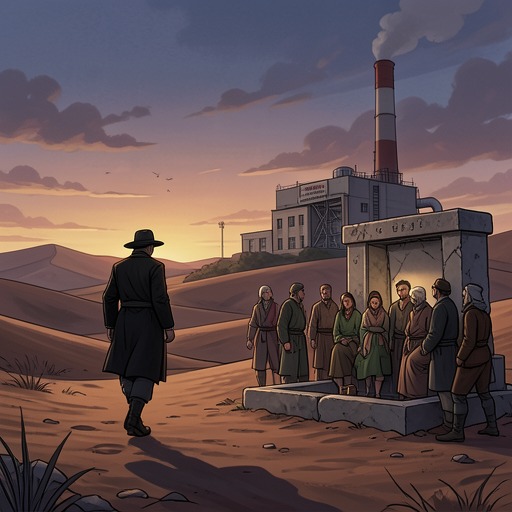
The plateau gave Oppenheimer the mountain views he wanted, while its remoteness gave Groves a defensible degree of separation: there was only one winding gravel road and one telephone line into the site. Over the following three months, construction crews erected inexpensive barracks with shingled or tin roofs and crude chemistry and physics laboratories, all painted Army green. The school landscape became the nucleus of a hastily built project town.
Oppenheimer concentrated on recruiting scientists and gave little attention to the administrative work of creating a town. The transformation left him with a lasting sense of responsibility for the damage to the setting. Years later, he acknowledged that he was responsible for ruining a beautiful place. The plateau thus held together two consequences of the choice: the remote mountain landscape made the laboratory possible, and the laboratory’s arrival altered the place that had first attracted him.