United States
American PrometheusThe United States in the book is both a physical setting and an organizing force: its universities, military agencies, political institutions, and scientific communities enable the atomic project while defining the boundaries within which its scientists can work and speak. The story moves between Berkeley, the isolated laboratory at Los Alamos, and the centers of national power, showing how scientific collaboration, military secrecy, and public policy became entangled. The result is a portrait of a country whose capacity to mobilize scientific labor made the bomb possible, and whose security system and political choices shaped what followed.
From University Laboratories to Big Science
The transformation begins before the wartime bomb project. By the early 1930s, Ernest Lawrence had built increasingly powerful cyclotrons at the University of California. He secured an old wooden building beside LeConte Hall and named it the Berkeley Radiation Laboratory. The machines promised access to the atom’s innermost structure, but their scale also brought new demands: an eighty-ton magnet required substantial funding, and Lawrence cultivated support from influential Berkeley regents and businessmen. His work exemplified Big science, in which expensive equipment, institutional resources, and organized research increasingly determined what scientific questions could be pursued.
The growth of industrial research in the United States sharpened the contrast between this emerging model and the smaller-scale theoretical physics practiced by J. Robert Oppenheimer. The number of industrial laboratories grew from four in 1890 to nearly one thousand four decades later, while many of these laboratories prized technological applications over basic science. Some younger researchers found large-machine research alienating; Robert Wilson, who had studied with both Lawrence and Oppenheimer, left Berkeley for Princeton after judging the work associated with the machines to be team research at its worst. The contrast was not simply between different kinds of equipment. It concerned the organization of knowledge, the control of research, and the growing proximity of scientific work to military purposes.
Los Alamos and the National Mobilization of Science
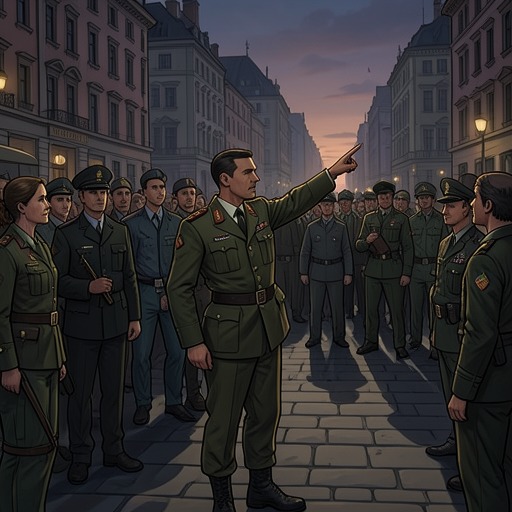
The wartime project required Oppenheimer to take on a new role: director of a weapons laboratory charged with bringing together work from distant sites and turning it into a usable atomic weapon. In November 1942, he accompanied Edwin McMillan and Army officer John H. Dudley to inspect a proposed site near Jemez Springs in New Mexico. The location offered the desert landscape Oppenheimer knew from horseback trips, but its isolation also served military needs. The site had a winding gravel road and a single telephone line; construction crews raised inexpensive barracks and makeshift laboratories, all painted Army green.
The choice exposed the practical costs of separating a research center from the infrastructure of an established American city. John Manley contrasted Los Alamos with Chicago, where the first controlled nuclear chain reaction had been achieved amid a major university, libraries, machinists, glass-blowers, and engineers. Los Alamos initially lacked such resources. Oppenheimer nevertheless promised a functioning community for scientists and their families, including homes, a school, a library, a hospital, laundry, and a grocery and mail-order service. Building the laboratory meant building a town, and the promise of a swift scientific result depended on solving an immense set of logistical problems.
The laboratory’s organization also revealed a conflict between military compartmentalization and the cooperation that research required. Oppenheimer supported a weekly, open-ended colloquium after Hans Bethe proposed it, arguing that scientists had much to gain from thorough discussion after years of highly divided information. At the first session, on April 15, 1943, Bob Serber briefed fewer than forty scientists in an unfinished schoolboys’ library. Carpenters could be heard working nearby, and a worker’s leg appeared through the ceiling. When Serber used the word bomb, Oppenheimer sent John Manley to suggest the less revealing code word gadget. The scene captures both the roughness of the new installation and the effort to make scientific exchange possible under military restrictions.
In practice, the restrictions grew increasingly difficult to maintain. Edward Teller warned Oppenheimer that excessive secrecy was a source of anxiety, and even Ernest Lawrence disregarded General Leslie Groves’s instructions about what he could tell a group of scientists. The formal rules remained, but discussion among the researchers became less restricted as the work demanded it. The United States’ wartime laboratory thus depended on a contradiction: military control sought to divide knowledge, while the scientists’ task required them to bring knowledge together.
Security, Surveillance, and the Limits of Openness
The same contradiction shaped Oppenheimer’s personal life at Los Alamos. Army counterintelligence arranged full-time technical and physical surveillance, and an undercover agent, Andrew Walker, served as his driver and bodyguard. Agents monitored Oppenheimer’s mail and home telephone, and his office was wiretapped. Oppenheimer, once a comparatively casual professor, became careful about handling classified papers and tried to comply with security officers’ requests. At the same time, he complained about being watched and about restrictions that kept him from speaking to his own brother.
The pressure was not abstract. In the summer of 1943, Oppenheimer told Robert Bacher that he was considering quitting, citing both investigations into his past and the strain of the job. Bacher answered that no one else could do it. Oppenheimer continued, but his experience shows how national security oversight reached inside the laboratory and into the daily lives of the people working there. The institution needed his leadership while surrounding him with suspicion; scientific responsibility was exercised within a system that closely monitored its own participants.
The book also sets this domestic security regime against the international scientific openness advocated by Niels Bohr. In a memorandum shared with Oppenheimer in 1944, Bohr argued that the new weapon would transform warfare and that a temporary national advantage could become a lasting danger unless states agreed on controls. His proposal called for international inspection and Soviet participation in postwar planning before the bomb became a reality. Oppenheimer agreed with the basic case for openness, including the idea that the Soviet Union should be informed that the project existed and that it posed no threat. The argument placed scientific exchange and international confidence in direct opposition to the secrecy on which the American military project operated.
Public Debate and Nuclear Policy
By late 1944, scientists at Los Alamos were asking whether building the bomb remained justified as the war approached its end. Robert Wilson proposed a formal discussion of its possible effects on civilization. Oppenheimer initially warned that such a meeting could attract the attention of military security officers, but he attended when Wilson organized it. About twenty scientists gathered in the building that housed the cyclotron to consider why work on the weapon continued when the war was nearly won.
The debate recurred in larger meetings. At a March 1945 discussion attended by about forty scientists, Oppenheimer again tried to discourage participation, maintaining that the bomb’s use was not their task. Yet he also argued that the world must know about the weapon rather than allow it to remain a military secret. With the United Nations due to begin meeting in April, he believed its delegates should confront the existence of weapons of mass destruction as they considered the postwar order. Wilson found the argument persuasive: a world in which sovereignty over certain matters belonged to the United Nations might, he hoped, make another war less likely. The exchange shows how scientists disputed not only the weapon’s technical development but also who had the right and responsibility to discuss its use.
After the war, those questions entered American public life through competing interpretations of scientific responsibility and policy. Oppenheimer’s 1948 remarks about physicists having known sin drew criticism from his friend Isidor Rabi, while Patrick Blackett argued that the atomic bombings of Japan were also an opening operation in the diplomatic conflict with the Soviet Union. Oppenheimer’s public reputation and political past likewise became part of the national argument: in a 1948 Time profile, he described his left-wing education as an essential part of becoming a whole person and of preparing for his work at Los Alamos.
The expanding nuclear program made the policy consequences concrete. On January 31, 1950, President Harry S. Truman authorized a program to assess the technical feasibility of a thermonuclear weapon. The administration also ordered a review of strategic planning that produced NSC-68, which called for a sustained buildup of the free world’s political, economic, and military strength and rejected a policy of no first use. By the end of the decade, the American stockpile had grown from about 300 warheads to nearly 18,000. The decision marked a turning point in the arms race and demonstrated how national policy could amplify the military logic first embodied in the laboratories.
The United States therefore holds several roles in the book at once: home to the universities and research centers that enabled modern nuclear physics, the state that organized the bomb project under military secrecy, and the political power whose postwar choices expanded the nuclear arsenal. Its scientific institutions made unprecedented collaboration possible, but their dependence on government authority and defense priorities narrowed the space for dissent. The country’s history in these episodes is defined by that unresolved tension between knowledge shared among scientists and knowledge controlled in the name of national security.