
Mediated Violence
American PsychoThis flow traces how films, television, music, recordings, and staged images teach Bateman to experience violence as entertainment.
increasing Bearing strength in each event
 decreasing
Bearing strength in each eventdecreasingMovie Grammar
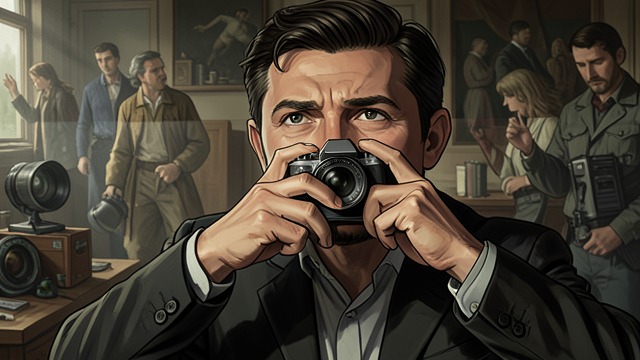
Movie Grammar
Cinematic Thought
Bateman repeatedly describes events as cuts, dissolves, slow motion, and movie scenes.
Emotional Distance
The language converts lived encounters into consumable images.
Significance
Mediation protects him from recognizing victims as real.
Television Routine
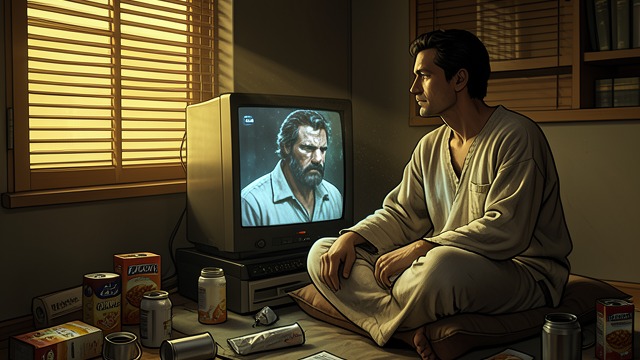
Television Routine
Daily Spectacle
The Patty Winters Show supplies bizarre topics that structure Bateman's mornings.
Passive Absorption
Murder, illness, deformity, and celebrity become interchangeable programming.
Significance
Television makes atrocity ordinary before Bateman imitates its logic.
Recorded Torture
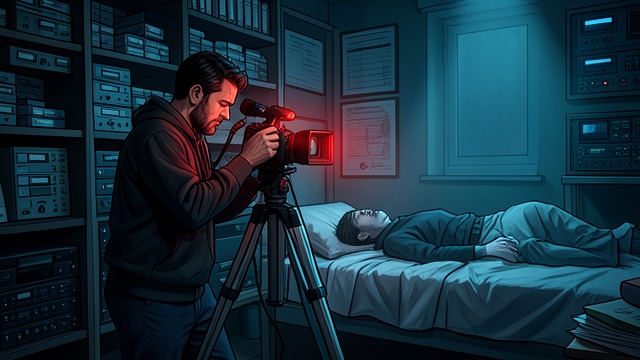
Recorded Torture
Private Production
Bateman films victims with cameras and stages their bodies for later viewing.
Repetition
Recording allows him to replay violence as an object rather than a memory.
Significance
Technology turns murder into authorship without giving it meaning.
U2 Concert
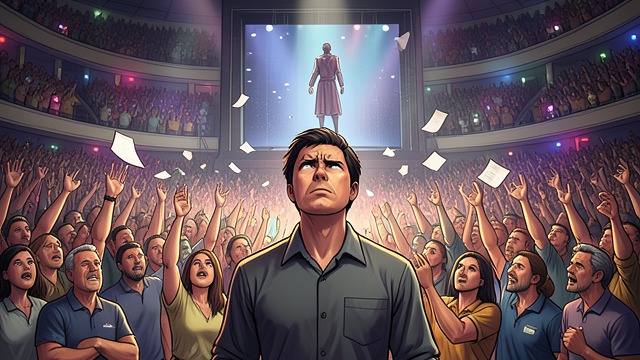
U2 Concert
Mass Performance
Bateman attends a U2 concert where music, clothing, and crowd behavior become overwhelming spectacle.
Fleeting Connection
He briefly feels attached to Bono before the sensation disappears.
Significance
Even transcendence is experienced as a staged image and quickly replaced by status anxiety.
Letterman Aftermath
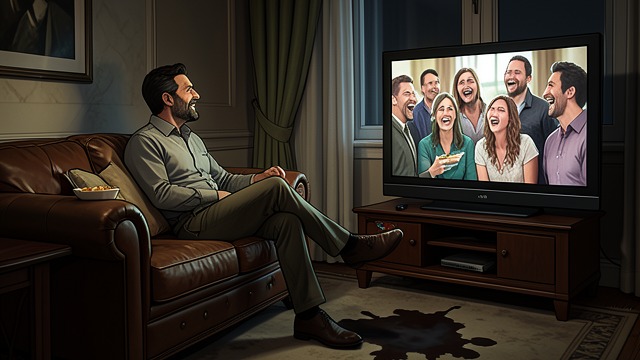
Letterman Aftermath
Domestic Viewing
After violence, Bateman watches late-night television and game shows in his apartment.
Moral Continuity
The screen supplies applause and jokes while bodies remain nearby.
Significance
Entertainment does not interrupt violence; it completes its emotional numbness.
early spring
early May
summer
late spring
late summer
