Wurlitzer 1015 jukebox
American PsychoThe Wurlitzer 1015 jukebox is a prominent fixture in Patrick Bateman's apartment and one of the clearest objects through which his private life is organized. More than a machine for playing records, it helps convert the apartment into a showroom of expensive taste: its glow, polished presence, and programmed songs accompany sexual fixation, bodily routines, waiting, and the return of violent thoughts. Its repeated appearance gives the otherwise unstable narrative a mechanical rhythm, even as the scenes around it expose the distance between Bateman's immaculate possessions and his disordered interior life.
Appearance and Domestic Setting
The jukebox stands in the corner of Bateman's living room, where it casts a glow while playing The Tokens' "The Lion Sleeps Tonight." Bateman compares it unfavorably with the hard-to-find Wurlitzer 850, making the object part of his habit of ranking luxury goods by rarity and desirability. The comparison is revealing: even an impressive possession is measured against a more exclusive version, so ownership does not produce satisfaction so much as another opportunity for dissatisfaction and distinction.
The machine shares the living room with an original David Onica painting, a highly specified Toshiba television, and other carefully selected furnishings. In this setting, the jukebox is both appliance and display object. Its practical use is inseparable from its visual and status value, and its presence helps establish the apartment as a curated environment in which every surface, sound, and brand contributes to Bateman's performance of control.
Music, Desire, and Repetition
The jukebox accompanies Bateman after he returns home and moves through a sequence of sexual thoughts involving Evelyn Richards, Courtney Lawrence, Vanden, and a model from a Calvin Klein advertisement. The music continues while his attention shifts among women and images, linking the object's cheerful entertainment function to a private consciousness marked by repetition, substitution, and emotional vacancy. The contrast between the buoyant song and Bateman's weak orgasm makes the jukebox's atmosphere less comforting than anesthetic: it supplies a polished soundtrack to an experience that cannot produce genuine pleasure.
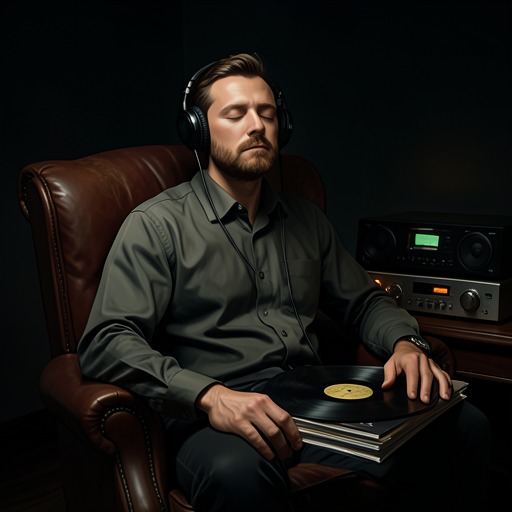
The Wurlitzer 1015 jukebox also plays "Cherish" by the Lovin Spoonful while Bateman waits for Patricia. During that wait, he decides that Patricia will remain alive, but his reasoning is arbitrary and self-serving. He considers her wealth, the effect of champagne, and the possibility of staining an Alexander Julian suit. The jukebox therefore frames a moment in which life and death are treated as matters of taste, convenience, and personal choice. Its romantic music does not soften the scene; instead, it intensifies the grotesque separation between the sentimental surface of the setting and the cruelty of Bateman's thoughts.
Exercise, Violence, and the Private Stage
After Courtney Lawrence cancels a dinner, Bateman performs two thousand abdominal crunches and jumps rope for thirty minutes in his living room while the Wurlitzer repeatedly blasts "The Lion Sleeps Tonight." He has already spent nearly two hours exercising at Xclusive, yet he continues the ritual at home. The jukebox's repetition mirrors the compulsive repetition of the workout, turning the room into a closed circuit of music, physical discipline, and mounting tension.
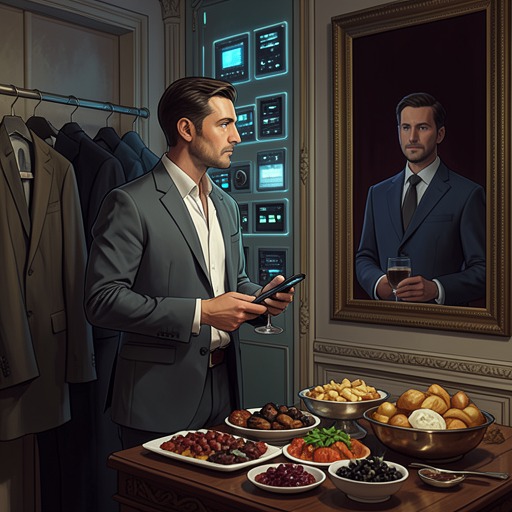
The same episode associates the jukebox with the equipment Bateman prepares for a trip to D'Agostino's: three knives and two guns are packed into a Louis Vuitton attaché case, while an expensive leather coat, gloves, designer clothing, and a Bergdorf Goodman umbrella complete his appearance. The machine does not cause the violence, but its recurring soundtrack belongs to the material arrangement through which Bateman makes violence coexist with grooming, shopping, and luxury. The apartment becomes a backstage area where respectable presentation and murderous possibility are assembled side by side.
Narrative Function and Significance
The jukebox's recurrence creates a recognizable acoustic motif within Bateman's fragmented account. It returns in moments of solitude, anticipation, sexual frustration, and compulsive exercise, providing continuity when identity, chronology, and perception remain unstable. Its mechanical capacity to repeat a song becomes an analogue for Bateman's own repetitions: the same brands, bodily rituals, fantasies, and attempts to impose order recur without resolving anything.
The object also embodies the novel's contrast between appearance and reality. A Wurlitzer 1015 jukebox signifies cultivated taste and conspicuous affluence, yet it accompanies scenes in which Bateman's inner life becomes increasingly violent and incoherent. Its polished entertainment value belongs to the social world of consumerism and material display, while its repeated presence in the apartment exposes the private emptiness beneath that display. As a result, the jukebox is not merely background decoration. It is part of the machinery by which Bateman stages normality, and its bright, repetitive music makes the failure of that performance audible.