Billy Poe
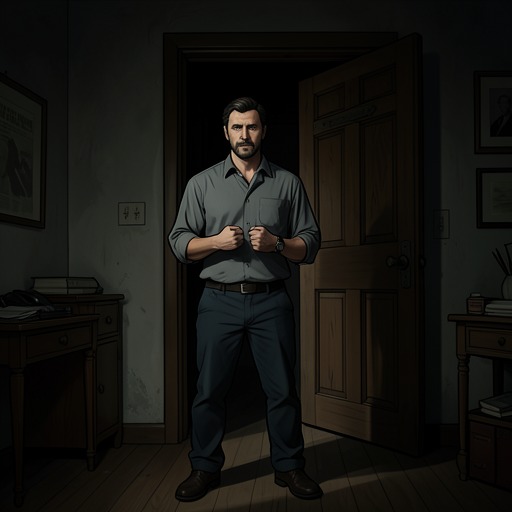
American RustBilly Poe is a large, locally celebrated former football player whose physical confidence conceals a habit of freezing over consequential choices or answering pressure with violence. After Isaac English kills Otto Carson while intervening to protect him, Billy faces a murder case and later prison danger; he refuses to disclose Isaac's role, taking on the legal and physical risks himself. His arc makes loyalty both a source of care and a route into self-endangerment.
Identity and Background
Billy is a year older than Isaac English, tall and broad, weighing about 240 pounds—more than twice Isaac's size. The town had expected him to attend college and continue playing football, though his prospects were not at the highest level. Instead, two years later, he is living at his mother's trailer, with empty beer cans around him and no settled direction. He works at a hardware store, but his employment is insecure; Bud Harris later describes him as having no job, few skills, and no reliable car. Billy can work practically with his hands, but he does not consider himself suited to classroom learning.
Football is the arena in which Billy feels most capable. When competing, he reads movement with extraordinary precision: the openings between players, where a foot will land, and the ball's path seem to come to him at once. The experience makes him feel as if he is moving in real time while others slow down. He likes himself best in that state, precisely because it seems to place some other part of him in control. Away from the field, decisions do not produce the same clarity. He believes he either ignites into impulsive action or stops and examines a choice until the moment passes.
Billy's home life carries both responsibility and strain. His mother has severe rheumatoid arthritis and cannot reliably split wood, while the electric heaters are expensive. Billy knows that leaving the firewood until the last minute can leave her cold, and his failures to keep up with the task feed his sense that he is letting her down. His family history also shapes his understanding of violence. His father, Virgil Poe, has hit him, and Hiram Poe once struck him as well. Billy interprets this pattern as inherited, extending blame beyond the people who directly harmed him to an older, less easily located source.
The Machine-Shop Death and Its Aftermath
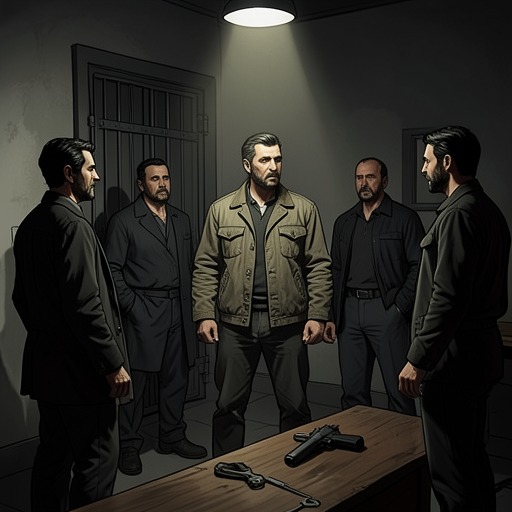
At the abandoned machine shop, Billy remains inside while Isaac leaves with Billy's backpack. When shouting and banging draw Isaac back into the building, he finds Murray Clark on the ground and Billy being threatened by Jesús and Otto Carson. Billy has his hands raised, trying to calm the situation. Isaac intervenes, and Otto Carson dies in the confrontation. Billy leaves the scene with Isaac rather than contacting the police, and his jacket remains at the shop.
The walk home turns the immediate crisis into a reckoning with ordinary obligations. Billy is without his jacket in sleet and snow, and he remembers that he has not split the wood his mother needs. He worries about leaving her in a cold house and condemns himself for failing at work and at home. At the same time, he recalls Isaac's intervention and the danger he faced. Billy understands that the killing was connected to an immediate threat against him, but he also recognizes that legal authorities may see only a dead man and two people who fled.
Harris brings Billy from a cold, wet cell to his office and presses him about the dead man and the return to the scene. Billy denies knowing what happened, then gives Harris the immediate circumstances: one man had a knife at his neck while the dead man came toward him. Harris urges him to explain who else was present so the death can be presented as self-defense. Billy does not identify Isaac. Harris has spent years intervening in Billy's troubles and warns that the murder charge is a serious danger, but the warning does not make Billy abandon his silence.
Billy later confronts the moral meaning of that silence. He burns the sneakers he wore on the night Otto died, an attempt to remove a possible trace of the event, while recognizing that destroying them cannot settle what happened. He considers the possibility of a long sentence or execution and imagines losing the years in which he might have lived outside prison. His reasoning repeatedly circles around whether Isaac or he should bear the consequences. He finally accepts inwardly that he is responsible for Otto's death—not because he struck the fatal blow, but because Isaac acted to save him. In Billy's understanding, this is the truth that matters most, even though he continues to conceal it from the authorities.
Relationships and Conflicts
Billy's friendship with Isaac is built around an imbalance of size and fearlessness, but Billy does not simply regard Isaac as weak. He sometimes sees Isaac's caution as timidity and assumes that Harris has protected them from arrest; he also relies on Isaac's intervention when the danger at the shop becomes immediate. Their bond is therefore neither uncomplicated admiration nor one-way rescue. Billy's later refusal to name Isaac is an attempt to repay that protection, even at substantial cost to himself.
Billy's relationship with Lee English, Isaac's sister, carries a different kind of uncertainty. After eight months without a call, he learns that Lee is married, yet when they meet she has dressed carefully and moves close to him. At Frank's Tavern, Billy takes her hand and reads her blush and familiar crooked smile as signs of continuing feeling. His excitement is intense, but he also knows that their earlier connection had not promised permanence. The encounter offers closeness without resolving what they mean to each other.
Harris occupies a difficult place in Billy's life: authority figure, persistent protector, and critic. Billy knows Harris has repeatedly kept him from worse consequences, but resents being told that he is spoiled and stupid. Harris says he has been working for years to keep Billy in one piece; Billy answers that Harris is trying to make himself feel better. The exchange exposes a genuine divide. Harris sees a pattern of avoidable danger and believes intervention can still change its outcome; Billy experiences those interventions as judgments that do not undo his own choices.
Prison, Loyalty, and Survival
In custody, Billy is held in a deliberately harsh cell, then returned to a cell of his own. Prison reorganizes his surroundings into a system of surveillance, factions, and shifting protection. In the yard he keeps close to Dwayne and the group around Black Larry, while understanding that his place in the inner circle is provisional. Clovis and others control access to the weight pile, and Billy learns that even ordinary routines are governed by informal authority. The green Valley remains visible beyond fences and razor wire, but it no longer feels like the place he knew.
As threats mount, Billy faces a choice between seeking legal help and preserving Isaac's safety. He refuses to speak with his lawyer, even when he is told that he must sign papers to secure representation. He understands that telling the lawyer who killed Otto could redirect the case toward Isaac. At the same time, he knows that refusing to disclose the truth leaves him exposed to prison retaliation. His own fears are plain to him, but so is the possibility that Isaac might cope with the consequences better than he can. Loyalty does not make the choice easy; it makes the cost of either answer personal.
Billy tries to find a middle course by asking for protective custody. In a new cell, he sharpens a toothbrush handle and considers whether he can make a weapon, then imagines running to the guard station to demand protection. When he attempts to get there, the doors are locked and Clovis and several younger men close in. Billy struggles to get away, but they bring him down and he is badly injured. He survives the assault and wakes in a hospital, disoriented by the apparent rush and movement of his memory. His first words to the nurse are a plain acknowledgment of being present: for now, survival has replaced the choice he had been trying to make.
Change and Narrative Significance
Billy's arc joins physical strength to vulnerability without treating them as opposites. His size and football instincts once made him feel unusually capable; they do not protect him from indecision, legal jeopardy, or prison violence. Nor does his tendency toward fighting explain everything about him. He can recognize when a choice has become a pattern, feel the burden of caring for his mother, and accept a responsibility that the formal account of the killing might place elsewhere.
The central tension is between legal guilt and moral responsibility. Isaac kills Otto, but Billy understands the death as bound to the threat against him and refuses to turn that understanding into testimony. His silence protects Isaac while deepening Billy's own danger, first through the murder case and then through the prison's informal order. The narrative leaves him alive in a hospital, not with the legal or relational conflict resolved, but with the consequences of loyalty made physically unmistakable.