Buell City Council
American RustBuell City Council is the municipal body responsible for the city budget in a community facing declining incomes, deteriorating infrastructure, and mounting public-service demands. Its decisions shape the resources available to local government, most visibly the police department, as Buell struggles to pay for essential repairs and maintain services.
Budget and Infrastructure
The council’s budget arrived as the city’s infrastructure was crumbling and the Environmental Protection Agency had ordered repairs to a sewer system that spilled sewage into the Monongahela River during heavy storms. These obligations competed for funds in a town with small-town revenues and problems that Bud Harris regarded as comparable to those of a larger city.
The police department’s allocation fell from $785,000 to $541,000, the largest cut in its history. The reduction made the city’s fiscal limits tangible: the department would have to reduce training, keep aging vehicles in service, and dismiss three full-time officers. The budget thus connected infrastructure needs to the everyday capacity of municipal services rather than treating them as separate problems.
Effects on the Police Department
The cuts left the department facing a substantial staffing change. From the following month, it was expected to consist of Bud Harris, Steve Ho, Dick Nance, and twelve part-time officers. Harris anticipated dismissing Bert Haggerton, Ron Miller, and Jerzy Borkowski; Miller had worked with him for twenty years and had children in college. Harris considered the personnel decisions his responsibility, even as he contemplated whether to tell the officers that the council had chosen whom to retain.
Harris also feared that the reduction was part of a longer decline rather than a one-time adjustment. He expected future budgets to shrink until Buell Police Department could no longer operate independently and would have to merge with the Southwest Regional department based in Belle Vernon. Three years earlier, the city had run out of money late in November; municipal employees took loans from Mon Valley Bank in place of their final four weeks of pay, and the city repaid them at the start of the new year. The episode illustrates the precarious finances behind the council’s budget decisions, though the novel does not present it as a council action in particular.
Political Scrutiny and Local Decline
The council also appears in the context of a state’s attorney’s investigation of Don Cunko, a council member and a friend of Harris. Harris believed investigators would discover that a club basement and wet bar in Cunko’s house had been paid for by Steelville Excavation, the company that won the contract to replace Buell’s sewer system. The account places a possible misuse of public trust beside the city’s urgent infrastructure costs, but does not establish that the council as a body participated in or approved any wrongdoing.
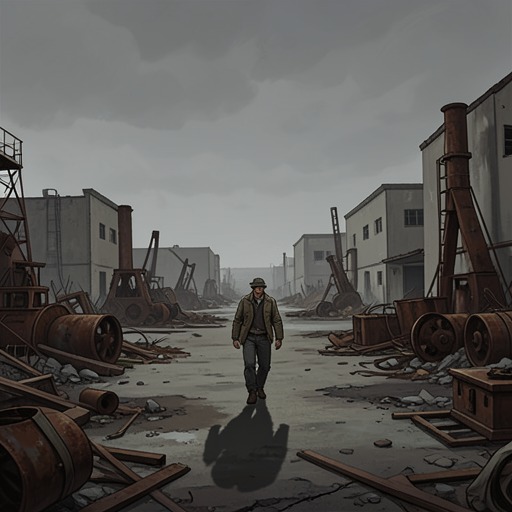
Buell’s financial strain reflects a wider regional contraction. The Valley’s population was growing again even as incomes and municipal budgets fell, and decades of inadequate infrastructure investment had left towns with mounting needs. In that setting, Buell City Council’s budget decisions are part of a broader struggle to preserve basic local services with diminishing resources; the narrative also makes clear that municipal budgets and policing cannot by themselves reverse the loss of stable employment across the region.