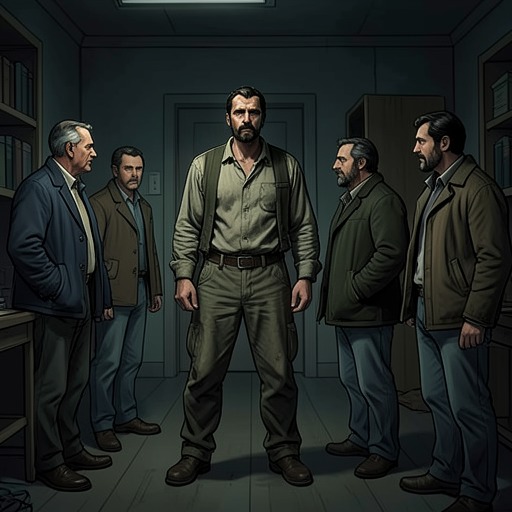
Buell Eagles
American RustThe Buell Eagles are the football team for which Billy Poe played tight end, a role that made college football seem like a possible next step. In the novel, the team is seen chiefly through Poe’s former athletic promise and the community’s memory of it: football offers a measure of local recognition, but not a future that circumstances guarantee.
Identity and Local Context
The evidence identifies the Buell Eagles as a football team but does not describe its organization, season, or record. Its significance is instead personal and communal. Poe had been a prominent enough player that residents expected him to continue playing after high school, and his time with the team became a remembered part of his public identity in Buell.
That memory belongs to a town shaped by the collapse of the steel economy. The Valley had lost 150,000 jobs since Poe and Isaac English were born, leaving many towns unable to afford basic services. Against that backdrop, the prospect of playing college football appears as a narrow route outward, not evidence of a secure or widely available opportunity.
Billy Poe’s Playing Career and Expected Future
Poe played tight end for the Buell Eagles. The town expected him to attend college and keep playing ball; residents considered him good enough for some college program, though not for a major Big Ten school. The expectation was informal and communal, not a documented offer or recruitment: the account establishes what people thought would happen, but not that a college opportunity was secured.
Two years later, Poe was living in his mother’s trailer, a year older than Isaac English and apparently past his athletic prime. The contrast between anticipated college ball and his present circumstances gives the team’s place in his story its poignancy. His Eagles years register as a promise that has receded, rather than as a continuing career.
Recognition and the Football Jacket
The team’s importance also persists through small acts of recognition. When Isaac identifies Poe as a former tight end for the Buell Eagles, Poe gives him a look. Later, an older man recognizes Poe’s football jacket, recalls watching the games after work, and says that he had expected Poe to leave for college football. He remembers Poe as good, and not so long ago.
The jacket makes that past visible in the present, while the man’s recollection confirms that Poe’s athletic reputation extended beyond his own household. The exchange does not restore the future people once imagined for him; instead, it shows how the Buell Eagles remain attached to a version of Poe that the town still remembers even as his circumstances have changed.
Narrative Significance
The Buell Eagles represent a local source of distinction and a possible path beyond Buell, but the evidence keeps that possibility modest: Poe was thought capable of playing somewhere, not destined for a major program. His stalled trajectory places athletic promise beside the Valley’s broader loss of work and opportunity without suggesting that the team itself caused or could have prevented that decline.
The team’s presence is therefore less institutional than biographical. It survives in the town’s expectations, in Poe’s jacket, and in the recollection of someone who watched him play. Those traces preserve the gap between the future once imagined for Poe and the life he is living now.