Buell Police Department
American RustThe Buell Police Department is both a local law-enforcement agency and an institution under pressure from the decline of the community it serves. Its shrinking budget, depleted staffing, and informal practices reveal a force trying to maintain public order while the economic and civic foundations of Buell weaken around it.
Identity and Institutional Role
When Bud Harris became chief at forty, he was the youngest person to hold the position in Buell and, Harris believed, in the whole Mon Valley. The department then had fourteen full-time officers and about six part-timers. By the time Harris was fifty-four, the balance had reversed: part-time officers outnumbered full-time staff, and his pension was eighteen months away. His career thus spans a transformation in the department’s capacity as well as in the town it polices.
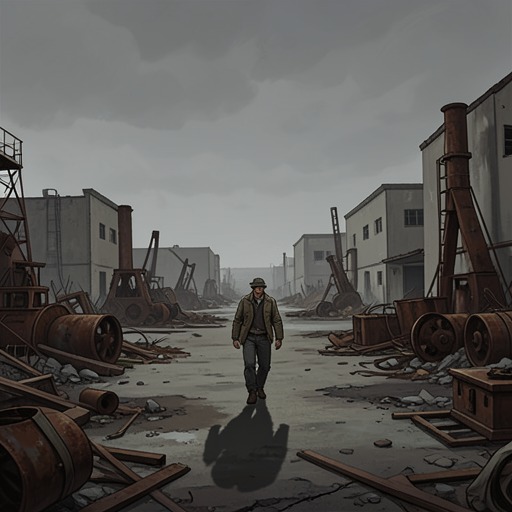
Buell’s police work takes place amid the aftermath of steel’s collapse. The Mon Valley had been a major center of steel production, but since Isaac English and Billy Poe were born it had lost 150,000 jobs. Many towns could no longer afford basic services, and some had lost their police forces altogether. Harris remembers the closure of the mills and the migration that followed: people left for places such as Texas in search of work, only to find that jobs were scarce there too. In the Valley, workers who had earned thirty dollars an hour could end up bagging groceries for a fraction of that wage. The department’s difficulties are therefore not separate from the region’s decline; they are one of its civic consequences.
Budget and Staffing Crisis
The department’s immediate crisis comes through the city budget. With infrastructure deteriorating and the EPA requiring Buell to repair a sewer system that spilled into the Mon River during heavy storms, the city cut the police budget from $785,000 to $541,000. Harris describes this as the biggest cut in the department’s history. The reduction means less training, continued use of already worn-out vehicles, and the loss of three full-time employees—nearly the entire full-time force.
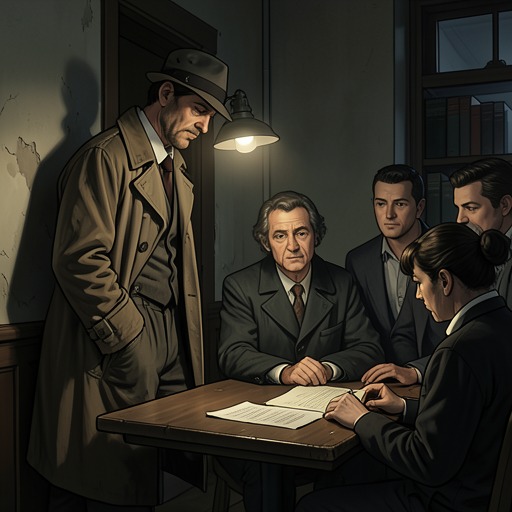
The planned cuts make management a personal as well as administrative problem. Harris identifies Bert Haggerton, Ron Miller, and Jerzy Borkowski as officers to be let go. Miller has children in college and has known Harris for twenty years, but Harris considers him a clock-watcher; Borkowski, in his view, is no more effective. Harris anticipates that the men will learn if he lies about the council having made the choices, and accepts that they may never speak to him again. The personnel decisions show the department’s shrinking options: Harris must judge individual performance while deciding which colleagues to dismiss and living with the consequences in a small community.
As of the following month, Harris expects the department to consist of himself, Steve Ho, Dick Nance, and twelve part-timers. He is relieved that Ho will remain, having feared that the council would require him to keep Miller as the most senior officer. Harris also expects the cuts to be temporary only in the sense that further reductions will follow. Eventually, he believes, Buell will have to merge its police service with the Southwest Regional force based in Belle Vernon. The department’s future as an independent institution is uncertain, not because its duties have disappeared, but because the town’s resources may no longer sustain it.
Discretion and Local Practice
The department’s work depends on more than formal enforcement. Harris understands local policing as an exercise in deciding what doing right requires in particular circumstances. In his account, officers do not arrest every person caught breaking windows or driving after drinking; the community’s informal expectations leave room for warnings and second chances. That latitude can also extend to serious wrongdoing, creating a difficult boundary between humane discretion and favoritism.
Harris’s handling of the case against Billy Poe brings that boundary into view. After finding a jacket belonging to Billy at a crime scene, Harris hides it behind a workbench before a state trooper arrives. The jacket remains unnoticed, but Harris later recognizes that concealing evidence has placed him in conflict with his duty. He considers returning to the scene to reveal it and arrest Billy, then decides to stay and watch what happens. His hesitation is not an official departmental policy; it is a personal choice shaped by his concern for Billy and by his own uncertainty about whether leniency is justified.
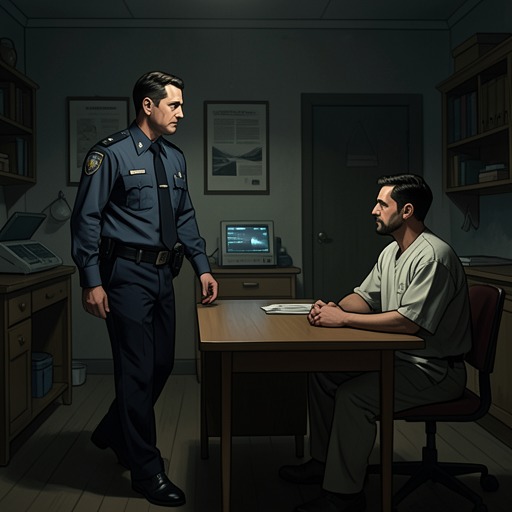
That discretion continues after Billy is in custody. Harris brings him from the cell to his office and, instead of having him booked immediately, lets him go home for the night. He tells Billy to be ready to be picked up the next day before state police arrive, warns him not to run, and instructs him to get rid of the shoes and any receipts that could connect him to the case. The decision gives Billy a brief period at home while also directing him toward the custody Harris expects will follow. It illustrates how an individual officer’s judgment can alter the timing and conditions of a case, even when the larger legal process is moving ahead.
Harris’s approach is also visible when he and another officer encounter Isaac English and Billy near the train tracks. Harris says they look fine from a distance and sees no need to lay hands on them, offering instead the possibility of a ride home if they stay out of trouble. Isaac declines the ride, but Harris’s choice marks a deliberate alternative to immediate detention. Such decisions make the department’s authority feel personal and local: the officer can warn, assist, or escalate, and the outcome depends in part on his reading of the people before him.
Community Pressures and Limits of Policing
Buell’s police face demands that exceed what enforcement can repair. The area has small-town budgets alongside problems Harris regards as those of a much larger city. The Valley’s population is growing again, but incomes continue to fall, public budgets contract, and infrastructure has gone without investment for decades. Other communities along the river are already in severe decline; Harris points to a fatal shooting in Monessen as one sign of the violence confronting the region. He also sees young people accepting their lack of prospects while professional jobs become scarce and move elsewhere.
Harris rejects the idea that more aggressive policing can resolve those underlying conditions. In his view, stable employment and the security that comes with it matter to public safety in ways that police intervention cannot substitute for. A department can respond to crime, but it cannot create dependable jobs or reverse the loss of industry. The force is consequently judged against problems that originate beyond its authority, even as its own budget and staffing are cut.
The department’s history of financial strain reaches beyond the latest budget. During an earlier crisis, the city ran out of money in late November; for the final four weeks of the year, city employees borrowed from the Mon Valley Bank in place of paychecks, and the city repaid the loans at the start of the new year. Harris regards this episode as unusual, but it also shows how municipal instability touches the people responsible for keeping local services running. The Buell Police Department’s predicament is thus institutional and personal at once: its officers serve a community in need while facing dwindling resources, difficult personnel choices, and an uncertain future.