California
American RustCalifornia matters as the destination Isaac English gives to his escape from Buell, but the novel presents it chiefly through his plans and imaginings rather than as a place he is shown reaching. He associates it with warmth, a life on his own terms, and the chance to study astrophysics. That hoped-for future takes shape against the declining industrial towns of the Mon Valley, while its changing details also reveal how Isaac tries to make a direction for himself out of uncertainty.
California as a Destination
Isaac has been planning to leave for a month when he sets out from home with four thousand dollars taken from Henry English’s desk. His intended route begins with the railroad tracks along the river to Pittsburgh, about forty miles away. From there, he expects to board another train west. The plan is practical in outline, but its emotional force comes from the distance it promises: California stands for a life beyond the familiar town and the responsibilities he is leaving behind.
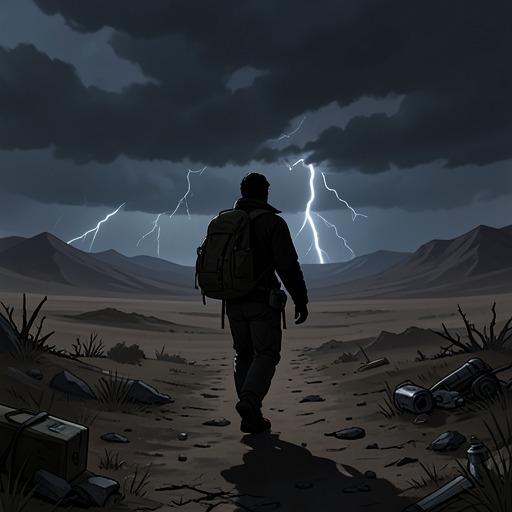
Isaac’s departure becomes real when he walks through the grounds of the abandoned steel mill and continues along the tracks past Buell and his old school. He does not turn toward the road to Billy Poe’s house. In the darkness, he imagines himself beginning his journey as a solitary traveler bound for California. The scene confirms that he has left Buell; it does not confirm that he reaches his destination. California remains the endpoint of his plan, not an established location in the events shown here.
The Future Isaac Imagines
The destination first appears as an escape into warmth. Isaac imagines California’s easy winters and pictures a desert of his own, a sharp contrast to the cold and uncertainty he associates with his present life. He considers living simply on the road, with the option of buying a bus ticket if he tires of it, but recognizes that an easy return would undermine the meaning he wants the journey to have. His idea of freedom thus depends not only on getting away, but on accepting the uncertainty of going.
California also carries an intellectual ambition. Isaac imagines applying to school after establishing residency and hopes to study astrophysics. He thinks of Lawrence Livermore, the Keck Observatory, and the Very Large Array as landmarks in the future he wants to pursue. These plans connect his attention to astronomy and the scale of the universe with the personal decision to leave. Yet he questions whether any of it still makes sense, showing that the destination is not a settled promise. It is a route he is trying to keep open even when his confidence falters.
His imagined California is not consistent in its geography. Alongside the desert, he pictures mountains in northern California, much taller than the hills around Buell, and a home near an observatory. He envisions a long porch extending over a cliff, where he could look at the stars. This imagined home adds intimacy and permanence to what began as a plan for flight: California means not just movement away from Buell, but the possibility of belonging somewhere he has chosen.
Buell and the Valley Left Behind
The contrast between California and home is shaped by the physical and economic condition of Buell. Isaac’s view from the overlook takes in forest, a muddy river, and the town’s steel mill, once like a small city and now closed and partly dismantled. Its buildings have been overtaken by vegetation, and animal tracks cross the grounds. The town itself retains white houses, church steeples, and historic stone buildings, but much of its downtown is boarded up or abandoned. California’s promise is therefore set against a place Isaac knows intimately, one marked by both natural surroundings and industrial loss.
That decline is regional, not simply a private misfortune. The Mon Valley had been a center of steel production, but by the time Isaac and Billy Poe were born it had lost 150,000 jobs. Many towns could no longer afford basic services. The collapse of steel also weakened the smaller industries that depended on it, while residents faced limited work and diminishing prospects. Isaac’s westward plan is personal, but the landscape it leaves behind makes departure part of a wider story of economic contraction and migration.
The river and railways make that departure imaginable. Isaac watches coal barges pass on the muddy water, which he knows is polluted, and understands the tracks as a way to travel toward Pittsburgh and onward. The same regional networks that once carried coal and steel can carry him away. His route is not an abstract leap: it begins in the industrial landscape that shaped his childhood, then follows the river corridor toward a larger city and the imagined West.
An Unconfirmed Arrival
At moments when the danger and uncertainty of his situation press in, Isaac returns to California as a way of holding on to a future. He tells himself he will get to Berkeley and see what happens there. He imagines that, even if events go badly, reaching that point would mean he had done something he intended to do. Later, Lee wonders where Isaac is and understands that he has gone to California, but her knowledge comes through what Poe has told her; it does not establish that Isaac has arrived there.
California consequently functions less as a described setting than as a measure of the distance between Isaac’s current life and the life he hopes to make. The desert, the university, the observatory, and the northern mountains are parts of a future assembled from ambition and longing, not a single confirmed itinerary or settled home. His actual departure carries the narrative beyond Buell, while the promised destination remains uncertain. That gap preserves both the force of his choice to leave and the unresolved question of what, if anything, he will find there.