Choice, Responsibility, and Inevitability
American RustChoice, Responsibility, and Inevitability names a central tension in the novel: people often experience decisions as if they were forced on them, then discover that their own actions helped determine what followed. The idea does not reduce every outcome to individual fault. Instead, the narrative tests how agency works under pressure, how people use circumstance to excuse themselves, and how obligations and consequences remain even when a person believes the path was already set.
Agency Under Pressure
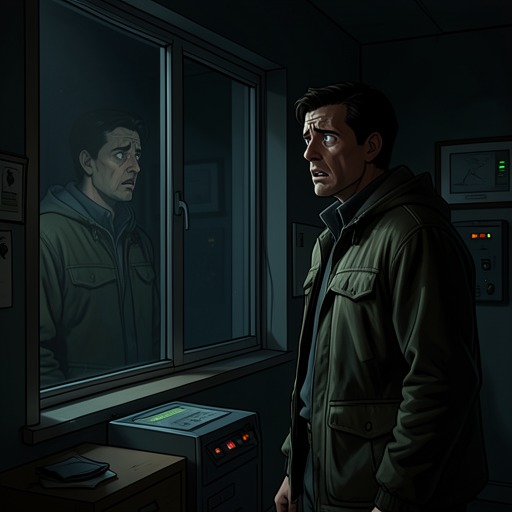
Billy Poe’s reflection in a locked cell gives the concept its clearest formulation. Confinement initially seems like a condition imposed entirely from outside, with no way through it. Yet Poe recognizes that the feeling of having no choice was also present during his earlier imprisonment, and that his later perspective reveals alternatives he could not see at the time. He concludes that choices had been involved, even when they did not feel like choices as he made them. The shift moves the explanation away from an all-encompassing conspiracy of other people and toward personal agency, without implying that agency is easy to perceive in the moment.
Poe connects that recognition to a pattern of escalation. In the Donora fight, he had an opportunity to leave after winning, but remained because he did not want to turn victory into a loss. The encounter worsened, and he later understood that his actions had contributed to the other young man’s lasting difficulties. He also links that episode to Otto Carson’s death: the outcomes are not identical, but both expose his habit of testing how far he can go. His fear that a future mistake could involve someone he loves makes the pattern feel cumulative rather than isolated. Each decision narrows the space for an uncomplicated retreat.
Choice, Hesitation, and Counterfactuals
Poe’s account of himself is not simply that he acts recklessly. He describes a contrary response as well: when a life decision demands deliberation, he can freeze. He finds book learning difficult and recalls that his most confident awareness came while playing ball, when he could read the movements of other players and respond immediately. Outside that kind of action, he says, he either becomes intensely impulsive or stops while examining every possibility. The contrast makes agency unstable: decisiveness can become escalation, while reflection can harden into delay.
His refusal to attend Colgate University becomes the principal counterfactual. Two years later, he imagines that leaving Buell for college would have made the later encounters and death physically impossible. In this account, a missed opportunity appears to explain a chain of catastrophe. But Poe also calls the outcome inevitable, even as he acknowledges that he made the choice. That contradiction matters: inevitability is not established as an objective truth, but appears as a way of interpreting a past that cannot now be changed. His imagined alternative gives shape to regret, while his sense of fate threatens to absolve him of the responsibility he has just recognized.
Moral Responsibility and Shared Causes
Bud Harris gives Poe a different account of responsibility. He tells Poe that Otto Carson’s life and choices were the larger truth behind the death, and that Poe’s part in it was small enough to seem nearly meaningless; he asks Poe to help him. Harris’s appeal separates the question of who bears responsibility for a life’s course from the question of who is legally or morally implicated in a particular death. It also has a practical purpose: Harris wants Poe’s cooperation. The reassurance therefore cannot settle the issue on its own.
Poe’s private reckoning resists that simplification. He tries to reason that Isaac English killed Otto Carson and that Poe should not be held responsible. He then admits that this account suppresses what he knows: Isaac acted while protecting him from Jesús, and the confrontation had come down to Poe’s survival or Otto Carson’s. Poe concludes that the crucial truth is his own responsibility for the death, while recognizing that other truths remain true as well. The narrative thus holds more than one causal fact at once. Isaac delivered the fatal action; Poe understands himself as implicated in the circumstances that made it necessary. Responsibility is neither transferred wholly to Isaac nor erased by the fact that Poe was threatened.
Family Duty and the Cost of Staying
Isaac English’s history with his father also complicates the boundary between choice and obligation. Looking back on the years he remained with Henry English, Isaac considers several explanations: he wanted his father’s approval, wanted Henry to admit that he needed him, and believed it would be wrong to leave him alone. None fully cancels the others. After five years, Isaac’s departure does not appear to him as the product of a clean, rational decision. The passage presents staying as both care and entanglement, and leaving as a choice made after an extended period of dependence and unresolved motives.
Grace Poe’s reflections extend the same question from personal duty to family consequence. After Billy is arrested, she revisits her decision to remain with Virgil rather than move away, and connects that history to the life she and Billy have had in Buell. She also recalls giving up college and describes Virgil’s influence on her work and finances. Yet she refuses to place the entire fault on him: she believes she should have recognized his manipulation. Her self-blame is not offered as a simple verdict that every harm was her fault; it shows how people can acknowledge another person’s conduct while also examining the choices through which they remained tied to it.
Consequence Without Fatalism
Grace’s response to Billy’s arrest makes the idea forward-looking as well as retrospective. She had hoped that someone would eventually care for her as she had cared for others, but now feels that she has lost her son and must continue without that hoped-for support. She recognizes that she had spent much of her free time worrying about Billy and had neglected her own aims. At the same time, she does not treat his arrest as something her reflection can undo. She decides she must go on living, considers stopping her house payments to save for a lawyer, and resolves not to leave Billy with only a public defender if she can help it. Her actions do not erase the consequences of earlier choices; they show that responsibility can include making new choices after damage has been done.
Across these lives, inevitability is a felt interpretation rather than an excuse the novel finally endorses. Circumstances shape what people can see and do, and care can bind them to difficult situations; nevertheless, the characters repeatedly confront the part their own decisions played. The concept’s force lies in keeping those truths together: agency does not mean total control, and limited control does not mean the absence of responsibility.