Clovis
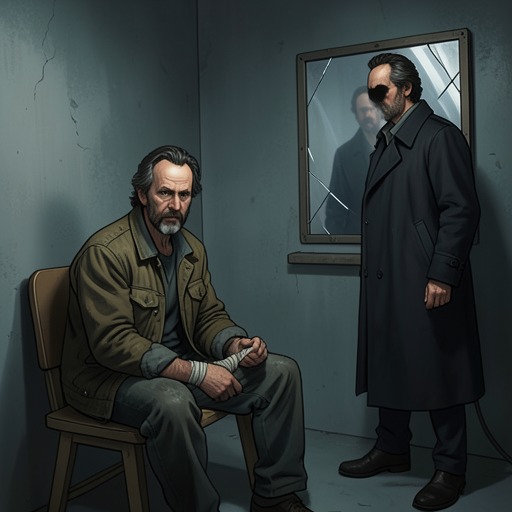
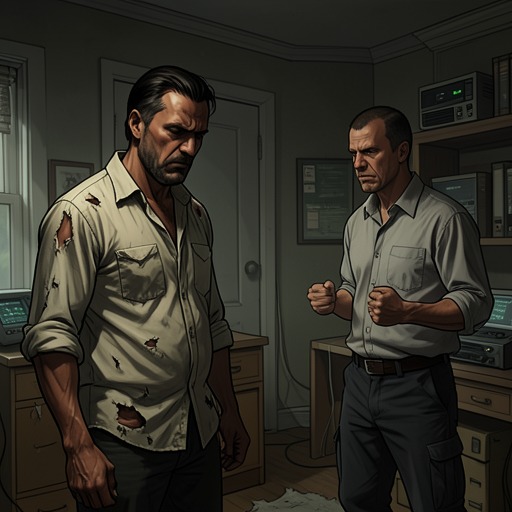
American RustClovis is a powerful inmate at Fayette prison, where his authority is exercised through a group of shot-callers and lieutenants rather than through any formal role described in the text. He helps control access to the weight pile, presses Billy Poe to prove his usefulness by assaulting another prisoner, and later joins the group that corners Poe after he refuses. His part in the story shows how prison protection and belonging can be offered as bargains whose price is violence.
Position in the Prison
Clovis appears within the prison’s informal order, where space, alliances, and the threat of force organize everyday life alongside official confinement. The cafeteria is divided by race, and the white prisoners are a visible minority. In the yard, shot-callers and their lieutenants occupy the weight pile while other inmates run errands or help conceal activity from the guards. Billy Poe is allowed into the group around Black Larry, but his place is provisional: he watches others for cues and understands that he is being tested.
Clovis makes that authority concrete through control of access. When Poe looks toward another prisoner using the weight pile, Clovis tells him that nonmembers must pay ten dollars a day. The fee is more than a price for equipment: it marks the boundary between those with recognized standing and those who must pay for permission. Clovis’s position therefore depends not only on his presence among the leaders but on his ability to make group membership consequential in ordinary routines.
Testing Billy Poe
Black Larry eventually tells Poe that the group has been discussing his future and wants to inspect his charge sheets. This scrutiny leads to a demand that Poe attack Fisher, a prisoner described as a skinny man with a goatee. Clovis identifies the intended setting as the hallway between the showers and the laundry room, presenting it as a quiet place for the encounter. Dwayne clarifies that Fisher’s name will be on a shirt, and Black Larry says the group wants him left alive so that he can continue paying them.
Clovis’s role is direct and pressuring. When Poe asks why he should do it, Clovis dismisses the question rather than offering a justification. The group presents the assignment as a test of what Poe can do, while Black Larry frames the choice as a place among the “band of brothers” or exclusion from it. Clovis is thus part of a collective demand, but his impatience helps make its coercion plain: Poe is not being invited to weigh an equal set of options. His belonging is made conditional on carrying out violence for the group.
Poe does not agree immediately. He says that he needs time to think, and Black Larry indicates the weight bench as the place available to him while gesturing toward the yard as the alternative. Clovis shakes his head at Poe’s hesitation. As the leaders walk away, the scene leaves the choice unresolved but establishes the terms under which Poe is expected to make it: acceptance brings proximity to the group, while refusal risks isolation and exposure to the wider prison population.
Confrontation and Violence
Poe’s later movement through the prison reveals the danger behind that conditional protection. When he enters the cafeteria, the men at the tables look up; Clovis is there with younger lieutenants, while Dwayne avoids meeting Poe’s eyes. Clovis stands and grins as though he had expected Poe. Poe turns away, tries to reach the locked doors to the yard, and finds himself followed by Clovis and several of the younger men. The group catches up with him and assaults him. One of the lieutenants carries a knife; the text does not identify Clovis as its carrier or specify which blows he delivers.
Clovis’s appearance in this confrontation makes the earlier ultimatum consequential. The group that demanded Poe’s participation is also present when he is surrounded after leaving the cafeteria, with Clovis at its head or among its most visible members. The sequence links the pressure to join with the danger of standing apart, without reducing the prison’s violence to Clovis acting alone: the younger men and other leaders are part of the collective force brought against Poe.
Characterization and Narrative Role
The narrative gives Clovis little personal history or access to private thought. Instead, it defines him through repeated public actions: setting a fee at the weight pile, rebuking Poe’s questions, shaking his head at Poe’s hesitation, and appearing with the men who confront him. Later, when Poe recognizes the group, the narration notes that Clovis is not wearing his hat and describes his thin red hair combed forward over a bald head. This brief physical detail accompanies Poe’s recognition of the threat, rather than opening a separate account of Clovis’s background.
Clovis functions as an enforcer of an informal order that offers conditional inclusion and demands obedience in return. The group’s language of brotherhood sits beside its practical coercion: access has a daily price, and Poe’s place is tested through a proposed assault. Clovis’s narrative significance lies in making that system visible at close range. He is neither presented as the prison’s sole source of danger nor given an independent redemptive or explanatory arc; his defined role is to help enforce a hierarchy whose promises of protection expose members to further demands.