Coyotes
American RustCoyotes are part of the wildlife reclaiming the industrial ruins around Buell, but they are not merely scenery: their growing presence signals a changed landscape and affects how Bud Harris protects his dog. Across the novel, they stand in contrast to the Valley’s shrinking human prospects, enduring in places where industry and public life have receded.
Presence in the Industrial Ruins
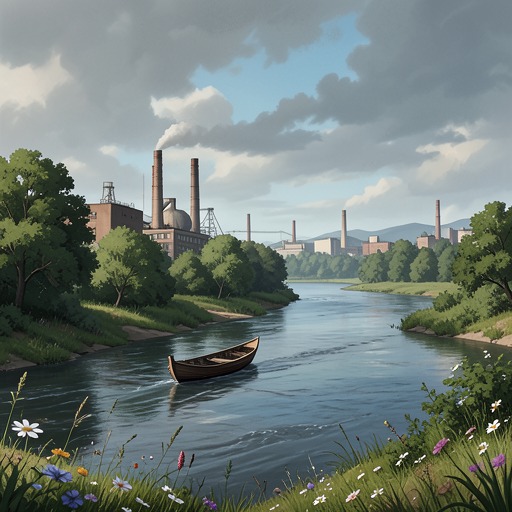
Tracks of coyotes cross the grounds of the closed Buell steel mill, alongside deer prints, among buildings overtaken by vegetation. The former industrial complex has become a place where human presence is reduced to the occasional squatter and nonhuman life leaves its marks across the site. Coyotes belong to this emerging landscape not as an isolated sighting but as part of its ordinary traces.
Their return is also visible on the road between Brownsville and Buell. Grace sees a black bear on a ridge and reflects that bears, coyotes, and deer are coming back; in her assessment, they are among the few doing well. The observation gives wildlife a measure of success that the surrounding communities lack, without suggesting that the region’s recovery is shared equally by people and animals.
Growth and Human Encroachment
Bud Harris believes coyotes have grown substantially over the preceding two decades and that their numbers have increased. Neighbors take shots at them, so their return places them in a contested relationship with local residents: they are thriving, but human responses can make that survival precarious. The novel presents their presence as an ecological change unfolding alongside, rather than repairing, the Valley’s economic decline.
Bud Harris and the Coyotes
Coyotes shape a small but revealing decision in Bud Harris’s private life. He considers leaving Fur outside, then thinks of the larger, more numerous coyotes and the danger they pose. Although he has a rifle capable of reaching them, he refuses to shoot. He calls them noble because they possess a will that makes other animals take them into account, and he compares them to mountain lions and wolves. For him, killing such an animal requires certainty about one’s motives.
His restraint does not mean he leaves Fur exposed. He nudges the dog inside and closes the door, despite having jokingly offered him a choice between staying in and fending for himself. That gesture sets the coyotes’ independent claim to the landscape against the human obligation to protect a domesticated animal. Harris recognizes their force and agency, yet still draws a boundary around the life in his care.
Narrative Significance
Coyotes link the derelict mill, the wooded roads, and Harris’s remote home into a single habitat in transition. They are evidence that nature is returning to land shaped by steel production, but their presence is not presented as a simple pastoral consolation: they threaten a dog, attract gunfire from neighbors, and coexist with communities losing jobs and services. Harris’s refusal to shoot them makes that coexistence ethically complicated. He treats the animals as beings whose will commands consideration, even while taking practical steps to keep them away from Fur.