Deer
American RustDeer are a recurring presence in the novel’s postindustrial landscape: they cross the grounds of Buell’s abandoned steel mill, browse through empty neighborhoods, and move through the woods where people hunt, hide, and try to survive. They are not only emblems of nature reclaiming industrial ruins. Their tracks, feeding, flight, and seasonal vulnerability give them a material presence of their own, even as human characters interpret them as food, signs, or reminders of mortality.
In the Ruins and the Valley
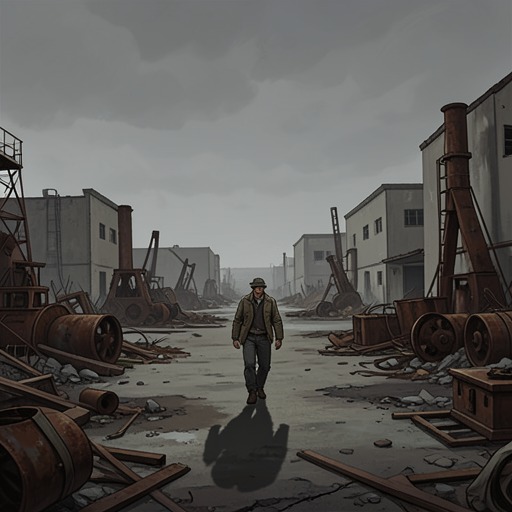
On the grounds of the dismantled steel mill, deer tracks cross the derelict industrial land alongside those of coyotes. The mill had been a city within the town before its closure and partial dismantling left long-abandoned buildings and an occasional human squatter. The tracks show that the ruins are not empty: animals use ground once organized around industrial work, and the old mill has become part of a habitat rather than simply a monument to lost employment.
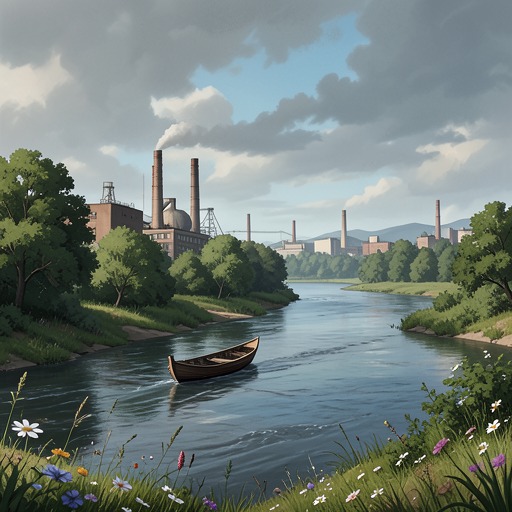
The broader landscape also suggests a gradual return of wildlife. In spring, Grace Poe sees a black bear on the wooded road between Brownsville and Buell and thinks bears, coyotes, and deer are coming back. She contrasts that return with the fortunes of local people, who continue to face limited work and economic insecurity. The contrast is not a claim that the region has recovered in every sense: the animals appear to be doing well while the human community still bears the consequences of industrial decline.
Deer also occupy the margins of settled life. They browse in the yard among old apple trees while Lee English is back at the family home, and they feed around the remains of a neighbor’s abandoned property. Their presence makes vacancy visible in a different way from broken windows or rotting houses: human occupancy has receded, while deer continue to move and feed through the space. On a midnight street in another abandoned neighborhood, several deer walk along the pavement and browse on bushes. A man watching a nearby house takes their unalarmed passage for a good omen, but the animals themselves are simply moving through a place from which most people have disappeared.
Food, Hunting, and Attention
For Billy Poe, deer are a practical source of food in a household with little to eat. After telling Grace he is a good boy, he finds the refrigerator unappealing and the chest freezer nearly empty. He decides to poach a deer, reasoning that the population is too large for the extended hunting season to control and that venison would provide about fifty pounds of free meat. Grace will not eat it, but Billy regards the hunt as both provision and a family practice.
The rifle he takes is a fifty-year-old Winchester 94 that he bought with his own savings. He carries three cartridges and settles into a blind he built near a narrow strip of woods and a creek. He plans to take the smallest deer that emerges from the tree line into the opening. His attention to the wind, the likely route to water, and the animal’s caution makes the deer more than an abstract resource: its movements and senses shape the hunter’s own stillness and timing.
Waiting requires Billy to quiet his body and watch. He has learned to remain motionless, with his eyes alert, until the woods seem to accept his presence. The creek, the trees, and the prospect of a deer coming to drink organize the scene; the animal is not yet captured, and the hunt remains a patient encounter governed by conditions beyond the hunter’s control. Billy’s reflections turn from this immediate task to Lee English and the dead man in the factory, but he puts that thought aside and returns his attention to the deer.
Elsewhere, the novel connects wild meat to the feeling of being sustained by the land. Isaac English thinks of deer in winter as bodies that look like bones and swell again in summer, when warmth allows the processes of life to resume. The image belongs to his meditation on his own near-drowning and return from the cold river: decay and renewal are not separate worlds but parts of a cycle. That association gives the deer a presence beyond its use as food, while remaining rooted in the physical fact of seasonal change.
Encounter, Flight, and the Human Gaze
During Isaac’s westward journey, deer tracks mark wet ground as he walks through forest and farmland. Later, after making a shelter from brush, leaves, and pine branches, he wakes in darkness with a sense of being buried. He sees a deer moving outside, its long legs visible in the moonlight. When it catches his scent, it leaps away through the branches. The encounter is brief and unsentimental: the deer detects a human presence and leaves, while Isaac returns to the precarious shelter that has kept him warm.
The moment briefly reverses the roles of observer and observed. Billy’s hunt depends on concealing himself from a deer; Isaac, alone in the woods, is the one whose scent announces him. In both scenes the animal responds to its surroundings rather than to the meanings people attach to it. Its attention, movement, and ability to withdraw place limits on human control, even where human characters try to turn the encounter into a resource or an omen.
Deer also cross into moments of human crisis without resolving them. When Henry English, confined to a wheelchair, rolls into the backyard while contemplating suicide, the deer standing there scatter as he moves across the soft earth. Their sudden flight registers the disturbance of a living space, but it does not decide what Henry will do: he changes his mind and keeps the pills. The animals are part of the event’s physical world, not agents of his decision.
Seasonal Cycles and Narrative Significance
The novel repeatedly places deer against signs of abandonment and change: tracks in the mill’s ruins, browsing near unoccupied houses, movement through spring greenery, and flight in the darkness of Isaac’s makeshift camp. Their appearances connect the industrial past to a landscape that continues to grow and sustain life, without suggesting that ecological return repairs the losses experienced by Buell’s residents.
Deer consequently hold several meanings that remain in tension. They are hunted meat for a family short of food, animals whose behavior requires patience and observation, and visible inhabitants of places human beings have left behind. Their presence can prompt a person to imagine hope, but the narrative does not make the animals responsible for that hope. They continue to feed, sense, and flee on their own terms, offering a measure of continuity amid human poverty, guilt, and upheaval.