Envelope containing the money
American RustThe Envelope containing the money is Isaac English’s concealed reserve, a practical resource that becomes the focus of The Baron’s betrayal and Isaac’s desperate pursuit. Its importance shifts sharply: at a chicken counter, it enables Isaac English to pay for food; in a clearing, it becomes the prize The Baron runs away with; afterward, Isaac English abandons his backpack and changes his appearance rather than risk being caught. The envelope links money to exposure, dependence, and the narrowing choices of life on the road.
A reserve kept out of sight
At a restaurant counter, The Baron orders a bucket of fried chicken and several sides, and Isaac English regrets that they came when the bill exceeds twenty dollars. He reaches for his wallet but has only a single dollar. The people waiting at the counter watch as he turns away and unzips the pocket where he has kept the money. Getting to the envelope is awkward: he has to lift it slightly out of his pocket to remove a bill. The scene makes the envelope less a neutral container than a hidden reserve Isaac English would prefer not to display.
He takes out a fifty-dollar bill and hands it to the clerk, who holds it to the light and checks it with a felt-tip pen. The Baron sees Isaac English retrieve the cash, then looks away. That small act of looking away gives the moment an uneasy doubleness: The Baron has noticed where the money is, but the meal proceeds as though the discovery carries no consequence. He picks up the food and leaves with it while Isaac English zips the pocket closed. In the immediate transaction, the envelope solves a problem; in retrospect, the scene has also made its location visible to a companion who will later take it.
The Baron’s comment that they are near Detroit because people there love fried chicken follows the payment, but the meal itself is the more consequential detail. The food costs more than the single dollar Isaac English has available in his wallet, and paying requires him to expose cash kept separately. The envelope allows him to meet the cost without explaining the full extent of what he carries. It offers a measure of independence, but only so long as it stays under his control.
The theft and the chase
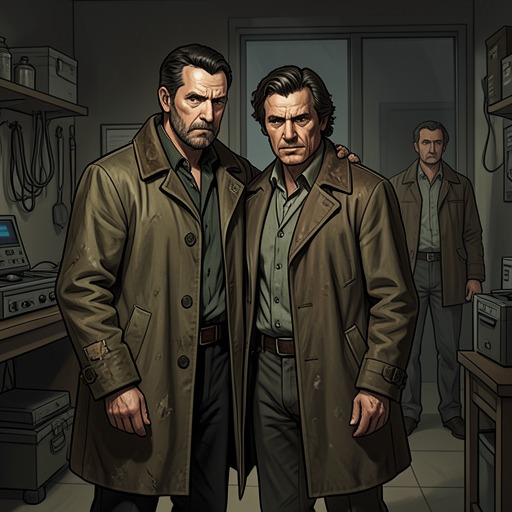
Later, in a clearing, Isaac English wakes to find The Baron squatting over him and gently removing a hand from the pocket of his cargo pants. The Baron has the envelope. Isaac English has slept with his knife in one hand and feels himself tense around it, but releases it rather than use it. He grabs The Baron’s coat and tries to roll on top of him; The Baron shakes free and runs. The envelope’s earlier concealment has failed: it has been taken from the very pocket where Isaac English had struggled to reach it at the counter.
Isaac English pursues him through the trees, past a trailer park and into an open parking area, then onto a four-lane road. The white envelope flashes in The Baron’s hand as he runs. Isaac English carries the knife, switches it from one hand to the other, and thinks through the danger of catching his companion: he may have to use the blade, though he does not want to. The chase turns the money into a visible point of pursuit, while the knife makes the possible recovery inseparable from the possibility of violence. Isaac English comes close enough to nearly touch The Baron, but a police car pulls across the road in front of them. An officer gets out with a gun drawn.
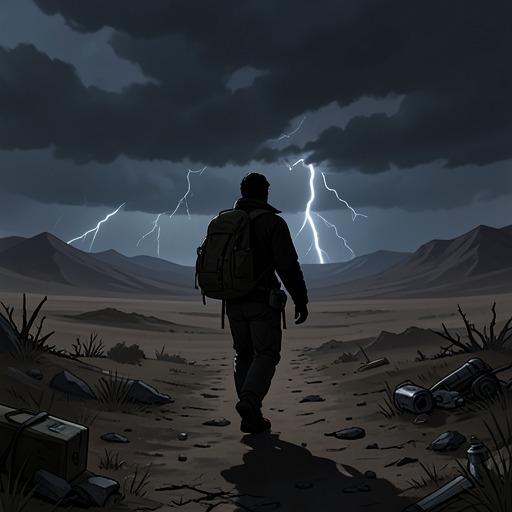
The narrative does not confirm that the police catch The Baron. Isaac English hears sirens from additional cars and guesses that they have, but his immediate concern becomes escaping the area. He returns toward the canal and searches the trees for his backpack, then realizes it is behind him and decides he has no time to retrieve it. The envelope is not recovered in the sequence. Its loss is part of a larger retreat: rather than risk arrest, Isaac English leaves the pack behind and concentrates on getting away.
What the money means after the loss
As Isaac English moves through the woods, he understands that the police may have seen him chasing The Baron with a knife. He strips off his coat and black watch cap and throws them into the canal along with the knife’s sheath, then changes how he looks by tucking in his shirt and raising its collar above his sweater. The discarded clothes and sheath are not the envelope, but the sequence shows the consequence of the chase: the effort to recover his money has forced him to abandon possessions and disguise himself. Money that had allowed him to pay without relying on The Baron now draws him into a pursuit that leaves him with fewer resources and greater risk.
Six days later, Henry English thinks of Isaac English as still gone and imagines that bums may have taken him, before reminding himself that his son is tougher than he looks. Henry English also thinks of the four thousand dollars in Isaac English’s pocket and treats it as a reason he may not come home. This later reflection gives the money a larger family consequence: while Isaac English is away, the cash becomes part of his father’s fear that he has both the means and the incentive to remain gone. The scene does not settle how much of that money remained after The Baron took the envelope, or what eventually happened to it.
Across these episodes, the envelope’s significance comes from its changing visibility. It is first hidden, then exposed by the practical need to pay, then carried openly by The Baron as Isaac English runs after him. Its value is not only financial: it marks the thin margin between self-sufficiency and dependence that shapes Isaac English’s journey. When the envelope disappears from his reach, the loss is registered through action rather than explanation—an abandoned backpack, discarded clothing, and a hurried attempt to pass unnoticed.