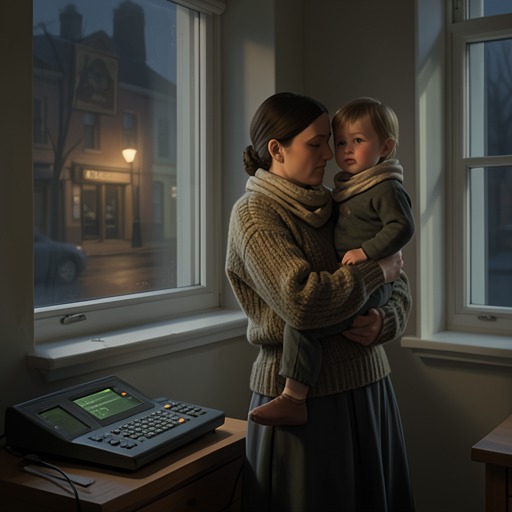
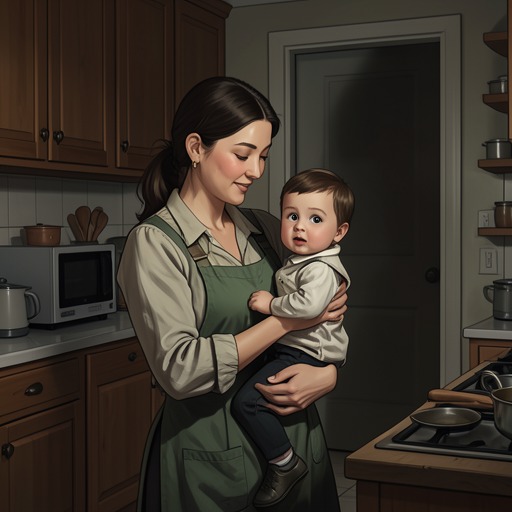
Grace rescues frostbitten, injured Billy
American RustGrace Poe’s rescue of Billy Poe follows the machine-shop violence and transforms a night of fear, cold, and disorientation into an urgent act of maternal care. Finding her son outside the trailer without a coat and barely responsive, she gets him indoors, warms him in a bath, and tends to his injury. The scene places Grace’s regret and uncertainty beside the practical decisions that keep Billy safe, while Billy’s scattered memories disclose how Isaac English intervened when he was in danger.
The Rescue
Before Grace sees Billy, she notices movement at the edge of the yard and initially mistakes it for someone fooling around. The late, unseasonable snowfall has made the yard and trees look peaceful, but the quiet scene changes when she spots her son sitting beneath a tree. Snow is in his hair; he has no coat, and he does not look up when she calls him. Grace recognizes that something is wrong and leaves the porch to reach him.
Billy’s condition makes getting him inside difficult. His face is pale, and he has a cut on his neck; when Grace tries to pull him up, he is so unresponsive that she first experiences him as dead weight. She supports him until he can push with his legs and stand. Rather than wait for him to explain, she directs him toward the house and walks him there. The rescue begins with the simplest necessary task: moving him out of the snow and into warmth.
Grace takes Billy to the bathroom and places him, still dressed, in the bathtub, then runs hot water and removes his shoes. He stares ahead and seems not to recognize her. His clothes and the bathwater are dirty with the night’s accumulated grime and blood, and Grace understands that he has not been caring for himself. She knows that losing his hardware-store job sent him into a decline and reproaches herself for having decided to let him find his own way. Her response is not detached diagnosis: she keeps him in the bath and adjusts the water as his body begins to warm.
As the steam fills the bathroom, Grace worries that warming him too quickly might be dangerous. She sits Billy up, cleans the cut on his neck with iodine, and tries to remove his dirty clothes. He will not initially let her take off his pants; when he finally allows it, she leaves his underwear in place. The hesitation sets a boundary within the rescue: Billy can barely orient himself, yet Grace proceeds carefully when he resists. She also considers whether someone might come after him and whether she has secured the door. Her questions register the danger surrounding his return, even before he is able to explain what happened.
The household context sharpens Grace’s fear and regret. Earlier, she had imagined leaving Buell for a job in Philadelphia, but stayed while Billy was doing well at school and playing football, still hoping that Virgil Poe would return. Now she sees her son as someone who had nearly had a football scholarship and has since lost his job and fallen into difficulty. Her thoughts about that unrealized life surface as she encounters the immediate fact of his vulnerability. She does not resolve the earlier choices in this scene; she sets them aside long enough to get him warm and care for him.
Billy’s Return to Awareness
Billy’s recollections, presented alongside the rescue, show why he reaches the trailer in such a distressed state. After leaving the machine shop, he is intensely cold and remembers that he left his jacket there. He also feels responsible for failing to split wood for the stoves, imagining his mother in the cold with hands too affected by arthritis to swing an axe. That concern is joined by guilt about the violence and by an awareness that he and Isaac English left Otto dead without calling the police. The details make his return home more than a search for shelter: he arrives carrying fear about what happened and shame about what he believes he has failed to do for his mother.
When Grace asks whether anyone is coming after him, Billy eventually says no and begins to wake up. The answer does not undo the uncertainty that has governed her actions, but it marks a change: he can respond to her and take part in the encounter. Later, when Grace leaves him to wash, Billy scrubs himself and recalls the assault. He remembers the moment Isaac’s intervention gave him a chance to escape, and recognizes that Isaac acted with a courage he is not sure he himself could have shown for anyone else. That recognition makes the rescue scene part of a larger chain of care: Grace brings Billy back from the cold, while Billy’s returning awareness turns toward the friend who protected him.
Guilt and Responsibility
Billy’s thoughts do not settle into a simple account of victimhood. He recognizes that he had wanted to provoke a confrontation and that his own temper helped bring the group’s attention onto him. At the same time, he sees a difference between that choice and what followed: he believes Isaac acted to save him, yet understands that Otto the Swede is dead and that they left without contacting the police. Billy thinks of the killing as self-defense, but fears that others may see it differently and that the circumstances could carry grave legal consequences.
His anger is also divided. He resents Otto the Swede and the man who threatened him, while regretting that he struck the older man who had tried to prevent the fight. In Billy’s recollection, the person who seemed least intent on violence was the one he treated most harshly. The contradiction leaves him with more than fear of punishment: he must confront how his own impulse helped create the danger, even as he remains grateful that Isaac intervened when he could not protect himself.
Aftermath and the Meaning of Care
Once Grace leaves him alone, Billy chooses to wash himself. The act gives him some control over his body after the attack, but it does not quiet his recollections: he remembers briefly believing Isaac English had left him, then recalls Isaac’s intervention. The memory sharpens Billy’s judgment of himself. He doubts he could have acted as Isaac did for just anyone, yet believes he would have gone back for Isaac. His gratitude is inseparable from an uneasy recognition of the limits of his own courage.
Billy also understands that reaching home has not ended the danger. Otto the Swede remains at the machine shop, and Billy wonders whether the men involved might approach Bud Harris. Although Harris has helped him before, Billy suspects that the death will leave the chief with less room to protect him. The possibility of exposure keeps the night’s events present even as Billy recovers enough to consider what may follow.
In the living room, Billy finds the house dark but warm: Grace has turned on the baseboard heaters. He feels both guilty and relieved. That mixed response closes the rescue on a domestic detail rather than an explanation or assurance. Grace has made the home warm despite the wood left unsplit, and Billy can register her care, but his relief remains shadowed by the violence and responsibility he has carried back with him.
The Limits of Protection
Grace’s concern extends beyond getting Billy inside: she wonders whether anyone will come after him and whether the door is locked. Virgil Poe has left a shotgun, but she does not know where its shells are, a detail that makes the home’s refuge feel uncertain rather than secure. Billy eventually tells her no one is coming, and begins to regain awareness, but his reassurance cannot erase the danger she has had to consider.