Grace’s chronic hand pain and limited function
American RustGrace Poe’s chronic hand pain shapes the limits of her working life: she can sew for only five or six hours before her hands become difficult to use, yet many of the few jobs available to her also depend on manual labor. The novel leaves the precise cause unresolved. Arthritis runs in her family, while a union organizer once suggested that her symptoms might instead reflect repetitive strain. Either way, pain is not an occasional interruption but a condition she must accommodate in order to work, care for her household, and retain some control over how she lives.
Condition and Daily Limits
In recent years, Grace has developed arthritis like her grandmother’s, and changes in the weather can make her hands hurt. After several hours of sewing, they can stiffen until they close into claws. The limit is practical as well as physical: she can manage roughly five or six hours of work before her hands force her to stop. The text does not settle whether the condition is arthritis or work-related repetitive strain. The organizer’s suggestion remains a possibility, not a diagnosis; the women at the shop were unwilling to speak with him because they feared losing their jobs.
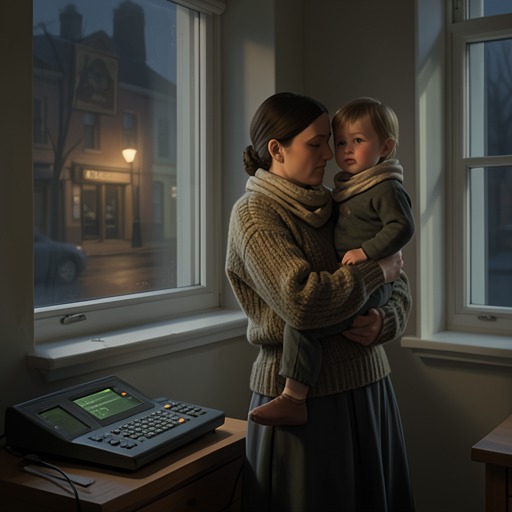
Her symptoms also affect work at home. The family relies on a woodstove, but Grace cannot swing an axe when her hands are badly affected. On one evening, she prepares a heating pad and a warmed towel, then wraps her hands and waits for the relief to take hold. The routine makes care concrete and domestic: heat offers temporary easing, not a cure, and the possibility of falling asleep with the towel cooling does not change the underlying limits. Pain enters ordinary tasks and the arrangement of the household, not just her time at the sewing machine.
Work, Income, and Constrained Choice
Grace works in a small dressmaking shop owned by Steiner. The shop’s flexibility allows her unusual hours and makes it possible for her to keep working despite her condition; Steiner calls the arrangement flex-time, provided she continues to make money for him. That accommodation is valuable but conditional. The shop pays Brownsville wages while selling wedding dresses in Philadelphia at much higher prices, and Grace knows that her own work contributes to garments worth far more than her pay. On a Saturday, she continues past the point when her hands tell her to stop, finishing two long seams on a bride’s dress before speaking to Steiner.
The alternatives offer little relief. Fast-food work and positions at Walmart or Lowe’s require the use of her hands and pay minimum wage; she also knows that getting hired can take time. The previous year she tried a second job at Wendy’s but lasted only a week. Her decision not to continue is connected to both the physical demands and the terms of the work: she does not want to come home soaked in grease and be directed by teenagers for low pay. Her wish for a life with some dignity is not a rejection of work; it is a measure of what she believes work should allow her to keep.
Industrial Decline and the Narrowing of Options
Grace’s circumstances developed within a region whose industrial collapse had already narrowed employment and family choices. At eighteen, after graduation, she found a new car and pay stubs waiting at home: her father had arranged for her to start at Penn Steel. She met Virgil on the rolling line, became pregnant, married, and began college, but layoffs and the disappearance of jobs ended her studies before she completed her associate degree. As the mills closed, there were few jobs to replace them. The family’s trailer went into foreclosure, and they depended on food-bank supplies and deer while local resistance to sheriff’s sales helped bring a moratorium on foreclosures.
That history matters to Grace’s hand condition because work that might appear to be an individual solution is scarce, poorly paid, or physically demanding. The Valley had lost 150,000 jobs in the years since Grace and her contemporaries were born, and incomes and local budgets continued to fall. In that setting, the sewing shop’s flexibility can help her remain employed, but it does not give her financial security: its viability depends on the owner’s decisions, while the work still requires the repeated use of her hands. Her condition meets an economic landscape that offers few ways to reduce that dependence.
Persistence and the Meaning of Relief
Grace continues to work, including on a Saturday when her hands ache enough by early afternoon that she knows she should stop. Guilt leads her to work a little longer, until she has completed both long seams. When she leaves, she anticipates the warmed towel she will use at home. The scene marks a shift in what pleasure means to her: she increasingly looks forward not to an added comfort but to relief from pain. The contrast between an expensive finished dress and the limited earnings of the women making it also places her bodily effort within the shop’s uneven rewards.
The account neither treats Grace’s hands as a problem that can simply be overcome nor reduces her to them. Her work, decisions, and desire for dignity remain central, while the condition places real bounds on what she can do and which jobs she can sustain. The uncertainty over diagnosis, the lack of worker speech about possible repetitive strain, and the reliance on an accommodating but profit-driven employer leave those bounds unresolved. Grace’s warmed towel brings temporary comfort; the larger pressures of pain, work, and limited choice remain.