Guilt and moral responsibility
American RustGuilt and moral responsibility in the novel arise not only from who committed a crime, but from who chose violence, withheld the truth, enabled another person, or accepted the consequences. The distinction is unsettled throughout: legal guilt can fall on the wrong person, while people who evade prosecution may still understand themselves as accountable. Acts of loyalty offer no simple escape from that burden; protecting someone can itself become a morally consequential choice.
Violence and the knowledge of responsibility
At the abandoned machine shop, Isaac’s responsibility begins in an urgent decision to intervene. Hearing shouting inside, he initially waits outside for Billy Poe, then decides something is wrong and goes back in. He hides his money and backpack, chooses an industrial ball bearing from the scrap, and enters through another door. When he sees Poe being threatened, Isaac throws the bearing at Otto the Swede. The weapon weighs roughly five or six pounds, and Isaac throws it with such force that he feels his shoulder muscles tear. Otto falls; Isaac recognizes from the impact that he has killed him.
The scene makes responsibility inseparable from the conditions of action. Isaac does not enter intending to kill Otto; he acts to protect Poe, in a moment when he believes there is no time to find another means. But the protective purpose does not undo the fatal result. Isaac’s immediate knowledge of what the heavy bearing has done marks the difference between a choice made under pressure and an outcome that can simply be dismissed as accident. The two friends leave without reporting the killing, turning an act of intervention into a continuing burden of concealment as well.
Silence, loyalty, and legal guilt
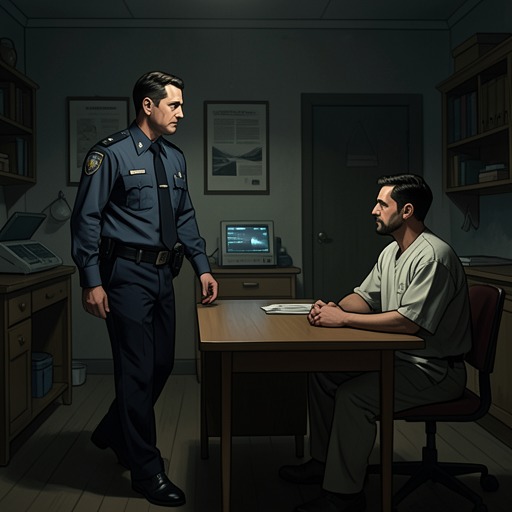
Poe’s imprisonment sharpens the conflict between truth and loyalty. Alone in his cell, he considers that telling the truth could change his situation and save his life. He also sees that doing so would trade Isaac’s safety for his own and violate a promise. Poe believes that he belongs in prison as a consequence of his own choices, while Isaac does not. His reasoning does not make silence easy: he anticipates that a lawyer will ask who killed the man in the machine shop, and believes he would answer truthfully if asked. He settles instead on not volunteering the account. Silence becomes a negotiated position between loyalty, self-preservation, and an expressed willingness to accept consequences.
Lee learns from Poe that Isaac killed the man, and her response shows how the truth redistributes responsibility within the family. She understands that Isaac and her father stand on one side of the case while Poe stands on the other, and considers using her and Simon’s checkbook to get Poe a good lawyer. Her impulse to help Poe does not erase her connection to Isaac; it makes the competing obligations newly visible. The legal case demands a division into sides, but the relationships make that division painful rather than morally clarifying.
Complicity and inherited blame
Grace’s part in the plan against Murray Clark is defined by what she does not say. She tells herself that she never directly instructed Bud Harris to kill him and that Harris will make his own decisions. Yet she recognizes that they both understand what is wanted: Murray dead so that Billy can live. Her reasoning moves from uncertainty about what Billy did to a choice that treats innocence or guilt as no longer decisive. She knows that Murray went to the police while Billy did not, but refuses to let that evidence change her desire to protect her son. By recognizing that Harris’s action would be as if she had done it herself, Grace rejects the comfort of treating silence as moral distance.
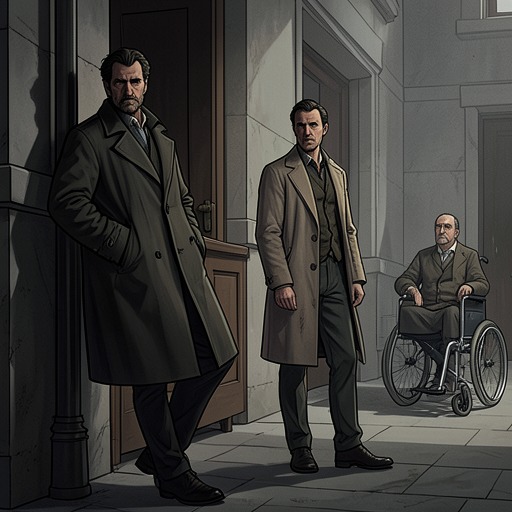
Henry’s guilt takes a different form: he blames himself for Isaac’s presence and for the chain of events that followed. He thinks Isaac was never supposed to stay, and that fear of losing him helped keep him from acting sooner. That remorse feeds a suicide attempt involving alcohol and old OxyContin, but his self-accusation is not the same as a legal judgment. It is a painful recognition that attachment, fear, and delay were also choices with consequences. The novel places this private blame beside the public question of who committed the killing, showing how responsibility can extend beyond the person whose act is most visible.
Harris: punishment, protection, and concealment
Harris’s memory of Vietnam gives his later choices a longer moral history. At Da Nang, he fired an M60 at a man carrying a package near the perimeter. The package was never found, and other people treated the death as unremarkable; Harris, however, felt that he was owed punishment for killing someone. The official response amounted to a debriefing and a notation of one confirmed kill. The gap between that brief record and his enduring sense of responsibility establishes a recurring tension: an act can be officially recorded and still remain morally unresolved.
Later, Harris tells himself that he is trading himself for Billy Poe when he considers confronting Murray, whom the state is paying to remain in the area as a witness. He retrieves a five-shot revolver from old evidence storage, checks it, and loads it, even as he tries to frame the meeting as only a warning. The encounter ends with Harris shooting Murray and then killing him as he attempts to escape. Harris’s stated protective purpose does not cancel the deliberate choices that lead to the killing. His subsequent concern with constructing an account of where he had been and checking the truck for evidence shows responsibility being met with concealment rather than confession.
Confession and an unfinished reckoning
Isaac eventually returns to Buell and tells Harris that Billy Poe did not kill the homeless man. He says he is turning himself in and insists that he is telling the truth. Harris asks him not to say more, signaling that disclosure threatens a fragile arrangement built around keeping the case unresolved. Isaac nevertheless tells him what he came to say. His return contrasts with the earlier flight and silence: he does not claim that protecting Poe made the killing disappear, and he accepts the risk of identifying himself as responsible.
Harris tells Isaac that he did the right thing, offers him contact information for the future, and sends him home. Isaac decides to leave Buell and live with Lee in Connecticut. As he walks toward the river, he realizes he has chosen to trust Harris and the others, though he does not know how that trust will turn out. The ending offers neither a clean legal resolution nor proof that confession repairs every harm. Instead, it presents truth-telling, accepting consequences, and placing trust in others as choices that can interrupt the cycle of evasion without undoing what has already been done.