Harris's cover-up after killing Murray
American RustBud Harris’s cover-up after killing Murray Clark turns his effort to protect Billy Poe into a second, deliberate breach of duty. Moving through the night, Harris tries to erase traces of the shooting, but his broken hand, uncertainty about the shots he fired, and failure to account for everything he wore expose the disorder behind his attempt at control.
The Attempt to Erase Evidence
Harris walks back to his truck through the shadows, unable to settle his thoughts. He cannot remember how many shots he fired or exactly where the shell casings are, and he realizes that his revolver remains inside the house. These omissions matter: the cover-up begins not as a composed plan but as a succession of hurried decisions made while he is struggling to think clearly.
Before driving away, Harris removes his hat, coat, and gloves and leaves them in the truck bed. He drives without headlights until he reaches the main road, watching the odometer as the distance from the house grows. At a river turnout, he throws his .45 into the water. He then remembers that the coat and hat are still in the truck, stops again, changes into spare clothes and running shoes, and throws the clothes he had worn, along with his protective vest, into the river. By the time he reaches the office at sunrise, he is still carrying the consequences of the night; amid the practical question of who will care for his dog, there is no indication that the discarded evidence has resolved what he has done.
The Moral Logic of Protection
Before Murray Clark’s death, Harris had already treated enforcement as a matter of judgment rather than automatic procedure. After concealing the jacket belonging to Billy Poe, he weighed the case for arresting Billy against the local understanding that people sometimes deserved another chance. He called this instinctive restraint “Even Keel,” yet recognized that it could also be cowardice; instead of acting immediately, he chose to wait and see which judgment proved right. His earlier offer to give troublemaking youths a ride home rather than take them into custody reflects the same discretionary practice, though protecting Billy would carry far greater consequences.
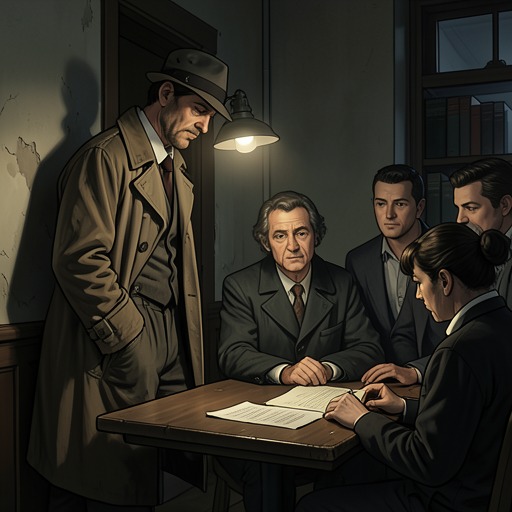
Harris understood the later confrontation with Murray as a choice made on Billy’s behalf: he considered whether Murray might be persuaded to leave, while also recognizing that he was putting himself in Billy’s place. Grace Poe, for her part, later acknowledged to herself that she had not needed to ask Harris directly; she believed that if he acted against Murray, she would share responsibility. Their unspoken alignment turns the cover-up from a private act of panic into an extension of the protection surrounding Billy, while making clear that loyalty does not erase either person’s knowledge of the choice.
The Cost of Concealment
Harris’s wartime memory gives the later cover-up a longer moral history. In Vietnam, after killing a man, he felt that he should not escape punishment simply because the dead man was regarded as an enemy. The incident was entered in his file as one confirmed kill; five months later, in May 1971, Harris returned home. His recollection that every dead man had once been alive sits uneasily beside his later effort to manage the consequences of another death through secrecy. The parallel does not make the two events equivalent, but it shows that the burden of responsibility is not new to him.
The concealment also extends beyond evidence at the scene. Harris does not tell Isaac that Billy Poe was stabbed and nearly died, and he cannot bring himself to tell Grace. He expects the district attorney to come asking questions and knows he will have to prepare himself, even as his injured hand and side continue to trouble him. The final practical thought about who will care for his dog offers no release: Harris has reached the office, but neither the aftermath nor the responsibility he has taken on has been put behind him.
The Department and the Burden of Office
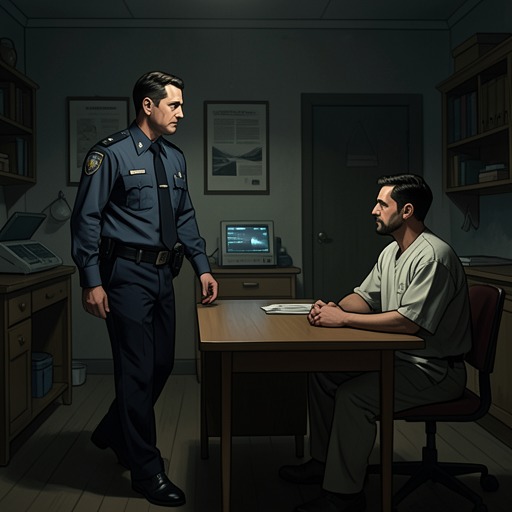
The cover-up unfolds against the strain on the Buell Police Department, whose budget had fallen from $785,000 to $541,000—the largest cut in its history. The reductions meant curtailed training, continued use of aging vehicles, and the planned layoff of three full-time officers, nearly the entire staff. The city was also facing crumbling infrastructure and an order to repair a sewer system that spilled into the Mon during heavy storms. These pressures establish the diminished institution Harris served, but they do not account for his private decision: after the shooting, he acts not through police procedure but to conceal what happened, carrying the conflict between his office and his personal protection of Billy Poe into the aftermath.