Isaac steals from Walmart and escapes
American RustIsaac’s Walmart theft is a survival-driven escape: hungry, exhausted, and lacking a coat, he takes food and practical supplies, disguises the stolen clothes beneath his own, and runs from the store into the woods. The episode turns scavenging into a tense passage from exposure toward temporary shelter, while Isaac’s self-invented image of “the kid” lets him frame desperation as a mission of preparation and self-improvement.
Need, Hunger, and the Store
Isaac approaches the Walmart slowly, crossing its parking lot with effort. At the entrance, he stands in the blast of warm air until the greeter motions him inside. The store’s brightness and heat offer immediate relief, but his first priority is food. He chooses two bean burritos and a taco from Taco Bell, weighing the menu by calories and insisting to himself that eating is necessary before he tries to rest. He is so tired that he can barely manage the meal; after sitting with a glass of water, he begins to drift off.
An old woman at the next table wakes him by pointing out that he has fallen asleep. The interruption sharpens his predicament: he cannot simply rest in the store, and he believes a shelter is where people will look for him. In his own assessment, he is a vagrant felon with neither a coat nor a clear sense of where he is. Leaving town as anyone else might have done is not a straightforward option. He decides to stay in the store and take what he needs, converting an exhausted pause into a calculated attempt to equip himself.
Gathering Supplies and Making a Disguise
As he pushes a cart through aisles accompanied by easy-listening music, other customers fix their attention on their merchandise until he passes. Isaac imagines their embarrassment and answers it by invoking “the kid,” a persona supposedly unconcerned with judgment and committed to starting over. He casts the shopping trip as resource gathering and a new beginning, beginning with the coats in Men’s Outerwear. The ordinary abundance of a department store contrasts with his recent vulnerability: what once took months to make can now be taken from a shelf, but only if he can get it out unseen.
He adds a razor, travel-sized soap, shaving cream, and possibly deodorant from the pharmacy aisles, then takes energy bars like the ones Lee eats. From a wall of hunting knives, he chooses a four-inch knife. In the clothing aisles he collects clean pants, a button-down shirt, socks, underwear, and a pack of T-shirts, followed by the thickest coat available, a heavy, blanket-lined canvas garment, and an additional fleece. He also considers hats as part of preparing for sleep. These are not random acquisitions: food, hygiene items, a blade, and layered clothing answer immediate bodily needs while anticipating further nights outside. Isaac’s internal account calls this concern for the future, turning the pile of goods into evidence of a self trying to plan beyond the next few minutes.
A short, thin employee in her late sixties asks whether he wants to try anything on. Isaac says he knows his sizes and smiles, while reading her continued presence as suspicion and company loyalty. He waits in the checkout line, where a man ahead of him is talking on a cellphone. Isaac takes comfort in appearing small and unthreatening, but the employee watching him eventually leaves to do something else. Rather than complete the purchase, he pushes the cart toward the dressing rooms.
The Dressing Room and the Attempted Exit
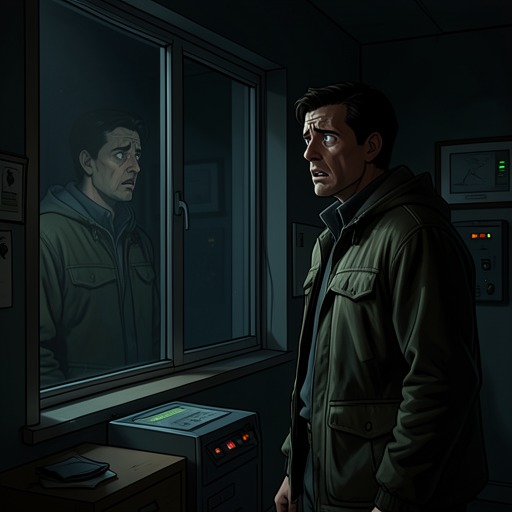
Isaac gets into a small dressing room, locks the door, and piles the loose items onto the coat. He strips completely and pauses before the mirror: beneath his filthy hair and week-old stubble, he sees a sickly, extremely thin young man. The new clothes offer a small, deliberate dignity. He changes into them, then puts his old clothes back over them, hoping the extra layers will not make his appearance conspicuous. He tucks the knife into his belt, puts the soap, razor, and energy bars in his pockets, and carries the coat over his shoulder as though it belongs to him.
The double layer is both concealment and protection. It allows Isaac to leave with the clothes already on his body, while the coat remains visible enough to draw an employee’s attention. He checks both directions as he leaves the dressing room and heads for the exit, beginning to sweat under the additional clothing. When a woman calls after him that he needs to pay for the coat, he does not turn around. He keeps walking and tries to put the coat on as he nears the doors. A surge of adrenaline accompanies the effort; voices call for him to stop, and a store announcement summons employees for a code seventy-six.
Flight into the Woods
Isaac sees someone running and starts running too. The greeter in a blue vest is directly between him and the exit. They look at one another, and the man steps aside at the last moment. Isaac stumbles against the doors and loses ground, but gets outside and into the parking lot. He chooses the wooded area at its far edge as his destination and runs past idling cars and customers with carts. Footsteps follow close behind. He considers using his cart to slow the people chasing him, then abandons the idea and keeps moving.
At the lot’s edge, a hand brushes his coat; the person behind him stumbles and falls, but Isaac hears another pursuer. He clears a high curb without slowing, plunges through the grass, and runs downhill toward the trees. Although he thinks he may fall, he keeps his footing. The footfalls behind him finally stop at the edge of the parking lot. Isaac reaches the woods and continues into the darkness, still running.
The escape does not resolve his larger uncertainty or establish a safe destination; it gives him only distance and concealment. Its sharpest reversal is material: the coat he entered without becomes the thing he risks discovery to obtain, and the store’s bright, heated interior gives way to darkness beyond the lot. By narrating himself as “the kid,” a maker of preparations who can be slowed but not stopped, Isaac turns a theft into a story of agency. Yet the closing image keeps the cost visible: even after reaching the woods, he is not at rest.