Isaac’s escape from home toward California
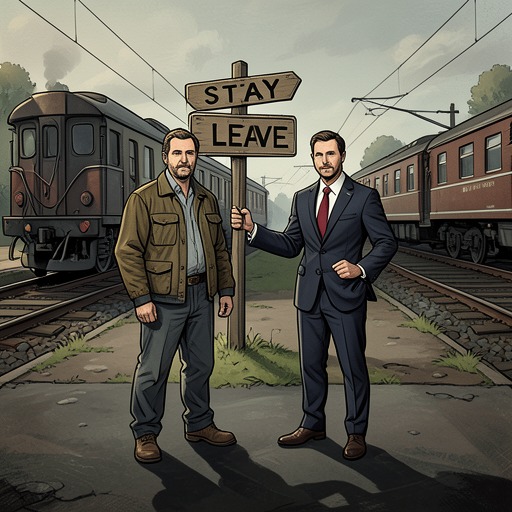
American RustIsaac English’s escape from home toward California is a carefully imagined departure that becomes a solitary journey on foot. He takes $4,000 from Henry English, prepares for life outdoors, and follows the railway corridor toward Pittsburgh, hoping to ride freight trains west. The escape matters not simply as a change of place: it carries Isaac away from a damaged household and a shrinking industrial town, while exposing the conflict between his desire to begin again and the ties he leaves behind.
Identity and Circumstances
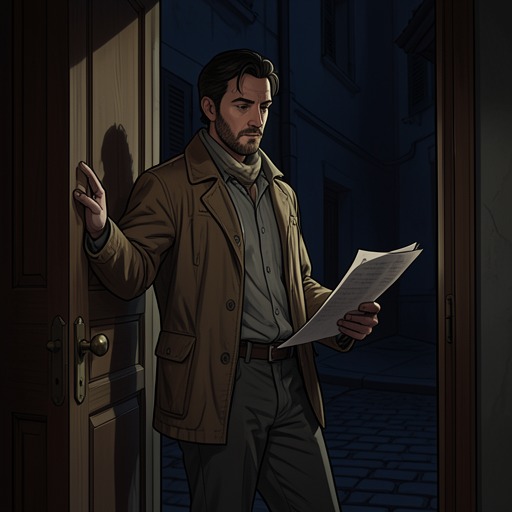
At twenty, Isaac lives alone with his father, Henry English, in the family house. His mother has been dead for five years, but Isaac still thinks about her. He is small enough to be mistaken for a boy, a contrast to the scale of the decision before him: he is trying to leave without attracting attention, carrying a backpack and money taken from Henry’s desk. His first description of the act is theft, then an attempted correction. That self-reproach makes the departure morally unsettled from the start: he is not only escaping hardship but also taking what he needs from the person he is leaving behind.
The house is part of a strained family history rather than a secure point of return. Isaac remembers a time when Henry worked at the mill and seemed strong enough to lift him; that memory belongs to life before the accident, when his father was not yet the old man Isaac now lives with. The loss of his mother and the change in Henry’s condition frame Isaac’s departure as an escape from a home shaped by bereavement and disability, even as his plan requires him to leave his father behind.
Preparing to Leave
Isaac has been planning the trip for a month. He calculates that Pittsburgh is forty miles away and intends to reach it by following the tracks along the river, where it should be possible to board a coal train. From Pittsburgh, he plans to catch another train to California. The route is practical as well as aspirational: the railways offer distance without requiring money for conventional travel, and the river’s bends promise a slower path than the roads.
His preparation becomes more concrete after he realizes that most of what he needs is in the backpack he left by the machine shop. He decides that retrieving it comes first, despite recognizing the place as a crime scene. He regrets having walked through the field without checking whether anyone was watching and resolves to avoid further mistakes. He changes into thermals, cargo pants, a flannel shirt, and a wool sweater, then adjusts the sheath of his fishing knife so it will sit inside his waistband. Looking at himself with the knife, he feels ridiculous; the gear marks the point where an imagined departure begins to demand the habits and risks of an actual one.
Before leaving, Isaac considers talking to his sister, Lee English, but decides it is too late. He remembers a previous drive west toward Charleroi and along Route 70, when he continued merely to see what it felt like to go, nearly ran out of gas, and returned after dark to find Henry waiting on the porch. That earlier excursion had let him test the sensation of leaving without completing it. This time, his preparations and the knowledge that Henry is waiting at home make the break more consequential.
The Departure and the Route West
In the dark, Isaac tells Lee that she is a day too late to fix the situation, then goes out the front door and toward the road. The narrative later marks the railway departure as the journey’s real beginning: Isaac follows the tracks out of the steel mill, past Buell and his old school, and beyond the road to Billy Poe’s home. The familiar landmarks quickly disappear. He is now moving away not only from his house but from the everyday geography that has defined his life.
The rail route leads through the remains of the industry that once sustained the region. Isaac passes the long, empty mill buildings, rusted furnaces and powerhouses, slag cars, and stacks of structural steel left behind when dismantling ran out of money. These ruins give his escape a stark setting: the route out of town runs through the material remains of the work and prosperity that had once made the Valley’s communities. The trains are not guaranteed transport. A short train passes too quickly for Isaac to board, and he recognizes the danger of trying to catch it. Rather than force the attempt, he measures his pace and continues walking.
A Personal Escape in a Declining Valley
Isaac’s plan for California is specific enough to suggest a future but remains provisional. He imagines warm winters and a desert of his own, followed by a year establishing residency and an application to study astrophysics. He pictures Lawrence Livermore, Keck Observatory, and the Very Large Array as destinations within reach. Yet he also questions whether any of those ambitions still make sense. His escape therefore contains both hope and doubt: California represents a possible life beyond Buell, but the intellectual future he once pictured no longer feels assured.
That uncertainty is set against the Valley’s wider economic collapse. The region had been a major center of steel production, but had lost 150,000 jobs during the period since Isaac and Billy Poe were born. Many towns could no longer afford basic services, and some had lost their police departments. Isaac’s departure is personal, but it takes place in a community where work, public resources, and prospects have been steadily diminished. The later account of Henry’s work history sharpens that background: Penn Steel had failed to invest in its factories while overseas competitors modernized, leaving American mills vulnerable. Isaac’s future is shaped by this industrial failure even as he tries to imagine himself outside it.
On foot, Isaac accepts that the road would be shorter but chooses the tracks because they follow the river and point toward where he wants to go. He calculates his walking speed, adjusts his expectations, and settles into a slow pace. The departure does not immediately deliver him to California or resolve his doubts; it changes his immediate condition from someone planning an escape to someone beyond the places where he expects to be recognized. The journey begins with stolen money and an uncertain destination, but its first decisive result is distance: Buell recedes behind him, and the open route becomes, for the moment, his home.