Moral responsibility versus legal guilt
American RustMoral responsibility versus legal guilt is a central tension in the novel: an act may be understood as protection, judged under criminal law, and still remain a personal burden that neither explanation nor silence can erase. The killing of Otto the Swede brings these standards into collision. Its consequences spread beyond Isaac English’s decisive act to Billy Poe’s account, Bud Harris’s police discretion, and Grace Poe’s unspoken assent to a later crime.
The killing and the first moral reckoning
Isaac enters the abandoned building after hearing a disturbance and finding that Billy Poe has not come out. Inside, he sees Murray Clark on the ground and Billy Poe being held by another man. When Otto the Swede returns, Isaac throws an industrial ball bearing at him. Billy Poe escapes, while Isaac remains briefly at the scene and recognizes that Otto is dead. The act is immediately legible as an intervention to save a friend, but its fatal result makes that motive insufficient to settle what Isaac has done.
As they leave, Isaac urges Billy Poe to get help for the injured man, proposing a call from a payphone at a Sheetz station. Billy Poe argues that calling an ambulance would bring police, and explains that Otto had not been the man holding him. Isaac insists that they cannot simply leave someone behind; Billy Poe answers that the authorities would follow the ambulance. The disagreement is not merely about avoiding arrest. It exposes the gap between an immediate duty to help and the fear that submitting to the law will put both young men at risk.
Isaac keeps returning to what he saw and chose. He questions whether Otto was armed and why he attacked him rather than the man threatening Billy Poe. His reasoning moves between the concrete threat to his friend and the identity of the person who died: he had chosen Billy Poe’s life over a stranger’s, but the stranger was not the person directly holding Billy Poe. Billy Poe tells Isaac that he did the right thing, yet reassurance cannot end Isaac’s self-questioning. The scene makes moral judgment more difficult than a simple division between innocent and guilty: the protective purpose is real, and so is the irreversible consequence.
Protection, testimony, and legal discretion
The police response adds a second standard of judgment. Bud Harris has concealed a jacket belonging to Billy Poe at the crime scene. He distinguishes between the law and what he sees as doing right, describing a local practice of discretion in which people may be warned or allowed a second chance rather than arrested. But he also recognizes that this flexible code can become a way to excuse serious wrongdoing. His internal debate is not resolved by treating loyalty to Billy Poe as automatically virtuous: he considers whether he should disclose the jacket and arrest him, then decides to wait and see what happens.
When Bud Harris encounters Billy Poe and Isaac in the area, he does not arrest them. He offers them a ride and warns them to stay away from the site. Later, he tells Billy Poe that Isaac is not yet known to the district attorney and that further disclosure could worsen Billy Poe’s position. He urges Billy Poe to explain what happened so the case might be presented as self-defense, while also warning him to destroy items that could link him to the scene and not to run. His conduct blends concern for Billy Poe with interference in the investigation; protection becomes a choice with legal consequences, not a substitute for them.
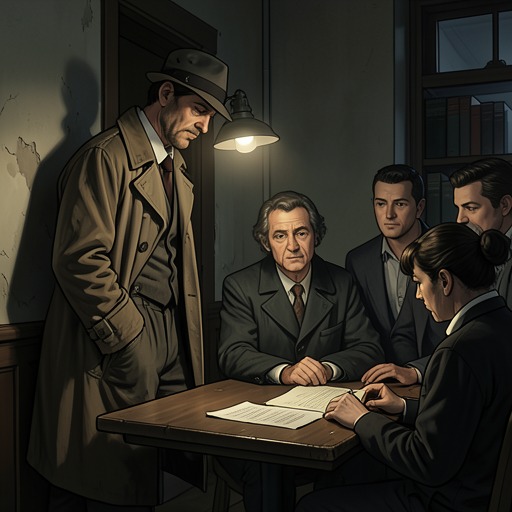
Billy Poe gives Bud Harris an account in which a man had held a knife to his neck and Otto the Swede had been coming to finish the attack. Bud Harris responds positively, but the account does not eliminate Isaac’s earlier doubts about who posed the direct threat. Meanwhile, Lee English hears Billy Poe describe events and recognizes that their interests may no longer align: a lawyer who helps Billy Poe could harm Isaac. Her practical dilemma shows how testimony and legal defense turn intimate loyalty into competing obligations. A truthful account might protect one person while exposing another.
Harris’s private rules and public duty
Bud Harris’s decisions unfold within a strained department and a small town where personal relationships and public responsibilities overlap. A major budget reduction forces him to consider layoffs and keep aging vehicles in service, while an investigation into a city council member reminds him that people in Buell have grounds to question his own past liberties. These circumstances help explain the pressure under which he exercises discretion, but they do not make that discretion neutral. His idea of doing right can protect people from the full force of the law, yet it also gives him power to decide whose conduct will be overlooked.
His earlier experience in Da Nang gives this conflict a longer history. As a young soldier, Bud Harris killed a man he believed might be carrying a weapon, then continued firing after the man fell. The military recorded one confirmed kill, and Bud Harris later reflected that people forget the dead were once alive. The official notation establishes what happened for institutional purposes; it does not settle what the act means to him. His memory links state-authorized violence with his later efforts to decide, on his own, when a person should face legal consequences.
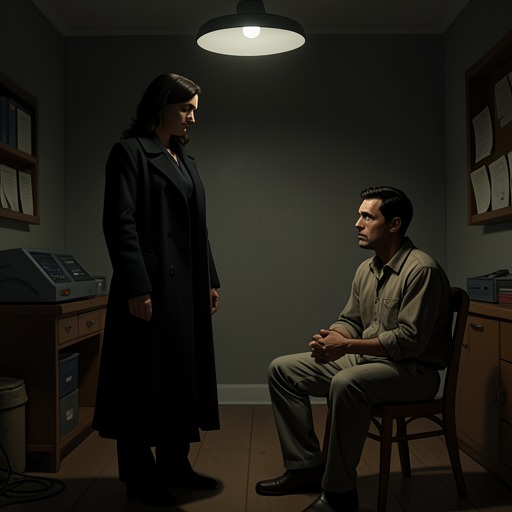
The contrast sharpens when Bud Harris considers what to do about Murray Clark, the witness whose account threatens Billy Poe. Bud Harris knows that Murray is not simply an abstract obstacle: the man is receiving money under a witness-protection arrangement that offers little actual protection. Nevertheless, Bud Harris thinks of driving him away as a way of trading himself for Billy Poe. Grace Poe has not explicitly told him to kill Murray, but she recognizes that their shared understanding makes her morally implicated if he acts. Her reasoning rejects a narrow defense based on the absence of spoken instructions: silence can carry responsibility when both people understand what is being chosen.
Consequences and the limits of justification
Bud Harris goes to Murray Clark armed, and the encounter ends with Bud Harris killing him after being attacked. He shoots Murray as the witness tries to escape and fires again. That Murray is connected to a threat against Billy Poe does not make the killing disappear into the category of protection. The novel places the act beside Bud Harris’s earlier decision to shield Billy Poe and Grace Poe’s silent complicity, showing how one attempt to prevent legal harm creates a new moral and legal burden.
The consequences also return to the people Bud Harris meant to protect. Later, after Isaac visits him, Bud Harris keeps from him the fact that Billy Poe has been stabbed in prison and nearly died after refusing to see his lawyer. Bud Harris’s concealment is another protective act, but it prolongs Isaac’s incomplete understanding of what has happened. Wounded and exhausted, Bud Harris still thinks both young men are worth saving. The judgment is compassionate, yet it cannot undo his choices or the harms incurred in making them.
Across these episodes, the novel refuses to make legal guilt and moral responsibility interchangeable. Isaac’s intervention is driven by loyalty and leaves him troubled by the death; Billy Poe’s account frames his actions as self-defense while loyalty discourages disclosure; Bud Harris turns police authority into personal discretion; and Grace Poe accepts that an unspoken wish may still implicate her in its outcome. Law can name offenses, shape testimony, and impose punishment, but the characters’ private reckonings concern what they chose to protect, whom they treated as expendable, and what they continue to owe one another afterward.