Poe family trailer
American RustThe Poe family trailer is the home Grace Poe shares with her son, Billy Poe, on a large wooded tract outside Buell. Set at the end of a dirt road, it offers a measure of seclusion amid the hills, but its modest rooms, costly upkeep, and uncertain future also embody the economic pressures that have shaped the family’s life. The trailer is not simply shelter: it is the place where Grace’s hopes of leaving, her practical care for Billy, and the consequences of the Valley’s industrial decline repeatedly meet.
Setting and Physical Character
Poe’s home is a double-wide trailer at the top of a dirt road, on eighty acres of woodland. The surrounding hills and hollows give the property a remote, almost self-contained quality. In the yard, a muddy four-wheeler stands near an old Camaro with a costly paint job and a failed transmission. Metal sheds are in varying states of collapse; one bears a Dale Earnhardt flag, and a wooden pole is used for hanging deer. These details establish a working, makeshift household rather than a polished retreat. The property feels spacious, but the trailer and its outbuildings also reflect limited means and unfinished maintenance.
The home sits within a landscape marked by both natural abundance and industrial ruin. From the family’s rural setting, the wider area is a short distance from Buell’s boarded downtown and the former steel mill, whose buildings have been partly dismantled and overtaken by vegetation. The contrast is sharp: woodland surrounds the trailer, while nearby towns and factory sites testify to a once-prosperous regional economy that has contracted. The trailer’s isolation is therefore relative. It is embedded in the Valley’s history, not separate from it.
A Household Shaped by Economic Decline
The trailer’s security has depended on local circumstances as much as on the family’s own efforts. After the mill closures and resulting unemployment, Grace and her family faced foreclosure. Community resistance to sheriff’s sales led a judge to halt foreclosures, and the pause eventually became law. That intervention allowed the family to keep the trailer. They lived on food-bank provisions and deer Virgil Poe poached; for two years, venison made up much of their food, a hardship that left Grace unable to stand its taste.
The same decline narrowed the family’s choices. For a time, there were few jobs to be had, and the loss of steel work spread through the industries that had depended on the mills. Virgil tried job training in robotics and later found work at a barge-making plant, but those opportunities did not last. Across the Valley, residents had lost 150,000 jobs since the younger generation’s birth, and many towns could scarcely afford basic public services. The trailer’s mortgage and maintenance costs belong to this larger history: keeping a home could preserve a foothold in the community, but it could also make moving away harder.
Grace’s Daily Life at Home
The trailer is a place of routine care and recurring discomfort. When Billy is out of firewood, Grace sits wrapped in blankets, weighing the cost of electric baseboard heaters against the expense of installing propane or oil heat. She resists investing in a permanent furnace because she has long hoped to move; spending more on the trailer would feel like accepting that she will remain there. Cold, in this sense, is not just a household inconvenience but part of her unresolved decision about whether the trailer is a temporary stop or the life she has been left with.
Grace’s work and health make that uncertainty concrete. Her hands hurt with changes in the weather, and she can sew for only several hours before they stiffen. At a Brownsville dress shop, she makes wedding gowns sold for far more than her annual trailer mortgage, while her own pay and physical capacity remain constrained. She has tried additional work, but a fast-food job proved unsustainable. At home, she uses a heated towel to relieve her hands and tends the woodstove. These tasks show how much domestic life depends on labor her body makes increasingly difficult, even as the family’s finances leave little room for alternatives.
Home, Attachment, and the Possibility of Leaving
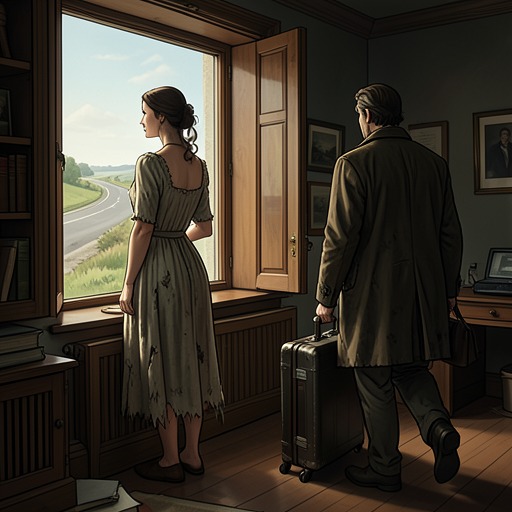
Grace has imagined other lives beyond the trailer. After Virgil left, she nearly accepted a job in Philadelphia, but Billy was doing well at school and football, and she still hoped Virgil would return. She also once planned to finish her degree and become a counselor. Her volunteering at a women’s shelter in Charleroi provides a connection to people and possibilities beyond Buell; when she has to stop volunteering, she feels the loss of an important link with the outside world. Yet the choices that might have carried her elsewhere repeatedly compete with concern for her son and the difficulty of starting over without money or nearby relatives.
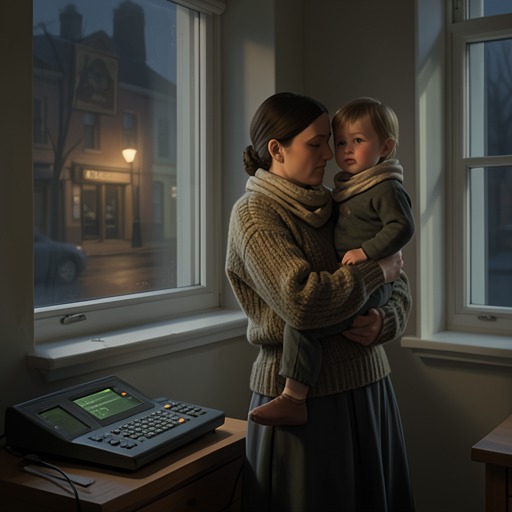
Billy’s presence gives the trailer both its emotional center and a source of strain. Grace resents having to manage the firewood and household while he remains at home, but her frustration exists alongside persistent attention to his welfare. When she sees him sitting outside during an unseasonable snowfall without a coat, she calls him in and recognizes that something is wrong. Later, after deciding that her relationship with Virgil has reached a breaking point, she plants six tomato plants and peppers in the yard and resolves to call Bud Harris. The act of planting is practical and immediate; her decision to reach out suggests that staying in the same place need not mean accepting every part of the life attached to it.
Narrative Significance
The Poe family trailer concentrates the novel’s account of postindustrial life at household scale. The lost mill and shrinking local economy appear here as mortgage insecurity, limited heating, constrained employment, and decisions about whether leaving is financially possible. At the same time, the woodland acreage, garden, woodstove, and family routines make the property a lived-in home rather than merely a symbol of decline. Its isolation can feel protective, but the family remains exposed to pressures created well beyond its boundaries.
The trailer also gives Grace’s conflict a physical setting. She wants a life with greater dignity and has repeatedly considered departure, yet her connection to Billy, the lack of dependable alternatives, and her attachment to familiar people keep her choices entangled with Buell. The home therefore holds two competing meanings: it is a foothold preserved through collective resistance to foreclosure, and a place Grace fears may turn a provisional life into a permanent one. Its importance lies in that tension, not in any simple choice between escape and belonging.